

As a parent considering relocation, you may wonder about the legalities of moving out of state with your child. Understanding the laws and guidelines governing such decisions is imperative to ensure you are acting within your rights and protecting your child’s best interests. This post will guide you through the key legal considerations, custody agreements, and potential steps you may need to take before making your move. Equip yourself with knowledge to navigate this process smoothly and make informed decisions for you and your child.
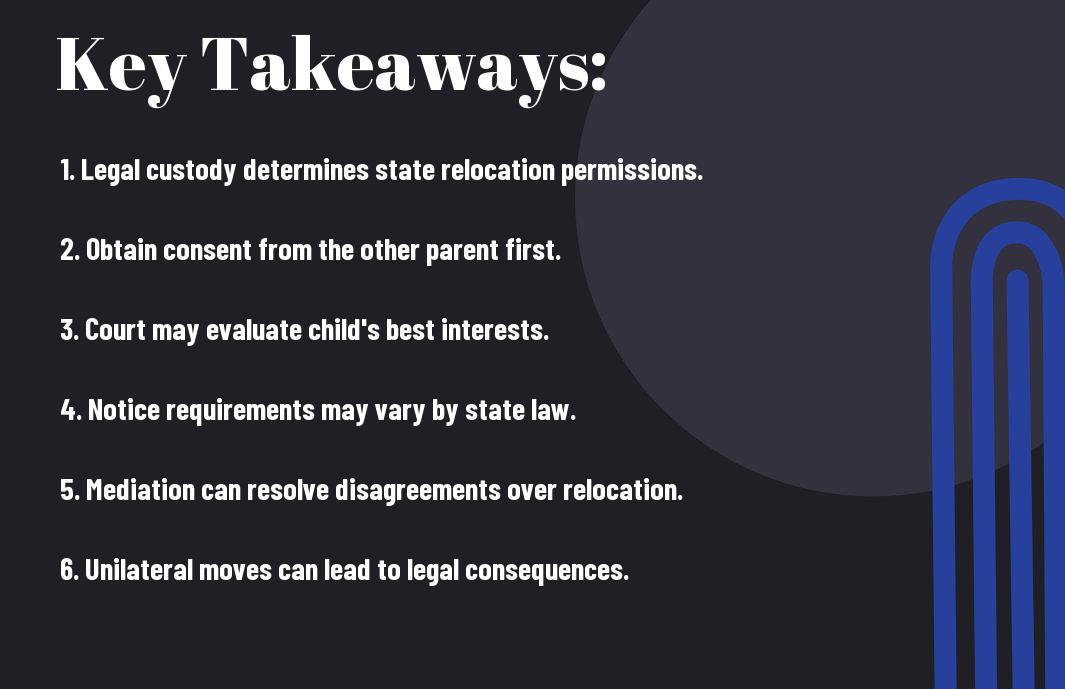
Understanding Custody Agreements
While navigating the complexities of moving out of state with a child, it’s vital to understand your custody agreements. These legal documents outline the rights and responsibilities of each parent, significantly influencing where and how you can relocate with your child. Understanding the type of custody granted is a key step in determining your options.
Types of Custody Arrangements
While custody can vary significantly, generally, you may encounter the following arrangements:
- Legal Custody: The right to make significant decisions about your child’s life.
- Physical Custody: Where the child resides; the custodial parent provides day-to-day care.
- Sole Custody: One parent has both legal and physical custody.
- Joint Custody: Both parents share legal and/or physical custody.
- Visitation Rights: Scheduled time for the non-custodial parent to spend with the child.
Recognizing the type of custody you have is imperative when considering relocation.
| Legal Custody | Decision-making authority regarding the child |
| Physical Custody | Where the child lives and who takes care of them daily |
| Sole Custody | One parent has full rights and responsibilities |
| Joint Custody | Shared rights and responsibilities between parents |
| Visitation Rights | Time allocated for non-custodial parent |
Modification of Custody Orders
Around the time you consider moving out of state, it’s important to review the current custody order. Modifying custody orders may be necessary to reflect your new circumstances, especially if you intend to relocate with your child. Such modifications typically require legal proceedings to ensure that any changes are in the best interest of the child.
In fact, courts often require a substantial justification to alter existing custody agreements. You will need to demonstrate how the move will benefit your child and address any potential concerns raised by the other parent. This process may involve submitting relevant documentation, participating in hearings, and possibly mediating disputes. Your proactive approach in addressing these factors will be key to a favorable outcome for your relocation plans.
Legal Considerations for Relocation
There’s a complex legal framework governing the relocation of a parent with a child. Before making any decisions, understand the implications of your current custody arrangement, as laws vary significantly by state. You may be required to provide notice to the other parent and possibly obtain court approval depending on your situation. Navigating these legal guidelines is vital to ensure your child’s best interests are considered during the relocation process.
Notice Requirements
Considerations regarding notice requirements typically depend on your custody agreement and state laws. You may be obligated to inform the other parent about your intent to move a specified time in advance. This notice usually details your destination, reasons for relocating, and how you plan to maintain the relationship with your child’s other parent.
Best Interest of the Child Standard
After notifying the other parent, the court will evaluate the proposed move using the “best interest of the child” standard. This legal principle serves as the foundation for custody and visitation decisions, emphasizing factors that support your child’s emotional and developmental needs.
Hence, when assessing the relocation, courts will consider aspects like your child’s age, relationships with both parents, the potential impact of the move on their stability, and educational opportunities in the new location. You should be prepared to demonstrate how the move benefits your child’s overall well-being, as this can significantly influence the court’s decision regarding relocation. Maintaining a strong case can help ensure that the relocation aligns with your child’s best interests.

Interstate Custody Laws
Unlike moving within a state, relocating out of state with your child involves navigating complex interstate custody laws that govern how custody arrangements are handled across state lines. These laws are designed to protect the child’s best interests while ensuring that existing custody orders are respected. Before making any decisions, it’s vital to understand the legal requirements in both your current and prospective state of residence.
UCCJEA Overview
Beside providing a framework for jurisdictional issues, the Uniform Child Custody Jurisdiction and Enforcement Act (UCCJEA) establishes which state’s courts have the authority to make custody determinations. This law aims to avoid conflicting custody orders by granting priority to the child’s “home state,” where the child has lived for six consecutive months prior to the custody action.
Jurisdictional Issues
At times, you may face jurisdictional issues when planning to move out of state with your child, as any existing custody orders remain in effect regardless of your new location. Understanding whether the courts in your new state will enforce your existing custody agreement is vital. It’s wise to consult with a family law attorney to navigate these complexities appropriately.
Another important aspect to consider is how the move may impact your custody arrangement regarding visitation rights and cooperative parenting plans. Jurisdictional questions can arise when the other parent resides in a different state, and these can complicate your ability to make unilateral decisions about relocation. You must ensure that any proposed move complies with your existing custody order to avoid potential legal repercussions. Proper legal advice can help you successfully maneuver through these challenges.

Factors Influencing Court Decisions
After considering a request for a parent to move out of state with a child, courts weigh several influential factors, including:
- The reason for the move
- The impact on the child’s well-being
- The existing parenting plan
- The relationship between the child and both parents
- The child’s age and developmental needs
Thou must understand these elements can significantly sway the court’s ruling.
Stability and Continuity
To maintain stability and continuity in your child’s life, the court will assess how the move may disrupt established routines, friendships, and educational opportunities. Stability is vital for your child’s development and well-being, and disruptions can lead to emotional distress.
Child’s Relationship with Parents
Above all, courts prioritize the child’s ongoing relationship with both parents when evaluating relocation petitions. A solid, healthy relationship is crucial for your child’s emotional and psychological health.
Influencing this decision, courts consider the frequency and quality of interactions between you and the child, as well as the proposed move’s effect on that relationship. If the move substantially limits visitation and bonding opportunities, it may be viewed unfavorably. Courts aim to ensure that your child enjoys meaningful connections with both parents, which is crucial for their overall development and happiness.

Potential Challenges and Disputes
For many parents considering a move out of state with their child, potential challenges and disputes can arise, especially if the other parent contests the relocation. Custody arrangements and parenting plans may require revisiting to address new living circumstances, which could lead to tensions and disagreements. This underscores the importance of legally documented permissions and open communication to navigate the complexities of co-parenting during a relocation.
Legal Recourse for Non-Compliant Parents
Before moving, make sure you’re fully aware of your legal standing. If the other parent does not comply with the agreed-upon terms regarding the relocation, you may seek legal recourse. Courts generally prioritize the child’s best interests, and this may involve petitioning for a modification of custody arrangements or enforcement of existing agreements. Consulting with a family law attorney can provide insights on how to proceed if you face challenges.
Mediation and Conflict Resolution
Against the backdrop of potential disputes, mediation may serve as an effective tool for resolving conflicts. Engaging in mediation allows both parents to communicate their needs and concerns in a structured environment with a neutral third party. This approach can facilitate understanding and promote cooperative solutions in the best interest of your child, minimizing the need for contentious court battles.
In addition, mediation can often lead to more flexible arrangements that cater to both parents’ circumstances while ensuring the child’s welfare remains a priority. Unlike traditional litigation, mediation encourages collaboration and can be less adversarial, helping you and your co-parent maintain a more amicable relationship. This can be particularly beneficial if ongoing parenting is necessary after a relocation, allowing for smoother interactions and fewer conflicts in the future.
Resources for Parents
Now that you’re informed about the legal guidelines for moving with your child, it’s important to explore various resources available to assist you during this transition. Whether you seek legal advice or community support, numerous options can help you navigate this complex process and ensure your child’s best interests remain a priority.
Legal Assistance and Support
Resources for legal assistance can guide you through the necessary steps to take when relocating with your child. Consulting a family attorney who specializes in custody issues is beneficial. Additionally, many legal aid organizations provide services to assist low-income parents seeking guidance on custody and relocation matters.
Government and Community Resources
Any parent considering relocation should explore governmental and community resources available in your area. These services often include counseling, mediation, and child advocacy programs that can support your family’s needs during this transition.
Another excellent way to find community resources is by connecting with local family service organizations or non-profits that focus on parenting and child welfare. They may provide access to workshops, support groups, or legal clinics that specialize in custody and relocation issues. These resources are invaluable for navigating the emotional and legal aspects of moving out of state with your child, ensuring you make informed decisions that serve the best interests of your family.
Conclusion
Conclusively, if you are considering moving out of state with your child, it’s vital to understand the legal guidelines that govern such a decision. You must assess custody agreements, consult with legal counsel, and notify the other parent to navigate the process effectively. Each situation is unique, and adhering to the laws in your jurisdiction can prevent potential disputes. Always prioritize your child’s best interests throughout your decision-making process to ensure a smooth transition for your family.