

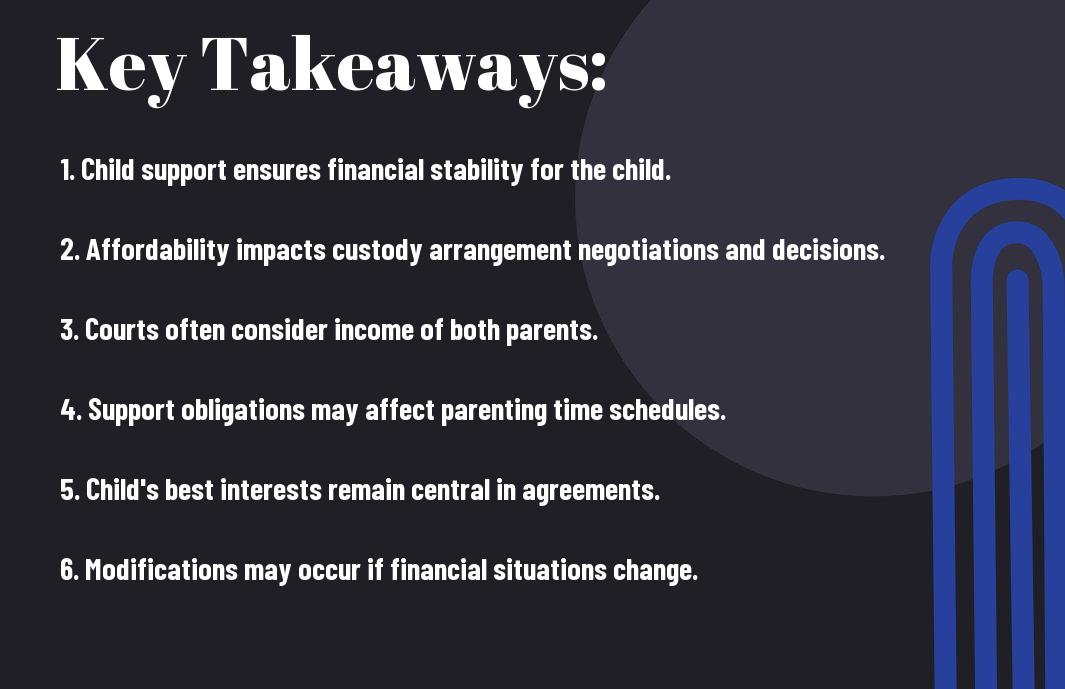
Agreements regarding custody often go hand in hand with child support arrangements, as both play significant roles in ensuring the well-being of your child. Understanding how child support impacts custody can help you navigate the complexities of family law more effectively. You’ll learn that child support not only provides financial stability but also influences custody decisions, so it’s crucial to grasp these connections. This post will clarify the relationship between child support and custody agreements, empowering you to make informed decisions for your child’s future.
Understanding Child Support
For parents navigating custody agreements, understanding child support is necessary. Child support represents the financial contributions that a non-custodial parent is obligated to provide for the upbringing and welfare of their child. This support is designed to ensure that the child’s needs, such as education, healthcare, and daily living expenses, are met despite the parents’ separation. Comprehending how child support operates will help you negotiate effectively for your child’s best interests.
Definition and Purpose
Along with the financial implications, understanding the fundamental purpose of child support is key for parents. It serves to maintain a child’s standard of living similar to what they would have enjoyed had the family remained intact. This support is assessed not only in terms of money but also encompasses the emotional stability provided to the child through consistent care and support from both parents.
Key Factors in Determining Amount
Purpose of determining child support amounts includes several variables that courts typically consider. These factors ensure that the support provided is fair and sufficient to meet the child’s needs. Key elements influencing this calculation may include:
- Income of both parents
- Number of children requiring support
- Healthcare and educational expenses
- Existing financial obligations of the non-custodial parent
Any additional unique circumstances of your situation may also be taken into account, further affecting the overall amount decided by the court.
At times, the calculation of child support may feel overwhelming due to the numerous factors involved. However, you can use guidelines provided by your state or seek legal advice for clarity. Some of the determining aspects include:
- Both parents’ earnings and income sources
- The physical custody arrangement and time spent with each parent
- Expense requirements for health insurance and childcare
- Any special needs your child may have
Any adjustments to these factors can require a modification of the support agreement, so staying informed about your situation is vital.

The Intersection of Child Support and Custody
One of the complex aspects of family law is how child support and custody arrangements intersect. Both elements play a pivotal role in ensuring the well-being of your child, as they determine not only where your child will live but also the financial obligations involved for both parents. Understanding how these two components influence each other can empower you to make informed decisions that serve your child’s best interests.
Custody Arrangements and Financial Implications
Before finalizing any custody arrangement, it’s imperative to consider the financial implications associated with it. The type of custody you pursue—whether joint or sole—can affect how child support is calculated. If you have primary custody, the other parent may be obligated to pay a specific amount in child support. This payment is designed to cover your child’s living expenses, schooling, and other needs, but it indirectly influences your ability to provide a stable environment for your child.
How Child Support Influences Custody Decisions
Above all, understanding how child support influences custody decisions can lead to better outcomes for you and your child. Courts often factor in the financial capabilities of each parent when determining custody arrangements. A stable financial situation can demonstrate your ability to provide a nurturing environment, which may sway the court’s decision in your favor.
Indeed, the interplay between child support and custody decisions is significant. When one parent can demonstrate financial stability, it may enhance their chances of obtaining a more favorable custody arrangement. Conversely, financial challenges can limit your options, influencing how the court views your capability as a custodial parent. Therefore, it’s vital to present a clear picture of your financial status to the court to ensure your custody arrangements align with your child’s best interests.

Legal Framework Surrounding Child Support
Despite the emotional complexities that often accompany custody agreements, understanding the legal framework surrounding child support is imperative. Child support is governed by state laws that outline how financial responsibilities are determined, which ensures that the child’s needs are consistently met. Familiarizing yourself with these laws can help you navigate the intricate processes involved in establishing a fair support system while maintaining a healthy co-parenting relationship.
State Guidelines and Variations
Variations in child support guidelines exist across states, reflecting the unique economic circumstances and legal precedents within each jurisdiction. This means that the calculations for child support can differ significantly based on where you live, with some states using income shares models while others rely on percentage-of-income formulas. Understanding your state’s specific guidelines is vital for ensuring accurate and equitable support arrangements.
Enforcement Mechanisms
At times, enforcing child support can pose challenges, especially if a parent fails to meet their financial obligations. Several mechanisms are in place to ensure compliance, including wage garnishments, tax refund intercepts, and even license suspensions for non-payment. These enforcement strategies help you secure the financial support your child deserves, promoting accountability and ensuring that obligations are met.
And while the enforcement mechanisms can be effective, your involvement is crucial to ensure that they are executed properly. You may need to work with local child support agencies or family law attorneys to initiate enforcement actions if support payments are consistently missed. Staying informed about your options and being proactive can make a significant difference in securing your child’s financial needs over time.
Modifications and Adjustments
Unlike what many may think, child support agreements are not set in stone. Over time, changes in your circumstances or those of your child’s other parent can warrant adjustments to the support amount. These modifications ensure that the financial responsibilities align with the current needs of your child and the financial realities of both parents.
Circumstances for Revising Support Agreements
Revising your child support agreement may be necessary due to several factors, such as job loss, significant income changes, or alterations in your child’s needs. If you need to address changes in your financial situation or your child’s circumstances, it’s advisable to consult with legal experts to initiate the modification process.
Impact of Changes in Custody on Support
Any changes in custody arrangements can significantly influence child support payments. When custody shifts from one parent to another, the financial responsibilities may need to be recalibrated to reflect the new living situation and care responsibilities.
This recalibration includes evaluating how the change in custody affects the daily expenses associated with raising your child. For instance, if custody transitions from joint to sole custody, the custodial parent may experience increased costs and seek an upward modification in support. Conversely, if a parent gains equal custody, the support obligations may be revised downward to accommodate shared responsibilities. Understanding these implications is vital for ensuring fair and adequate support for your child’s needs.
Common Challenges in Child Support and Custody Cases
Once again, navigating child support and custody disputes can be complex and emotional. Many parents encounter challenges that complicate the process, such as disagreements over the amount of support and the impact of changing financial situations. These challenges can significantly affect your relationship with your children and complicate the custody arrangement if not handled properly. Understanding these challenges will help you take informed steps to protect your rights and your child’s best interests.
Disputes Over Payments
With child support, disputes may arise regarding payment amounts, schedules, and modifications based on changing circumstances. It’s common for one parent to feel burdened by the financial demands, while the other may argue for increased support to meet the child’s needs. Proper documentation and open communication can help ease tensions and lead to more amicable solutions.
Resolving Conflicts
Besides disputes over payments, resolving conflicts effectively is vital for maintaining a functional co-parenting relationship. Open dialogue, mediation, or legal assistance can be valuable tools in addressing issues before they escalate into long-term disputes. Prioritize your child’s well-being when discussing these matters, as finding common ground can alleviate stress for everyone involved.
Payments made on time can foster a spirit of cooperation between you and the other parent, making it easier to address any arising concerns. By keeping lines of communication open and being proactive about addressing potential issues, you can work towards minimizing conflicts related to child support and custody. Consider involving a neutral third party, such as a mediator, to facilitate discussions and help you find mutually agreeable solutions for the benefit of your child.

Best Practices for Parents
Your ability to navigate child support and custody agreements is necessary for promoting your child’s well-being. By prioritizing cooperation, open communication, and informed decisions, you can create a stable environment for your child. Understanding the intricacies of these agreements will empower you to advocate effectively for your child’s needs while encouraging a positive co-parenting relationship with the other parent.
Collaboration and Communication
On fostering a collaborative environment with your co-parent can significantly enhance your child’s experience during custody transitions. Clear and respectful communication helps to establish mutual respect and ensures both parents are on the same page about expectations and responsibilities. This proactive approach can reduce misunderstandings and promote a healthier co-parenting dynamic.
Seeking Legal Assistance
An informed understanding of child support and custody laws may require professional guidance, making legal assistance a valuable asset in your journey. Engaging a knowledgeable attorney can help you navigate the complexities of agreements, ensuring that your interests and your child’s needs are adequately represented.
In fact, legal professionals can provide insights on how to formulate realistic child support and custody arrangements tailored to your unique situation. They can clarify your rights, obligations, and assist in negotiating terms that truly reflect your family’s needs. Additionally, they can help you prepare for court appearances, making the entire process less daunting and more manageable while ultimately safeguarding your child’s best interests.
Final Words
To wrap up, understanding the role of child support in custody agreements is imperative for ensuring the well-being of your children and facilitating a smooth co-parenting relationship. Child support is not just a financial obligation; it represents your commitment to meeting your child’s needs during and after the custody arrangement. By being informed about your rights and responsibilities, you can navigate these agreements more effectively, fostering an environment that prioritizes your child’s stability and development.