

There’s a lot to consider when it comes to relocation and how it impacts child custody arrangements. If you’re facing a move, whether it’s for work, personal reasons, or new opportunities, understanding the legal implications can make a difference in your custody situation. This blog post will provide you with crucial insights on how relocation can affect your custody rights and responsibilities, guiding you through what you need to know to navigate this complex area of family law effectively.
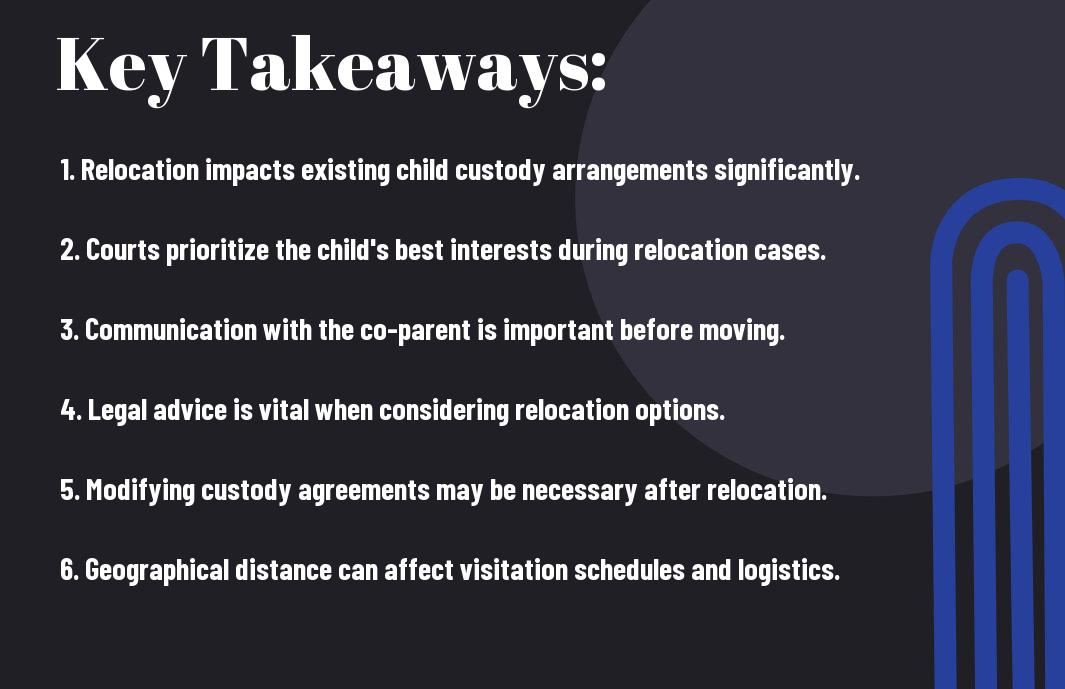
Understanding Child Custody
Before you navigate the complexities of custody arrangements, it’s necessary to understand how the law differentiates between various types of custody. In essence, child custody encompasses the legal and practical aspects of caring for your child following a separation or divorce. This understanding provides a foundation for making informed decisions about your children’s welfare during and after your relocation.
Types of Custody Arrangements
Before finalizing any agreement, familiarize yourself with the types of custody arrangements available:
- Legal Custody: The right to make significant decisions regarding your child’s upbringing.
- Physical Custody: Where the child primarily resides.
- Sole Custody: One parent holds both legal and physical custody.
- Joint Custody: Both parents share legal and/or physical custody.
- Visitation Rights: Arrangements for non-custodial parents to spend time with the child.
Perceiving these differences can help you navigate the custody landscape more effectively.
| Type of Custody | Description |
| Legal Custody | Ability to make important decisions for your child. |
| Physical Custody | Where your child lives most of the time. |
| Sole Custody | One parent has complete custody rights. |
| Joint Custody | Both parents share custody responsibilities. |
| Visitation Rights | Arrangements for the non-custodial parent to see the child. |
Legal Considerations in Custody
Between your relocation plans and custody arrangements, understanding the legal considerations is vital. Laws governing child custody vary by state, and relocation can significantly influence these rules. Courts primarily focus on the child’s best interest, assessing factors like the child’s emotional needs, the parent’s ability to provide care, and the impact of relocation on the child’s stability.
A careful examination of state laws, as well as existing custody arrangements, will help you understand the implications of moving. Engaging legal counsel experienced in family law is often advisable to ensure your relocation aligns with custody determinations. Gaining clarity on legal expectations will better prepare you for potential adjustments you may need to make to secure the best outcome for your children.

Impact of Relocation on Custody
It’s imperative to understand how relocating can significantly impact child custody arrangements. A move can alter your child’s routine, relationships, and overall stability. If one parent relocates, it often raises questions about the practicality and fairness of existing custody agreements. Courts typically prioritize the child’s best interests, weighing factors such as the child’s needs, the reasons for the relocation, and how it affects the custodial arrangement.
Psychological Effects on Children
Against the backdrop of relocation, children may experience various psychological effects. When faced with changes to their living situation, children can feel anxious, uncertain, or even abandoned. It’s important for you to assess your child’s emotional needs during this transition and provide support to help them cope with the stress that often accompanies a relocation.
Changes to Existing Custody Agreements
Behind every relocation is the need to reconsider your existing custody agreements. Changing locations can necessitate modifications in visitation schedules, communication plans, and parental responsibilities. Adapting these agreements ensures that both you and your child maintain a supportive relationship despite physical distance.
Understanding how your relocation impacts existing custody agreements is vital for maintaining stability in your child’s life. You may need to negotiate with your co-parent to reach a mutually beneficial arrangement that accommodates the new circumstances. This may involve addressing transportation logistics, adjusting visitation frequency, or working through legal channels to modify the agreement formally. Open communication and collaboration can lead to a smoother transition for you and your child.

Legal Framework for Relocation
All families undergoing relocation must navigate a specific legal framework designed to protect the best interests of children. Each state has its own guidelines and laws concerning how a move may affect child custody arrangements. Understanding this framework helps you avoid potential complications and ensure that your child’s welfare remains a priority during the relocation process.
State Laws on Relocation
Across the United States, state laws regarding relocation vary significantly. Some states require a parent to obtain court approval before moving, particularly when it affects custody arrangements, while others may allow relocation under certain conditions. Familiarizing yourself with the laws specific to your state is vital for a smoother transition.
Requirements for Notifying the Other Parent
Framework surrounding the notification of relocation often mandates that you inform the other parent well in advance. This allows for a reasonable period to discuss arrangements that may be affected by the move. Notifying your co-parent is not just a legal requirement; it also helps facilitate open communication, which is vital in developing a parenting plan that prioritizes your child’s needs.
Due to the varying requirements by state, you are typically expected to provide written notification to the other parent, often detailing the new address, the reason for the move, and any proposed changes in custody or visitation. Failing to comply with these requirements may lead to legal disputes or even modifications of your custody agreement. Ensuring timely and thorough communication with your co-parent not only fulfills your legal obligation but also builds a foundation of trust and cooperation during a challenging transition.

Mediation and Relocation
Now, consider mediation as a viable option when navigating the complexities of relocation and child custody. This approach can facilitate open communication between you and your co-parent, making it easier to reach an agreement that prioritizes your child’s well-being while addressing both parents’ concerns.
Role of Mediation in Custody Disputes
Disputes over custody can often escalate into contentious battles, making mediation a vital tool. It offers a neutral setting where you and your co-parent can collaboratively discuss relocation plans. A mediator can help guide the conversation, ensuring that both parties have the opportunity to express their feelings and concerns about the proposed move.
Benefits of Mediation for Relocation Issues
Mediation fosters a positive environment for addressing relocation issues, enabling you to find common ground without the stress of courtroom proceedings. This process not only encourages cooperation but also allows you to maintain a focus on what is best for your child during the transition.
To explore the benefits further, mediation often results in more personalized outcomes tailored to your family’s needs. It promotes constructive dialogue, which can minimize hostility and pave the way for more cooperative co-parenting post-relocation. By prioritizing communication, you can work on creating a custody arrangement that supports your child’s stability and emotional health during this potentially disruptive change.
Preparing for a Custody Hearing
Unlike other legal proceedings, a custody hearing demands careful preparation, as the outcome can significantly impact your child’s future. You should gather all relevant information and be ready to present your case convincingly. It’s advisable to understand the court procedures and the specific factors your judge will consider. By doing so, you’ll be better positioned to advocate for your child’s best interests.
Evidence and Documentation
Between your personal accounts and official records, a well-prepared case hinges on solid evidence. You must gather documentation that supports your position, such as financial statements, parenting plans, and any previous court orders. Organizing this information systematically can strengthen your argument and provide clarity for the judge.
Strategies for Presenting Your Case
About your approach to presenting your case, understanding the core factors the court evaluates is imperative. By maintaining a respectful tone with the judge and being open to constructive dialogue, you can convey your commitment to your child’s well-being. It’s important to anticipate questions and prepare your responses in advance, demonstrating your awareness of what matters most in securing a favorable outcome.
Understanding the importance of emotional appeals can also work in your favor. While facts and evidence are critical, showing genuine concern for your child’s needs and stability can resonate with the judge. Prepare to discuss your parenting style, your child’s needs, and how the proposed arrangements support their well-being. Providing examples of your active involvement in your child’s life can illustrate your dedication and strengthen your case further.
Alternatives to Relocation
Many parents face the dilemma of relocating for work or personal reasons while seeking to maintain their child’s best interests. Instead of moving away, explore alternative arrangements that can help you stay close to your children. Options such as remote work, flexible hours, or even temporary living arrangements may allow you to achieve your goals without disrupting your child’s stability and routine.
Co-Parenting Solutions
Across many families, effective co-parenting strategies can help you navigate the challenges that arise from potential relocation. Open and honest communication with your co-parent can lead to viable solutions, ensuring both parents remain actively involved in your child’s life despite geographical barriers.
Adjusting Living Arrangements
Among the key considerations when thinking about relocation are the adjustments to living arrangements that may arise. It’s imperative to assess whether shared living spaces or proximity to your co-parent can work in your favor.
Understanding your living arrangements can greatly impact your child’s wellbeing during a relocation. You might consider a shared living arrangement where you and your co-parent can collaboratively manage time with your child. This way, your child can maintain valuable relationships with both parents while enjoying stability. Ensuring that your current living space is conducive to co-parenting will allow you to mitigate any negative effects on your child’s emotional health and provide them with the support they need during transitions.
Summing up
Now that you understand how relocation impacts child custody, it’s vital for you to consider the legal implications and procedures involved. When planning a move, your child’s best interests should always come first, and you’ll need to be prepared to address any potential custody modifications. Keep open lines of communication with your co-parent and consult legal professionals to navigate the complexities that may arise. Your proactive approach will help ensure a smoother transition for both you and your child during this life-changing decision.