

Just when you think navigating child custody disputes could only lead to stress and confrontation, mediation emerges as a viable solution to promote cooperation between parents. This collaborative approach allows you to engage in constructive dialogue, enabling you to reach agreements that best serve your child’s needs. By choosing mediation, you not only reduce hostility but also foster a healthier co-parenting relationship moving forward. This post will probe into the benefits of mediation and how it can effectively guide you through the complexities of child custody arrangements.
Understanding Child Custody Disputes
Before entering into mediation, it’s imperative to have a clear understanding of child custody disputes. These conflicts often arise during divorce or separation proceedings, where parents must determine the living arrangements, sense of security, and emotional well-being of their children. Custody disputes can be emotionally charged, making it vital for both parties to effectively address their concerns while prioritizing the children’s best interests.
Types of Custody Arrangements
Below, you’ll find a breakdown of the types of custody arrangements that can be established during disputes:
| Type of Custody | Description |
|---|---|
| Legal Custody | Rights to make significant decisions about the child’s welfare. |
| Physical Custody | Where the child resides and the day-to-day care. |
| Sole Custody | One parent has full custody rights and responsibilities. |
| Joint Custody | Both parents share custody rights and responsibilities. |
| Visitation Rights | Time allocated for a non-custodial parent to spend with the child. |
- Legal custody allows you to make decisions about your child’s education and healthcare.
- Physical custody determines where your child lives on a day-to-day basis.
- Sole custody gives one parent authority over upbringing and care.
- Joint custody provides both parents an active role in their child’s life.
- Visitation rights enable non-custodial parents to maintain contact.
Assume that understanding these arrangements can help you communicate more effectively during mediation, ultimately benefiting your children.
Legal Framework Surrounding Custody Disputes
Types of custody disputes are significantly influenced by the legal framework established in each state. Laws regarding custody vary, and understanding your state’s statutes, relevant guidelines, and judicial preferences is imperative. Courts often prioritize the best interests of the child, considering factors such as parental involvement, stability, and the child’s relationship with each parent.
It is imperative to recognize that various laws govern custody disputes, creating a complex landscape you must navigate. Courts typically follow a standard set of principles, focusing on what arrangement will best serve the child’s needs. Understanding these laws can empower you during negotiations and mediation, enabling you to advocate effectively for your desired outcome. Familiarizing yourself with local statutes and seeking legal advice can equip you with the knowledge necessary to navigate custody discussions more effectively.
The Mediation Process
If you find yourself navigating a child custody dispute, understanding the mediation process can be beneficial. This process involves a neutral third-party mediator who facilitates discussions between you and the other parent. The goal is to help you reach a mutually agreeable solution regarding custody arrangements, fostering open communication and collaboration while avoiding the adversarial nature of court proceedings.
Overview of Mediation
At the heart of mediation is the emphasis on cooperation and problem-solving. The mediator guides you through discussions, focusing on your children’s best interests while enabling both parents to express their concerns and preferences. This constructively oriented approach often results in tailored agreements that suit the specific needs of your family.
Role of Mediators in Custody Cases
Mediation serves as a platform for you and your co-parent to negotiate custody terms, and the mediator plays a vital role in this process. Their objective is to remain impartial, helping you both convey your perspectives and aspirations while fostering a supportive environment conducive to resolution.
Role of mediators extends beyond merely facilitating conversations; they actively help you identify common goals and explore creative solutions. By maintaining a balanced atmosphere, mediators encourage productive dialogue and ensure each parent’s voice is heard. They may also provide information about parenting plans, legal implications, and resources available to support you as you navigate child custody challenges. Ultimately, their expertise aids in crafting an agreement that reflects both parents’ interests and prioritizes your children’s well-being.
Benefits of Mediation in Child Custody
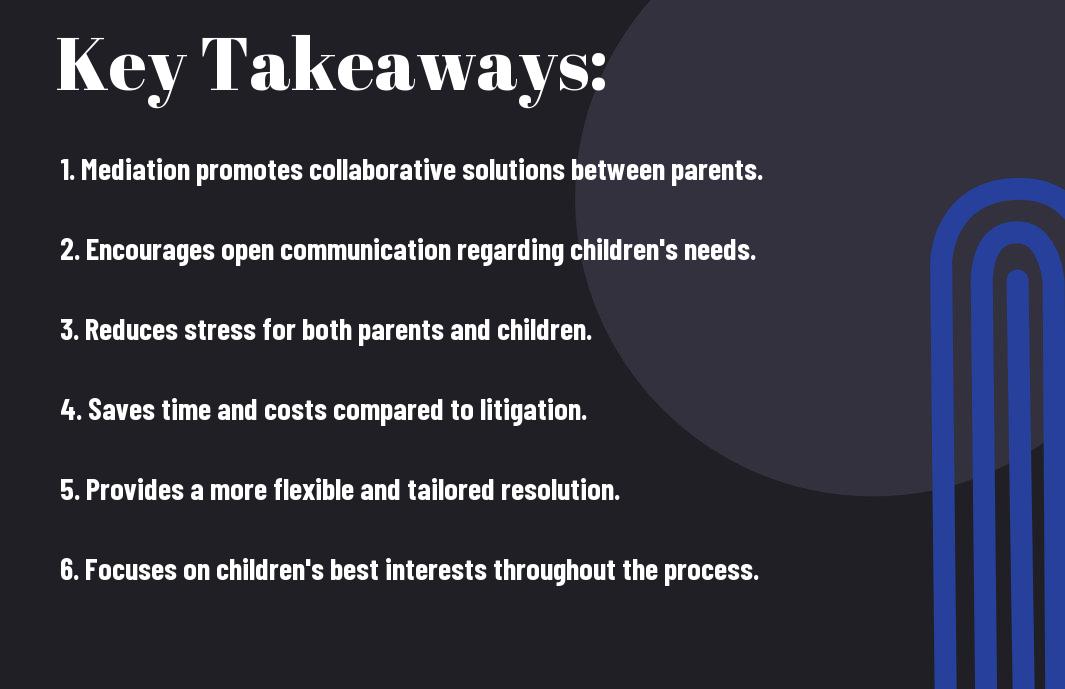
Despite the challenges that arise in child custody disputes, mediation offers significant advantages. It fosters collaborative communication between parents, allowing you to address issues constructively. This approach can lead to agreements that prioritize your children’s best interests and provides a more amicable environment. Mediation can also reduce stress for everyone involved and promote a healthier post-separation relationship, which ultimately benefits your children as they navigate their new family dynamics.
Cost-Effectiveness
Child custody mediation is often more affordable than traditional court litigation. It minimizes expenses related to prolonged legal battles and reduces the need for multiple court appearances. By choosing mediation, you can save both time and money while reaching a resolution that suits your family’s needs.
Emotional Benefits for Children and Parents
By engaging in mediation, you create an environment conducive to emotional healing for both you and your children. This supportive process can reduce anxiety and tension, allowing for more constructive conversations about custody arrangements. It also encourages you to focus on your children’s emotional well-being and stability during a potentially tumultuous time.
It is important to recognize that mediation allows you and your children to express feelings and concerns in a safe setting. This approach not only enables you to address potential conflicts but also fosters empathy and understanding, leading to healthier co-parenting relationships. Ultimately, your children’s emotional health is safeguarded as they witness their parents working collaboratively, helping them adjust better to changes in their family life.
Challenges of Mediation
Not every case is suitable for mediation, as various challenges can arise during the process. Emotional turmoil, miscommunication, or a lack of willingness to cooperate can hinder effective mediation. It is important to recognize these challenges early on, as they can significantly impact the overall outcome of your child custody dispute. Understanding these potential hurdles will help you prepare for mediation and ensure the best possible approach to reach a resolution.
Power Imbalances
Power dynamics can heavily influence the mediation process, especially in child custody disputes. If one party holds more emotional or financial power, it may undermine the fairness of negotiations. You may find that the more dominant party can intimidate or manipulate outcomes, making it difficult for you to advocate for your own interests and those of your child.
Situations Where Mediation May Not Be Effective
Challenges can arise in mediation when significant underlying issues exist, such as history of abuse, substance dependency, or uncooperativeness from one party. In these cases, the power dynamics can overshadow the mediation process, making it hard to create a balanced atmosphere for resolutions. Other factors, like complex legal matters or vastly different goals, can also render mediation less effective, potentially leading you toward more formal legal proceedings instead.
Imbalances in power or trust often prevent a genuine dialogue during mediation, ultimately making it difficult to devise a mutually satisfactory parenting plan. If there are significant concerns regarding one parent’s behavior, such as threats, violence, or manipulative tactics, you may find that mediation does not provide a safe space for meaningful negotiation. In such instances, legal intervention might become necessary to protect your rights and your child’s well-being.

Preparing for Mediation
Once again, preparation is key to navigating the mediation process effectively. Start by gathering all relevant documents, including parenting plans, financial statements, and any communications related to your child’s welfare. Think about your goals for the session and what compromises you might be willing to make. Consider the emotional aspects as well; introspecting on how your feelings may influence discussions can help you engage openly with the mediator and the other parent.
What to Expect
Below, you will find a general overview of what to expect during mediation sessions. You will typically meet with a neutral mediator who facilitates the discussion between you and the other parent. The goal is to create a collaborative environment where both parties can voice their concerns and preferences. Sessions may involve separate meetings or joint discussions, and the mediator will guide you through the process to ensure that each parent’s voice is heard.
Tips for Successful Mediation
Among the strategies to enhance your mediation experience, consider the following tips for a successful session:
- Stay focused on your child’s best interests.
- Practice active listening; acknowledge the other parent’s feelings.
- Be open to compromise and new ideas.
- Keep emotions in check to foster a constructive dialogue.
After each session, take time to reflect on the discussions and any agreements made, as this can help clarify your stance and future negotiations.
To better prepare for successful mediation, it is also beneficial to adopt a positive mindset and set realistic expectations. Here are some additional recommendations to consider:
- Plan to articulate your thoughts clearly and concisely.
- Gather insights from trusted friends or professionals who have experience with mediation.
- Know your rights and responsibilities regarding custody arrangements.
- Practice assertiveness without being confrontational.
After applying these strategies, you may find that the process becomes less intimidating and more productive.
Post-Mediation: Implementing Agreements
All parties involved in a child custody dispute benefit from an effective post-mediation phase. This stage involves putting the agreements reached during mediation into practice, ensuring that both parents understand their responsibilities and commitments. By clearly outlining the steps necessary to uphold these agreements, you set a foundation for co-parenting that prioritizes your child’s well-being and fosters a collaborative relationship with the other parent.
Finalizing Custody Agreements
Beside documenting the agreements reached during mediation, it is important to have them finalized in a legally binding format. This ensures that the custody terms are recognized and enforceable by the court. You should consult with your attorney to draft the formal documents required and confirm that all aspects of the agreement, including visitation schedules and decision-making authority, are clearly defined. This clarity reduces the chance of future disputes and helps establish a stable environment for your child.
Monitoring and Adjusting Agreements
Agreements made during mediation may need monitoring and periodic adjustments as circumstances change. Keeping open lines of communication with the other parent is imperative, as it allows you to discuss any issues that may arise regarding the custody terms. By regularly checking in with each other about the arrangement and any potential conflicts, you can collaboratively find solutions that work best for your child’s evolving needs.
Implementing effective monitoring and adjustments to your custody agreement involves staying flexible and attentive to your child’s circumstances. Life changes, such as relocation, job changes, or shifts in schooling, may require modifications to your existing arrangement. Keeping a journal or log of significant events can help you discuss necessary adjustments with your co-parent. It is imperative to approach these conversations with a problem-solving mindset, focusing on your child’s best interests and fostering a cooperative co-parenting relationship.