

Many parents face the challenging and emotionally charged process of child custody decisions during a separation or divorce. Understanding how courts evaluate custody arrangements can help you navigate this system more effectively. Judges consider various factors that directly impact your child’s well-being, including the child’s relationship with each parent, stability, and overall environment. By familiarizing yourself with these key elements, you can make informed decisions that align with your child’s best interests and your custody goals.
Legal Framework
For understanding how courts decide child custody, it is necessary to grasp the legal framework governing these decisions. This framework consists of statutory guidelines and case law precedents that provide judges with a structured approach to evaluate each case. By familiarizing yourself with these legal elements, you can better navigate the complexities of custody disputes and advocate for your child’s best interests.
Statutory Guidelines
For most jurisdictions, statutory guidelines outline the key factors judges must consider during custody proceedings. These guidelines promote consistency and fairness in rulings, typically addressing factors such as the child’s age, emotional ties with parents, and the stability of each parent’s home environment. Understanding these laws can help you prepare your case effectively.
Case Law Precedents
Below your understanding of statutory guidelines, case law precedents play a significant role in shaping custody decisions. Judges often refer to previous rulings to guide their judgments, ensuring that their decisions are in line with established legal principles. Being aware of these precedents can give you insight into how similar cases have been resolved in the past.
A comprehensive review of case law precedents can illuminate how specific factors have influenced custody outcomes historically. By examining previous cases, you may start identifying patterns or trends that could affect your custody situation. Engaging a knowledgeable attorney can help you navigate these precedents and incorporate them effectively into your strategy, thus improving your chances of achieving a favorable outcome.
Child’s Best Interests
Any child custody decision centers around the child’s best interests. Judges evaluate various factors to ensure that the child’s overall wellbeing is prioritized. This assessment encompasses emotional, physical, and social aspects, aiming to create an environment that fosters healthy development and stability. Understanding these factors can help you better navigate custody proceedings.
Emotional Well-being
On examining emotional well-being, judges consider how the proposed custody arrangement impacts your child’s mental health and stability. Relationships with parents and family dynamics play a significant role in their emotional development. Ensuring open communication and support is vital for fostering positive connections.
Physical Health and Safety
Between the various factors judges assess, physical health and safety are paramount. The court looks at the living conditions, any history of abuse or neglect, and each parent’s ability to provide a safe environment. These elements help determine which arrangement best safeguards your child’s welfare.
Indeed, a safe environment encompasses not only the absence of harm but also access to appropriate medical care and healthy living conditions. You must demonstrate your capability to provide a secure household, free from hazards, and to ensure that your child receives regular medical check-ups and proper nutrition. Your involvement in promoting physical health through safety measures significantly influences the judge’s decision on custody arrangements.
Parental Factors
Despite the complexities of custody disputes, judges emphasize parental factors that can significantly impact a child’s well-being. Key considerations include:
- Your ability to provide a loving and stable environment.
- Your involvement and commitment to your child’s life.
- Your capacity to support your child’s educational and emotional needs.
Thou should demonstrate these qualities to enhance your custody case.
Parenting Skills
Factors such as effective communication, discipline strategies, and emotional support play a vital role in assessing your parenting skills. Judges are keen to evaluate how well you can nurture your child’s growth and development.
Stability and Lifestyle
Beside your parenting skills, the stability and lifestyle you offer to your child significantly influence custody decisions. Judges will look for consistency in your living situation, including employment, housing, and social connections.
Further, maintaining a stable lifestyle sends a positive message to the court about your readiness to care for your child. This stability can include your job security, the safety of your home environment, and the quality of your relationships. Establishing reliable routines and demonstrating your ability to provide emotional and financial support will strengthen your case.
Child’s Preference
All child custody cases involve the consideration of your child’s preferences. While judges are not bound to follow these preferences, they do take them into account, especially as your child matures. By understanding how your child’s voice plays a role in custody decisions, you can better navigate the legal landscape with your family’s best interests in mind.
Age and Maturity Considerations
By assessing your child’s age and maturity, the court can better gauge how well they understand their preferences and the implications of custody arrangements. Typically, older children and teenagers have a stronger ability to express their wishes, which can lead to the court giving greater weight to their opinions during proceedings.
Communication with the Court
Communication with the court regarding your child’s preferences is vital. This includes how your child feels about living situations and the relationships they have with each parent. Keeping the lines of communication open can help ensure that the judge considers your child’s unique perspective during custody determinations.
Even if your child expresses a desire for one parent’s custody over the other, it is crucial to convey this information appropriately to the court. Judges often favor direct communication, where they can hear from the child in a controlled environment. Providing a safe space for your child to express their feelings can highlight their preferences while respecting legal protocols, ensuring their voice is heard during the decision-making process.

Relationship with Parents
Your relationship with your child is a significant factor that judges consider in custody cases. The nature of your bond, including emotional support and involvement in your child’s life, will influence the court’s decision. Courts aim to maintain stability and continuity for children, prioritizing the parent who has fostered a nurturing and supportive environment. Ultimately, your ability to foster a strong relationship will be key in the court’s evaluation of custody arrangements.
Parent-Child Bond
Parents play a vital role in shaping the emotional and developmental well-being of their children. A strong parent-child bond, demonstrated through active participation in your child’s life, not only affects their happiness but also influences the custody outcomes in court. Judges often look for evidence of warmth, communication, and trust in this relationship, as these are vital in ensuring the child’s emotional stability.
Sibling Relationships
Relationship dynamics between siblings also hold importance in custody evaluations. Courts recognize that maintaining sibling bonds can provide emotional support and a sense of continuity amid family changes.
Bonding with siblings can enhance a child’s emotional resilience and overall well-being. Maintaining these relationships is often viewed favorably in custody decisions, as siblings share unique experiences and a deep understanding of each other. Judges often prefer arrangements that prioritize these connections, allowing children to grow up with their siblings when possible. Maintaining a strong sibling bond can help alleviate the stress of family transitions and foster a supportive home environment.
Socioeconomic Factors
Many judges take socioeconomic factors into account when deciding on child custody arrangements. These factors can greatly impact the well-being of the child and include:
- Parental income
- Employment stability
- Access to healthcare and education
- Community resources and support systems
Assume that you are seeking custody; being aware of how these components can influence the judge’s decision is important.
Financial Stability
Among the key considerations for judges is the financial stability of each parent. Your ability to provide for the child’s needs, including basic necessities and enrichment opportunities, will be examined closely. Additionally, your income level and employment status can sway a judge’s opinion regarding your capacity to offer a stable environment.
Living Environment
On the other hand, the living environment you can provide for your child also plays a significant role in custody decisions. A safe, stable, and enriching home life can positively impact the court’s perception of you as a parent.
At home, your environment should support your child’s well-being and development. Factors such as the availability of a separate bedroom, clean living conditions, proximity to schools and parks, and a nurturing atmosphere are all considered. A well-maintained home in a good neighborhood can enhance your case, demonstrating that you can offer a nurturing and supportive space for your child to grow and thrive.
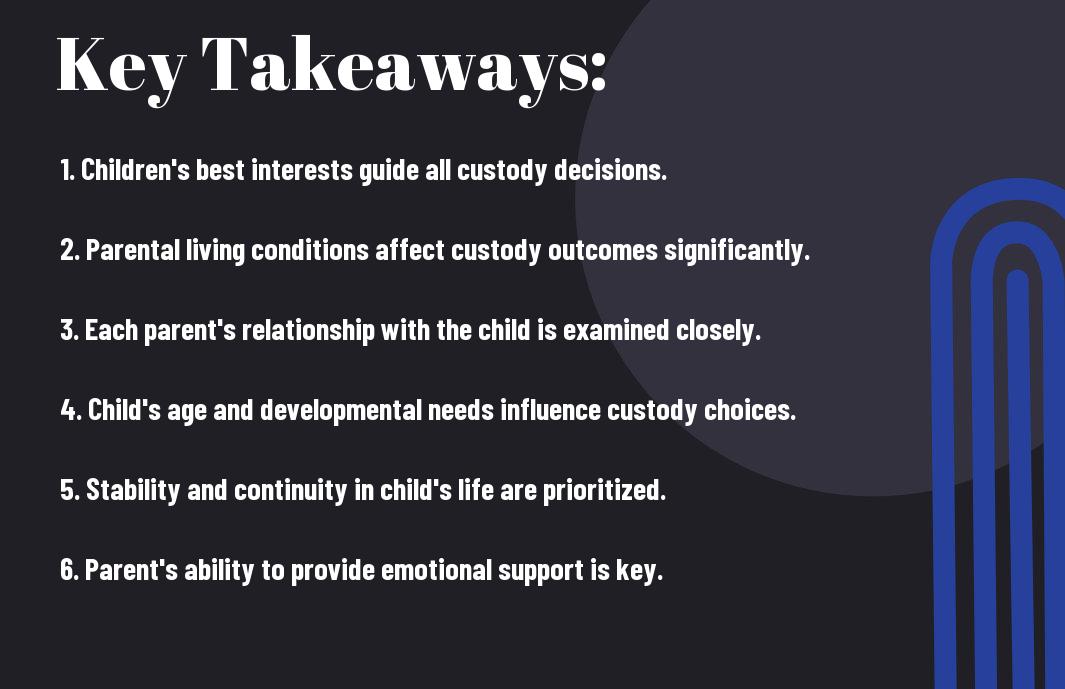
To wrap up
Drawing together the various key factors that judges consider in child custody cases, it’s vital for you to understand how your child’s best interests are assessed. Factors such as the child’s emotional needs, the parents’ living arrangements, and each parent’s ability to provide a stable environment play significant roles in the decision-making process. By being aware of these considerations, you can better prepare yourself and advocate effectively for your child during custody proceedings.