

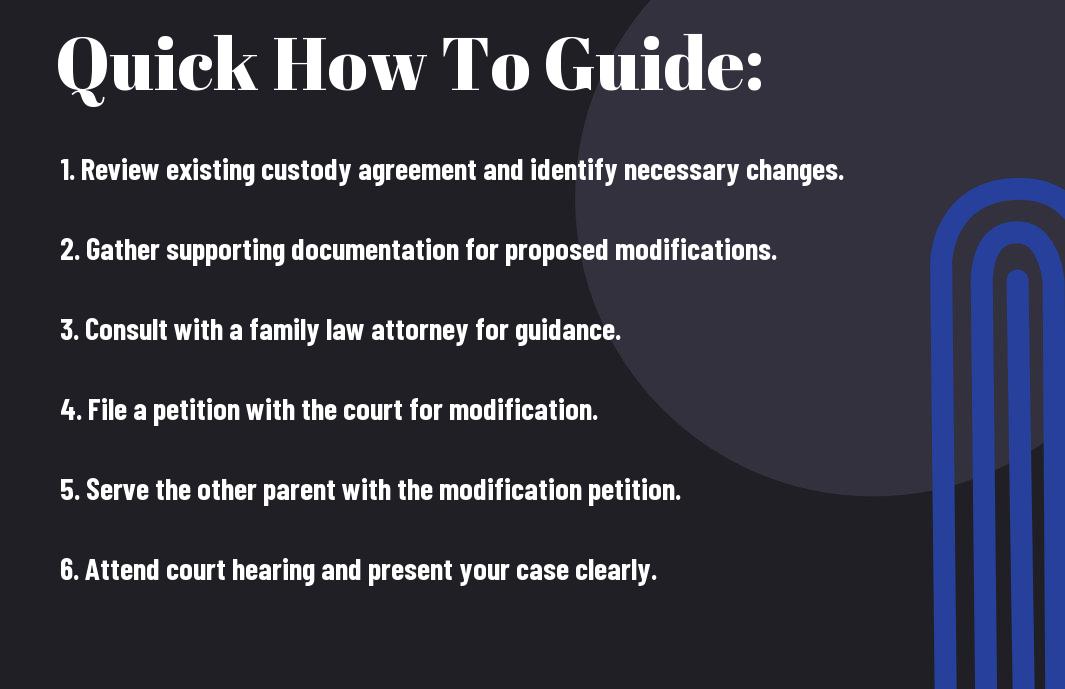
You may find it necessary to modify your child custody agreement due to changes in circumstances or the needs of your child. Understanding the legal process involved is important for ensuring that your modification request is successful. In this guide, we will walk you through the key steps to effectively modify your custody agreement, from gathering supporting documentation to filing the necessary paperwork, helping you navigate the legal system with confidence.

Understanding Child Custody Agreements
A child custody agreement is a legally binding document that outlines the responsibilities and rights of each parent regarding their child’s upbringing. It addresses crucial aspects such as physical and legal custody, visitation schedules, and decision-making authority. Understanding these agreements is vital, as they shape the parenting relationship post-separation or divorce, ensuring that the child’s best interests are prioritized.
The Importance of Custody Agreements
Agreements serve as a guideline for both parents, providing clarity on responsibilities and expectations. They help minimize conflict and misunderstandings, ensuring that the child’s needs are met while enabling both parents to maintain a meaningful relationship with their child. Having a solid custody agreement can also streamline dispute resolution should conflicts arise.
Common Reasons for Modification
Common reasons for modifying a custody agreement include changes in the parent’s living situation, such as relocation, changes in the child’s needs, or a significant alteration in circumstances that affects custody arrangements. Life events like job loss, medical issues, or changes in the child’s schooling can prompt a reevaluation of existing agreements to ensure they continuously serve the child’s best interests.
Understanding these modifications helps you navigate the complexities of custody agreements. Life is dynamic, and circumstances may shift, necessitating updates to ensure that the arrangements remain suitable for everyone involved, especially your child. Whether it’s a new job opportunity, a health concern, or changes in your child’s educational needs, recognizing when adjustments are necessary is vital for maintaining a healthy co-parenting relationship.
How to Initiate a Modification
Even if custody arrangements were finalized in the past, life changes can necessitate adjustments. To initiate a modification of your child custody agreement, you must demonstrate a significant change in circumstances that affects the welfare of your child. This process typically involves filing a petition with the court and providing evidence to support your request for modification.
Assessing Your Circumstances
Circumstances surrounding child custody cases can evolve due to various factors, including changes in employment, relocation, or altered living situations. Assessing your situation thoroughly is necessary to ensure that a modification is justified. Consider how these changes impact your child’s well-being and whether they warrant a review of the existing custody arrangement.
Gathering Necessary Documentation
You must collect relevant documentation that supports your case for modifying the custody agreement. This includes any evidence of changes in circumstances, such as financial records, school reports, and communications with the other parent that signify changes in your relationship or home environment.
Another vital step in gathering documentation is to keep thorough records that illustrate your commitment to your child’s well-being. This might include any relevant photographs, reports from professionals involved in your child’s life, and documentation of your involvement in their education and extracurricular activities. The more organized and comprehensive your evidence, the stronger your case for demonstrating the necessity of modifying the custody agreement will be.
Legal Considerations
Now, when modifying a child custody agreement, it’s imperative to be aware of the legal considerations involved. Understanding these factors can help you navigate the process smoothly and ensure that your modifications align with applicable laws and regulations. You’ll want to approach this matter seriously, as any changes to custody arrangements can significantly impact both you and your child.
Jurisdiction and Venue
Any modification request must be filed in the correct jurisdiction to be considered valid. Typically, this means the court that issued the original custody order will retain jurisdiction unless you or your child have moved to a new state. It’s vital to verify that you are addressing the appropriate court to avoid unnecessary delays in the process.
Filing the Motion to Modify
Venue plays a critical role in filing your motion to modify the custody agreement. You will need to file a formal request with the court, specifying the reasons for the modification and providing evidence that supports your claims. This includes showing how the changes serve your child’s best interests.
Plus, ensuring that you include all necessary documentation and adhere to local court procedures will strengthen your case. You may want to gather supporting evidence, such as witness statements or recent changes in circumstances. Being thorough and organized in your filing can significantly impact how the court views your request.
Factors Courts Consider for Modification
Keep in mind that courts evaluate several factors when considering a modification to a child custody agreement. These include:
- Changes in the child’s needs
- Parental lifestyle changes
- Changes in the location or environment
- Parental relationships
- The child’s safety and well-being
Recognizing these elements can guide your approach when seeking a modification.
Change in Circumstances
Consider that a significant change in circumstances is often required to modify a custody agreement. This can include job loss, relocation, or changes in your living conditions that affect your ability to care for your child.
Best Interests of the Child
With every modification request, your primary focus should be on the best interests of the child. Courts prioritize the child’s emotional, physical, and educational needs in any custody arrangement.
Understanding what constitutes the best interests of the child can significantly influence the outcome of your case. This perspective includes considering the child’s age, health, and emotional attachments, as well as maintaining stability in their life. You need to be prepared to show how the proposed modification benefits your child and supports their overall well-being.
Tips for a Successful Modification Process
Once again, to enhance the chances of a successful custody modification, consider these helpful strategies:
- Gather and present valid evidence for your case.
- Maintain clear and respectful communication with your co-parent.
- Document changes in circumstances that warrant a modification.
- Stay patient throughout the legal process.
Knowing these tips can significantly impact the outcome of your custody modification.
Working with Legal Professionals
With the complexities involved in modifying a child custody agreement, partnering with legal professionals can make a significant difference. Attorneys who specialize in family law will provide you with vital guidance, ensuring that you understand your rights and the requirements for your modification. They can also help you navigate court procedures efficiently.
Preparing for Court Hearings
Tips for preparing for court hearings include organizing your documents and rehearsing your main points. You should also dress appropriately for court and arrive early to alleviate any stress. Being well-prepared demonstrates respect for the judicial process and can positively influence the judge’s perception of your case.
Hearings can be intimidating, but thorough preparation can ease your nerves. Ensure all relevant documents, such as parenting plans and evidence of changed circumstances, are readily organized. Practice presenting your case clearly and confidently, focusing on your child’s best interests. Familiarize yourself with court etiquette and procedures, so you feel more at ease during your appearance in front of the judge.
Post-Modification Steps
Despite successfully modifying your child custody agreement, it’s imperative to follow specific steps to ensure smooth implementation and maintain a positive co-parenting relationship.
Implementing the New Agreement
An effective way to implement the new agreement is to familiarize yourself and your child with its terms, ensuring everyone understands the changes. It may be helpful to create a schedule that outlines any new visitation times or arrangements to ensure clarity moving forward.
Maintaining Communication with Co-Parent
Any successful co-parenting arrangement relies on open lines of communication with your co-parent. Effective dialogue is necessary to navigate changes and address any concerns that may arise after the modification.
Agreement on communication methods can set the tone for your co-parenting relationship. Utilize tools like shared calendars or messaging apps to keep each other updated on schedules, school events, and other important matters regarding your child. Regular check-ins can help forge a cooperative atmosphere and reduce misunderstandings, ultimately benefiting your child’s well-being.
Conclusion
Taking this into account, modifying a child custody agreement involves understanding the legal steps required to ensure your child’s best interests are prioritized. You should gather necessary documentation, consult with legal professionals, and file a formal request with the court. It’s important to articulate substantial changes in circumstances that justify the modification. By following these steps carefully, you can navigate the process effectively and work towards an agreement that reflects your child’s current needs and your parenting situation.