

It’s common for you to wonder whether your child can choose which parent to live with during or after a separation or divorce. The legal landscape surrounding child custody is nuanced and varies significantly by jurisdiction. Understanding the factors that influence custody decisions is crucial, as courts prioritize the best interests of the child over their personal preferences. In this post, you’ll gain insights into the laws that govern custody arrangements and how age, emotional maturity, and circumstances can impact your child’s ability to voice their living preferences.
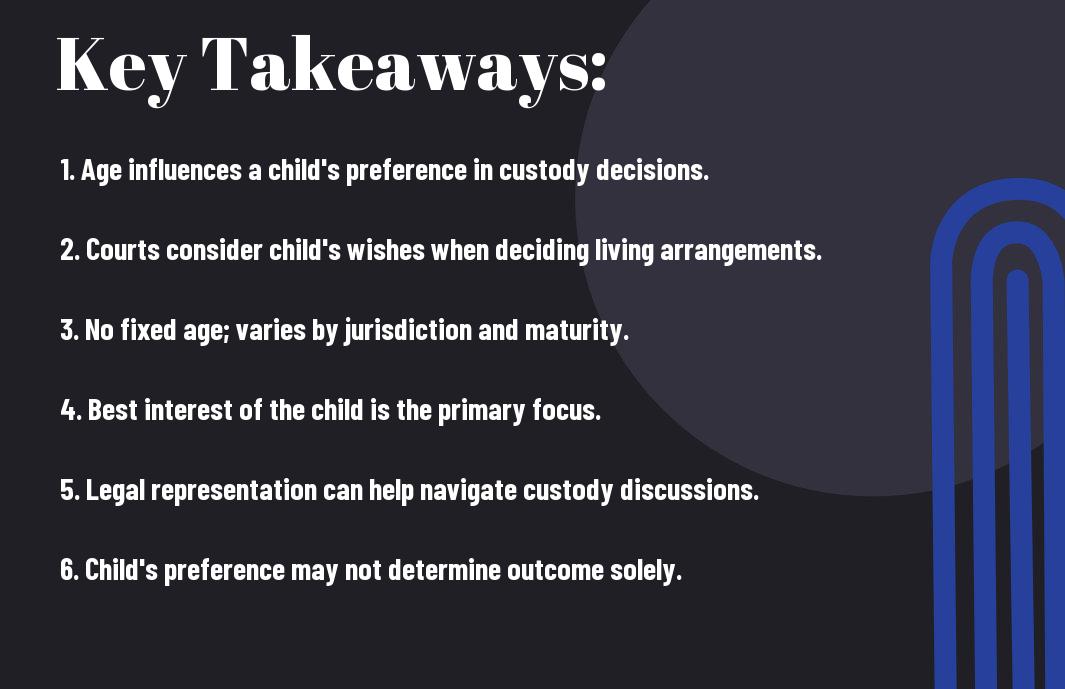

Understanding Custody Arrangements
Your understanding of custody arrangements is necessary when navigating parental separation or divorce. Custody arrangements define the living situation for children and include various terms regarding legal decision-making and physical custody. The arrangements are determined with the child’s best interests at heart, ensuring they maintain a strong relationship with both parents whenever possible.
Types of Custody
Your awareness of the types of custody can help you advocate effectively for your child’s needs. Generally, custody is categorized into two main types:
- Physical Custody
- Legal Custody
Any custody arrangement can be further split into joint or sole custody, providing various living arrangements to cater to your child’s best needs.
| Type of Custody | Description |
| Physical Custody | Where the child lives most of the time. |
| Legal Custody | Authority to make significant decisions for the child. |
| Joint Custody | Both parents share physical and/or legal responsibilities. |
| Sole Custody | One parent holds either physical or legal custody. |
| Split Custody | Children are split between parents in terms of custody. |
Legal Standards for Custody Decisions
Understanding the legal standards for custody decisions is important when determining your child’s living arrangements. Courts prioritize the child’s best interests, often evaluating factors such as emotional ties, safety, and the ability of each parent to provide a stable environment.
Indeed, you should be aware that various states have different legal standards, but common factors considered may include the parents’ living situation, work schedules, and the child’s preferences as they grow older. Courts also look for evidence of a parent’s involvement in the child’s life, their capacity to meet emotional needs, and overall stability. Familiarizing yourself with these standards will empower you to make informed decisions during custody negotiations.
Age Considerations
Clearly, age plays a significant role in determining a child’s ability to express a preference for which parent to live with during custody arrangements. Courts often consider the maturity level of the child, as younger children may not fully understand the implications of their choice, while older children and teenagers generally have a clearer sense of their own needs and desires.
Influence of Age on Decision-Making
Against common belief, merely stating a preference doesn’t guarantee that your wishes will be met. Young children may be more influenced by their immediate emotional attachment rather than rational considerations. As they grow, their understanding of familial dynamics and their personal feelings towards each parent often evolve, affecting their decision-making process.
Legal Age of Preference
Below a certain age, typically around 12 or 14, courts may not place significant weight on a child’s preference in custody cases. This legal guideline varies by jurisdiction, underscoring the importance of consulting local laws when navigating custody arrangements.
Another critical factor to understand is that while older children may have a more defined opinion about their living situation, the law typically requires their wishes to be weighed alongside other factors such as parental fitness and the child’s overall best interest. Familiarizing yourself with local laws regarding the legal age for consideration can help you better prepare for discussions about your child’s desires.
Child’s Wishes in Custody Cases
For many parents navigating custody disputes, understanding how a child’s wishes are considered can be pivotal. Courts often take into account what the child wants when determining custody arrangements, especially as the child matures. While it’s important to acknowledge your child’s feelings, the weight that these wishes carry varies by jurisdiction and the specifics of the case. Always keep in mind that the child’s best interests are the primary focus of any custody decision.
How Wishes Are Evaluated
With the court’s evaluation of a child’s wishes, several factors come into play. Typically, the child’s age and maturity level will influence how much their preference is regarded. Assessments may involve interviews with the child, consultations with mental health professionals, or a review of the child’s interactions with both parents. You should be informed that the court seeks to ensure that the child’s choice is made freely and is not unduly influenced by either parent.
Influence of the Child’s Perspective
The child’s perspective in custody cases can significantly shape judicial outcomes. Courts aim to ensure that a child’s wishes reflect their genuine feelings and not mere temporary preferences. Evaluators may consider the reasons behind a child’s desire to stay with one parent over the other, including emotional bonds and living conditions. Your role in fostering an open dialogue with your child about their feelings can be important, but be cautious not to place any pressure on them to choose.
At times, a child’s perspective can provide valuable insight into their emotional well-being and needs. Understanding what drives their wishes can help you present a clearer picture during custody discussions. Whether they prefer one household over another for reasons such as friendships, school stability, or emotional connections, these elements weigh heavily in court evaluations. Approach this with sensitivity and prioritize your child’s feelings, ensuring that they feel supported in expressing their wishes without fear of repercussions.
Role of the Court
Once again, the family court plays a significant role in determining where a child will live following the divorce or separation of parents. The court aims to ensure a fair process, considering various factors that affect the child’s well-being. Ultimately, a judge will make a decision based on the evidence presented by both parents and any relevant professionals involved in the child’s life.
Assessing Child’s Best Interests
Among the many factors the court considers, the child’s best interests are paramount. This involves evaluating the emotional, physical, and psychological needs of your child. The court may take into account the child’s age, preferences, and the relationship they have with each parent when deciding custody arrangements.
Involvement of Social Services
Social services may be called upon to provide insights and support during custody evaluations.
Child’s services often conduct assessments to gather information about your child’s environment and overall welfare. This may include home visits, interviews, and observations to ensure that both parents can provide a safe and nurturing setting. The findings help the court make informed decisions, ensuring that your child’s needs are met and that they are placed in an environment conducive to their development and happiness.

State Laws and Variations
All states in the U.S. have different laws regarding how a child can choose which parent to live with. These laws can vary significantly, influencing factors like the child’s age, the level of involvement from each parent, and the child’s expressed desires. Understanding your state’s specific statutes is important as they dictate how custody arrangements can be approached and modified over time.
Overview of Different State Approaches
Among the states, some give greater weight to a child’s preferences, especially when the child is older and can articulate their needs. Other states may prioritize the interests of the parents or the overall well-being of the child, potentially limiting the influence of the child’s wishes on custody decisions.
Key Legislative Examples
On the legislative front, your state may have specific laws that clarify when a child’s preference becomes a significant factor in custody arrangements. For example, some states specify an age—typically around 12 to 14—when a child’s preference can be formally considered in custody decisions.
This can have a considerable impact on your custody case. In states like Illinois, children aged 14 or older are allowed to express preferences in custody matters, while in others, the decision may be more nuanced. States like California allow for children over the age of 14 to choose their living arrangements, impacting how judges view custody. Knowing these specific laws helps you understand what to expect as you navigate the complexities of custody decisions, ensuring your child’s voice is heard where legally appropriate.

Practical Considerations for Parents
To navigate the complexities of custody arrangements, it is crucial for you as a parent to recognize the emotional and legal implications of your decisions. Creating a stable environment for your child should be a priority, and that may involve mediation or open discussions with your co-parent. You should consider how your actions impact not only your own interests but also your child’s well-being and relationship with both parents.
Communicating with Children
Practical communication with your child regarding custody is vital. Engage in open conversations about their feelings and preferences, but be mindful of the emotional weight such discussions carry. Be supportive and make it clear that your primary concern is their well-being, ensuring they feel heard without coercion.
Legal Guidance and Resources
By seeking legal guidance, you can better understand your rights and options regarding custody arrangements. Consulting with a family lawyer can provide tailored advice that reflects your specific circumstances.
In fact, having access to legal professionals and resources can significantly streamline the custody process. Many organizations offer workshops and informational sessions that guide parents through custody laws in your jurisdiction. Familiarizing yourself with local resources can equip you to make informed decisions, ensuring that both your and your child’s interests are protected throughout this transition.
Conclusion
With this in mind, it’s crucial for you to understand that while a child may express a preference regarding which parent to live with, the final decision remains in the hands of the courts. Factors such as the child’s age, maturity, and the overall best interest of the child play significant roles in this legal process. It’s advisable for you to consult with a legal professional who can guide you through the complexities of custody arrangements and help ensure that your child’s voice is heard within the framework of the law.