

Interests in your child’s well-being should always guide decisions during custody cases. The ‘Best Interests of the Child’ standard serves as a fundamental framework used by courts to determine custody arrangements that nurture your child’s emotional, physical, and psychological development. Understanding this standard can help you navigate the complexities of custody disputes, ensuring that your child’s needs take precedence throughout the legal process. In this blog post, you’ll learn about the key factors considered under this standard and how you can advocate for your child’s best interests effectively.

Historical Context of the Best Interests Standard
The concept of the Best Interests of the Child standard evolved in response to historical practices that often prioritized parental rights over child welfare. Initially, custody decisions were made based on paternal authority, reflecting societal norms of previous centuries. However, as understanding of child development and rights has progressed, courts began shifting focus to the children’s needs, ultimately emphasizing their emotional and psychological welfare in custody matters.
Evolution of Child Custody Laws
Between the late 19th and early 20th centuries, child custody laws started transforming to reflect changing societal attitudes. Early on, custody often defaulted to fathers, but the influence of the maternal preference arose, especially during the “tender years” doctrine. This shift brought attention to mothers as primary caretakers, leading to more equitable considerations based on the child’s best interests, which have continued to evolve to this day.
Key Legal Precedents
Custody decisions today are heavily influenced by landmark legal precedents that have defined and shaped the Best Interests standard. Pivotal cases, such as the 1970 ruling in “Sullivan v. Sullivan,” highlighted the importance of evaluating a child’s psychological well-being during custody proceedings. These precedents underline the necessity of individual assessments in determining the most suitable living arrangements for children in divorce and separation cases.
To fully grasp the significance of these key legal precedents, you should examine how they have consistently emphasized the child’s welfare over traditional parental rights. Decisions from various jurisdictions have established that the Best Interests standard requires a comprehensive evaluation of each child’s unique circumstances, fostering an understanding of each child’s emotional, educational, and physical needs. This progressive approach guides courts as they seek to ensure that custody arrangements truly serve the child’s overall well-being.

Factors Considered in Determining Best Interests
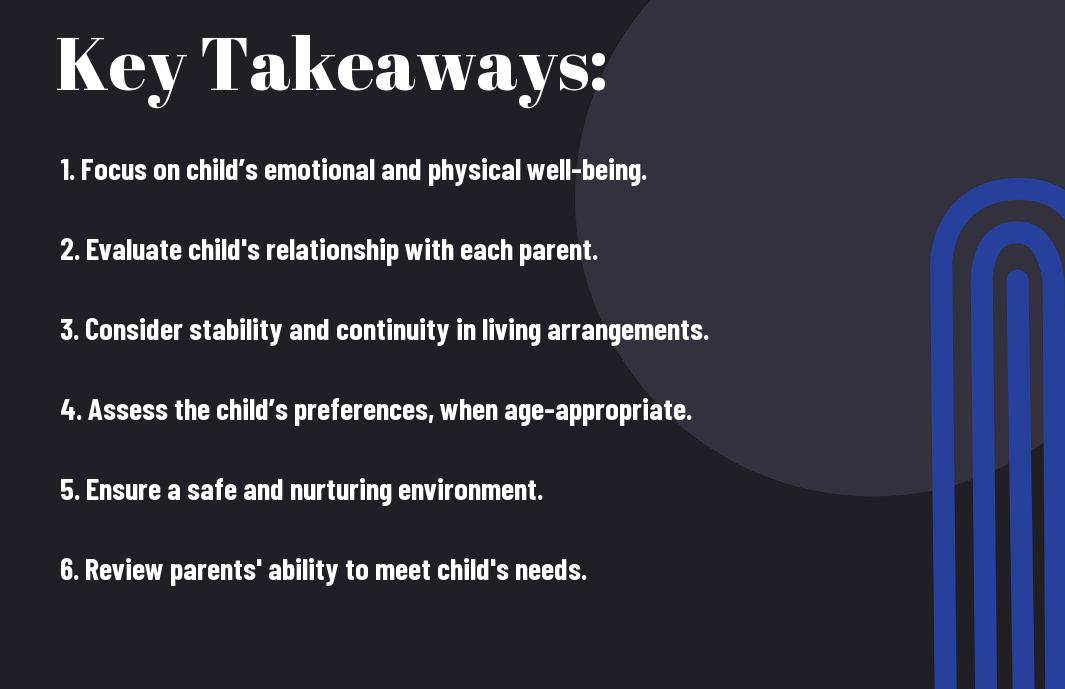
Assuming you are navigating a custody case, the court will evaluate several factors to determine what is in your child’s best interests. These factors typically include:
- Emotional stability of each parent
- Child’s relationships with siblings and extended family
- Parental involvement in the child’s life
- Child’s wishes, depending on age and maturity
- Each parent’s ability to provide a safe environment
This comprehensive evaluation helps ensure that any custody decision prioritizes the child’s well-being.
Emotional and Developmental Needs
Needs must be met for your child’s emotional and developmental well-being. The court will look at how each parent supports these aspects, including providing a stable, nurturing environment, fostering emotional connections, and addressing any specific developmental needs your child may have.
Parental Fitness and Stability
At the forefront of custody considerations is parental fitness and stability. The court assesses each parent’s capability to provide for your child’s emotional and physical needs, including their circumstances, lifestyle choices, and the ability to maintain a consistent routine.
With the focus on parental fitness, the court evaluates various aspects such as mental health, substance abuse history, and both parents’ ability to provide a safe, secure home environment. Stability in employment, housing, and relationships is also taken into account. This holistic approach ensures that your child’s day-to-day life remains positive and nurturing, contributing to their overall development and happiness.

The Role of Children’s Wishes
After a custody dispute arises, understanding your child’s wishes can significantly influence the court’s decision. Family courts increasingly recognize that children’s preferences should be heard and considered during custody proceedings, provided their wishes are expressed in a manner that reflects their genuine feelings. While their desires may not be the sole determining factor, evaluating their perspective can contribute to establishing a custody arrangement that serves their best interests.
Age and Maturity Considerations
On assessing your child’s wishes, the court will consider their age and maturity level. Younger children may have more limited understanding and may voice simplistic desires, while older children and teenagers can articulate more complex sentiments about their living situations. Courts may give greater weight to the opinions of older, more mature children, acknowledging their capacity to understand the implications of their choices.
Weighing Children’s Preferences
Below the surface, weighing your child’s preferences involves balancing their wishes with their emotional and psychological needs. The court will look at how these preferences fit into the broader context of your family’s dynamic and each child’s well-being. Although children’s voices are important, they should be weighed alongside other factors, such as stability, safety, and the ability of each parent to provide a nurturing environment.
Also, consider that children’s preferences may not always align with their best interests. They might be influenced by temporary emotions or struggles with the potential consequences of their choices. Therefore, it’s important to approach these preferences thoughtfully, weighing them against all aspects of their well-being, and guiding them to understand that while their wishes matter, the final decision must prioritize their safety and health in the long run.
The Impact of Domestic Violence and Abuse
Unlike typical custody arrangements, cases involving domestic violence and abuse require a more complex understanding of the best interests of the child. The presence of violence in the home can significantly impact a child’s emotional and physical well-being, leading to critical considerations for safety and stability in custody decisions. Courts prioritize the child’s safety when evaluating custody arrangements and may restrict parental access to protect them from potential harm.
Assessing Safety Risks
Between the complexities of domestic violence and the best interests of the child standard, it’s vital to assess safety risks thoroughly. This includes evaluating the history of violence, the perpetrator’s behavior, and any potential threats to the child’s well-being. Professionals involved in custody cases often collaborate with law enforcement and domestic violence specialists to ensure an accurate assessment of risks and develop an appropriate safety plan.
Long-term Effects on Children
One primary concern in domestic violence cases is the long-term effects on children, which can manifest in various ways, including emotional distress and behavioral issues. Children exposed to domestic violence may struggle with anxiety, depression, and difficulty forming healthy relationships, impacting their development and future social interactions.
To understand the long-term effects on children, consider how exposure to domestic violence can alter their perception of relationships and personal safety. Children may internalize the trauma and exhibit emotional disturbances that hinder their ability to trust others. It is important to recognize that the ramifications of growing up in a violent environment can extend into adulthood, affecting their mental health and future family dynamics. Addressing these issues early through therapy and support is vital for helping children recover and thrive.
Cultural and Societal Influences
Many cultures and societies have varying beliefs about parenting and child-rearing techniques, which can significantly affect custody decisions. The interpretation of a child’s best interests may depend on community norms and values, which can sometimes lead to differing outcomes in custody cases. Understanding these influences is imperative for ensuring that your child’s unique cultural background is respected and taken into account during legal proceedings.
Impact of Family Dynamics
One of the key elements in custody cases is how family dynamics affect your child’s well-being. The relationships among family members, such as siblings and extended family, can play a significant role in determining your child’s best interests. It’s important to consider who your child feels most at ease with and how those connections influence their emotional stability.
Socioeconomic Factors
With socioeconomic circumstances influencing access to resources, stability, and opportunities, these factors must be considered in custody arrangements. Strategies to assess socioeconomic influences might include:
- Evaluating the financial stability of each parent
- Considering the educational background of the parents
- Looking at access to healthcare and community support
Assume that understanding these elements can help you advocate effectively for your child’s best interests.
Due to the impact of socioeconomic factors on a child’s quality of life, it’s imperative to analyze how economic conditions affect your situation. This includes understanding not only your financial health but also how it compares with that of the other parent. Consider these aspects:
- Evaluating potential educational opportunities for your child
- Analyzing living conditions and stability
- Assessing how financial capabilities can affect parenting time and involvement
Assume that your understanding of these socioeconomic influences can greatly affect the court’s perception of your ability to meet your child’s needs.
Case Studies and Real-world Applications
Not every custody case is straightforward. Understanding real-world applications can shed light on how the best interests of the child standard is applied:
- 1. Smith v. Johnson: Awarded custody to mother due to stable environment, resulting in improved grades for child.
- 2. Garcia v. Roberts: Father granted custody after showing better educational opportunities, increasing child’s extracurricular participation by 50%.
- 3. Adams v. Britton: Joint custody awarded after successful co-parenting plan demonstrated, leading to a 30% reduction in child anxiety.
Analysis of Landmark Cases
An examination of landmark cases illustrates how courts interpret the best interests of the child. These cases reveal differing judicial priorities and underscore the importance of various factors such as the child’s emotional needs, stability, and educational opportunities, informing future custody rulings.
Common Misconceptions
On the other hand, many misunderstand how the best interests standard works. You might think it always favors one parent over another, but this is not always the case.
Plus, some believe that the standard prioritizes the wishes of the child. In actuality, while a child’s preferences can be considered, they are just one among many factors. Other elements, such as parental fitness and the child’s safety, are often weighed more heavily. Understanding these misconceptions can guide you in custody discussions and decisions.
Conclusion
From above, it is clear that understanding the Best Interests of the Child standard is vital in navigating custody cases effectively. You must consider various factors such as emotional stability, educational needs, and the child’s relationship with both parents. By prioritizing these elements, you can better advocate for outcomes that support your child’s wellbeing. Keeping informed and proactive will empower you to present a strong case, ensuring that your child’s needs remain at the forefront of custody decisions.