

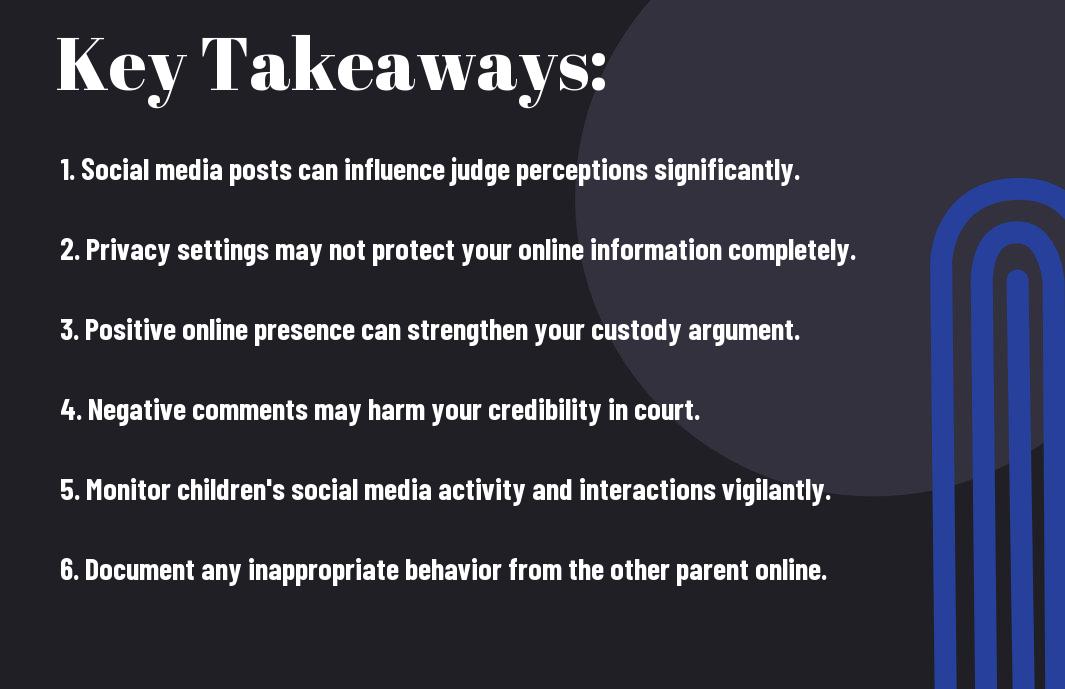
Social media can play a significant role in your child custody case, affecting perceptions and decisions made by the court. As you navigate this challenging process, it’s imperative to understand how your online presence might influence the outcome. Posts, comments, and even photos shared can provide insight into your lifestyle and parenting abilities, which can be scrutinized during custody evaluations. Being mindful of what you share online can help protect your interests and ensure that your focus remains on the welfare of your child.
Understanding Child Custody
Your child custody case can be a complex process that requires an understanding of the different types and factors at play. It’s necessary to know the distinctions in custody arrangements and what influences decisions in your favor.
Types of Custody Arrangements
Your understanding of custody arrangements will help you navigate your case more effectively. Here are the main types:
- Legal Custody: The right to make major decisions about a child’s life.
- Physical Custody: Where the child resides primarily.
- Sole Custody: One parent has full responsibility and rights.
- Joint Custody: Both parents share rights and responsibilities.
- Visitation Rights: Schedule for non-custodial parent to spend time with the child.
This understanding can guide your approach throughout the custody process.
| Custody Type | Description |
| Legal Custody | Rights to make important decisions. |
| Physical Custody | Where the child lives primarily. |
| Sole Custody | One parent has full custody rights. |
| Joint Custody | Both parents share custody responsibilities. |
| Visitation Rights | Allowed time for a non-custodial parent. |
Factors Influencing Custody Decisions
Beside understanding the arrangements, recognizing the factors influencing custody decisions is key. Courts typically consider:
- Child’s age and health.
- Parental living situation.
- Emotional ties between the child and each parent.
- Each parent’s ability to provide for the child.
- Parental cooperation and willingness to support the child’s relationship with the other parent.
Perceiving these factors can help you present your case more effectively.
This understanding of factors will allow you to better prepare your case. Additionally, the following considerations may come into play:
- History of domestic violence.
- Substance abuse issues.
- Child’s preference when age-appropriate.
- Parental involvement in the child’s education and activities.
- Possible relocation of a parent.
Perceiving these influences ensures you advocate for your child’s best interests effectively.
The Role of Social Media in Legal Proceedings
Some parents may not realize how significantly social media can influence their child custody case. Courts can consider your online presence and activities as part of their evaluation of your suitability as a custodian. The content you share could be interpreted in various ways, and it may even become evidence that affects the outcome of your case.
Gathering Evidence
One of the primary ways social media impacts your custody case is through the gathering of evidence. Your posts, photos, and interactions can be scrutinized and used to support claims or counterarguments in court. It’s vital to be mindful of what you share online, as it may all be accessible to the opposing party.
Impact on Perception
Evidence from social media can shape how judges and legal professionals perceive you. What you post may evoke assumptions about your character and parenting abilities, whether positive or negative. This perception can directly influence their decisions regarding custody arrangements.
This means that the photos, comments, and even your friends’ posts may cast a light on your lifestyle, emotional state, or relationships with children—elements that could be taken into account during proceedings. It’s important for you to curate your online image carefully and be aware of how it may resonate with legal authorities evaluating your case.

Positive Uses of Social Media in Custody Cases
After navigating the challenges of a custody dispute, social media can serve as a beneficial tool in presenting your case. By sharing meaningful moments with your child online, you can demonstrate your active involvement in their life. This visual evidence can positively influence how the court perceives your parenting capabilities and commitment to your child’s well-being.
Documenting Engagement and Responsibility
With social media, you have the ability to document your daily interactions with your child, showcasing events such as family outings, school activities, and shared interests. This authentic representation of your parenting can serve as valuable evidence in demonstrating your dedication and emotional support in a court setting.
Building a Support Network
At the same time, social media allows you to cultivate a supportive community that can aid you throughout your custody case. By connecting with friends, family members, and other parents, you can create a network that offers emotional reassurance, advice, and assistance during this challenging time.
In addition, engaging with your support network on social media can provide helpful insights from those who have been through similar experiences. This guidance can empower you to navigate your custody case more effectively, ensuring that you feel less isolated and more equipped to handle the emotional and legal challenges of child custody. Being part of a community that understands your struggles can make a significant difference in your overall well-being during this period.

Negative Consequences of Social Media Activity
Once again, your social media presence can significantly impact your child custody case. Attorneys and judges often scrutinize your online activity for insights into your character and parenting capability. Negative posts or careless interactions can lead to misinterpretations that may weaken your case, ultimately affecting custody decisions. Being aware of how your online behavior may be perceived is crucial in the context of a custody battle.
Incriminating Posts
Between sharing questionable photos or venting frustrations about your ex, you might unknowingly post content that damages your case. Courts can view these posts as reflective of your parenting abilities and may influence their decisions regarding custody and visitation rights.
Misinterpretation of Content
Above all, the nuanced nature of social media means that your posts can be easily misinterpreted. What you intend as harmless or humorous may be perceived as irresponsible or damaging by others, including judges and attorneys.
At any point, consider how your words and images can be taken out of context. A seemingly benign post could be twisted to paint you in a negative light. Therefore, always think twice before posting, even if your intention seems innocent. This precaution can help you safeguard your credibility and better your chances in an already challenging custody case.
Privacy Settings and Their Importance
Keep your social media profiles secure by adjusting privacy settings. This ensures only trusted friends and family can view your posts. During a child custody case, anything you share publicly can be scrutinized, potentially impacting the outcome. By maintaining tight control over who sees your content, you can minimize the risk of damaging information reaching the opposing party.
Managing Online Presence
Below are several steps you can take to manage your online presence effectively. Regularly audit your social media profiles and remove any posts that could be misinterpreted. Be mindful of the images you share, as they can create a narrative about your lifestyle and parenting abilities. Lastly, consider using pseudonyms or limiting your friend list to safeguard sensitive information.
Legal Implications of Public Posts
Among the many areas of concern in a child custody case is the legal impact of your public posts. Any remarks or images shared online can be presented as evidence, possibly influencing the court’s perception of your character and parenting. It is vital to understand that seemingly harmless posts could be twisted to fit a particular narrative against you.
Plus, anything you post online can potentially be used against you in court. Courts may interpret your social media activity as a reflection of your parenting skills or lifestyle choices. For instance, photos depicting irresponsible behavior or inflammatory statements can raise red flags. Always consider how your online activity aligns with your goals in a custody case to avoid unintended consequences.

Best Practices for Social Media Use
For parents navigating a child custody case, being mindful of social media activity is necessary. You should aim to maintain a professional online presence, avoid heated discussions about your case, and think carefully before sharing any content that could be misinterpreted. Protecting your privacy and being strategic about what you post can help shield your custody case from the pitfalls of social media.
Guidelines for Parents
Best practices for social media use include regularly reviewing your privacy settings, limiting what you share publicly, and refraining from discussing your parenting situation or custody battle online. Sharing positive aspects of your life may be beneficial, but it’s necessary to be thoughtful and aware of how your posts may be perceived during your case.
When to Take a Step Back
Above all, there are times when you should consider stepping back from social media entirely. If tensions are high or you’re feeling overwhelmed, it may be wise to unplug to avoid potential pitfalls that could negatively impact your case.
This decision can help you maintain your emotional well-being and avoid impulsive posts that may harm your credibility in court. Taking a break allows for reflection and gives you the space to focus on your legal strategy without the distractions and pressures of social media interactions. Prioritizing your mental state during this time may lead to better outcomes in your custody case.
To wrap up
Upon reflecting on how social media can impact your child custody case, it’s clear that your online presence and interactions can significantly influence legal proceedings. You should be mindful of the content you share and the interactions you engage in, as these can be scrutinized in court. It’s advisable to maintain a positive and responsible image on social platforms, ensuring that your actions and posts align with your parenting abilities. By being deliberate in your online conduct, you can better protect your interests in custody matters.