

There’s no denying that your child’s opinion can significantly impact custody decisions during divorce proceedings. Courts take into account your child’s preferences when determining the living arrangements that serve their best interests. Understanding how these preferences are evaluated can empower you in your custody case, guiding your approach to discussions and negotiations. This blog post will explore the factors that influence how your child’s voice is heard in court, giving you valuable insights into this important aspect of custody laws.
Understanding Custody Decisions
The custody decisions made by the court are heavily influenced by various factors, including the child’s best interests. Understanding these decisions helps parents navigate the complex landscape of family law and advocate effectively for their child’s welfare.
Types of Custody Arrangements
The different types of custody arrangements can significantly impact how a child’s needs are met post-divorce. Common arrangements include:
- Physical Custody
- Legal Custody
- Joint Custody
- Sole Custody
- Visitation Rights
After the arrangement type is determined, it’s necessary to ensure that it supports your child’s emotional and physical well-being.
| Type of Custody | Description |
| Physical Custody | Where the child lives on a day-to-day basis. |
| Legal Custody | Parents’ right to make decisions regarding the child’s upbringing. |
| Joint Custody | Shared responsibility and parenting time between both parents. |
| Sole Custody | One parent has both physical and legal custody. |
Legal Framework Governing Custody
After understanding the types of custody, it’s vital to be aware of the legal framework that governs these decisions. Family courts consider various legal guidelines and state laws when determining custody arrangements.
At the heart of the legal framework are statutes and case law that prioritize the best interests of the child. Courts often evaluate factors such as the emotional and physical well-being of the child, the relationship between the child and each parent, and any history of abuse or neglect. By familiarizing yourself with these laws, you can better prepare yourself for discussions and decisions regarding custody. Understanding the legal context also empowers you to advocate effectively for your child’s needs during custody proceedings.
The Role of Child’s Preference
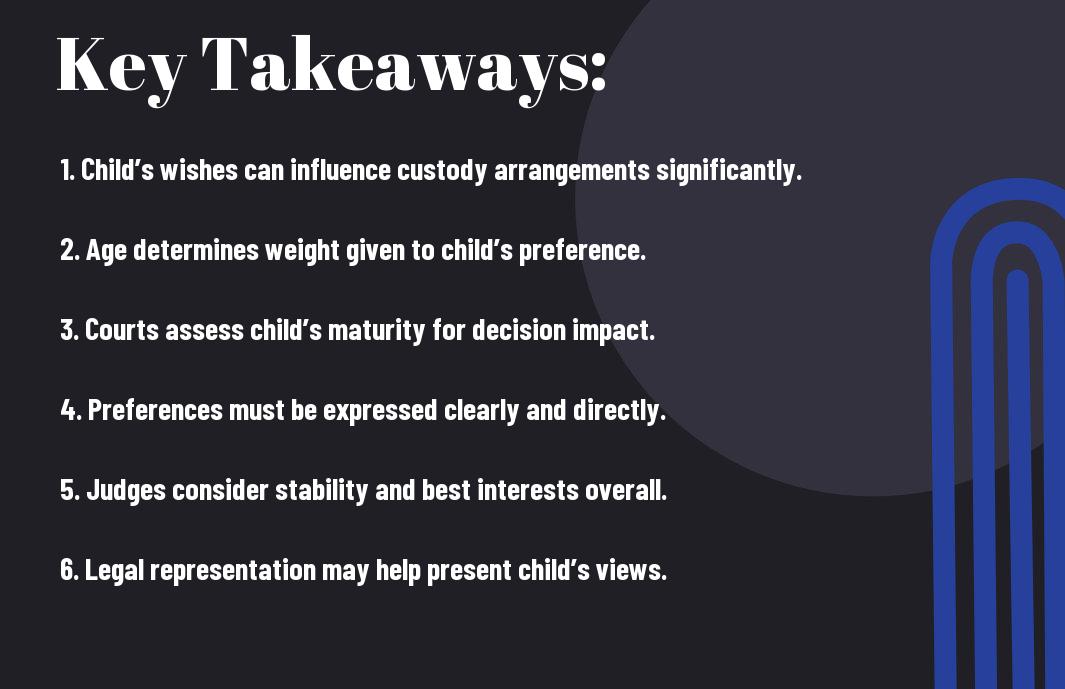
There’s a growing recognition in family courts that a child’s preference can significantly influence custody decisions. Courts increasingly aim to honor the wishes of children as they mature, especially when those preferences are clear and well-articulated. Understanding how your child’s voice impacts custody arrangements may empower you in navigating the complexities of custody disputes.
Age Considerations
To evaluate a child’s preference, courts often consider their age and maturity level. Younger children may not possess the emotional understanding to express their wishes appropriately, while teens might have more clearly defined preferences. Therefore, your child’s developmental stage is necessary in understanding how much weight their input will carry in the custody decision process.
Emotional and Psychological Impact
Along with age, the emotional and psychological impact of a child’s preferences on custody arrangements can be profound. A child’s feelings about living with one parent over the other may shed light on their emotional well-being and overall stability.
But it’s vital to approach this aspect with caution. Honoring a child’s preference should be balanced with their emotional health and the reality of their environment. Decisions driven solely by what your child wants can lead to unintended consequences, such as feelings of guilt or emotional turmoil. It’s necessary to ensure that their best interests are served, considering both their wishes and the overall family dynamics to support their well-being as they navigate this challenging situation.

How Courts Evaluate Child’s Preference
Despite the importance of a child’s preference in custody cases, courts thoroughly evaluate various factors before making a decision. Judges consider the child’s age, maturity, and understanding of the situation, as well as the overall context of the family dynamics. The child’s expressed wishes can influence the outcome, but they remain just one piece of the puzzle in determining the best interests of the child.
Factors Influencing Judicial Decisions
Besides a child’s preference, several factors influence judicial decisions regarding custody arrangements:
- The child’s age and maturity level
- The psychological and emotional needs of the child
- Parental fitness and ability to provide support
- The potential impact of the custody arrangement on the child’s wellbeing
After evaluating these factors, courts strive to arrive at a decision that serves the child’s best interests.
Weight Given to Child’s Testimony
Weight given to a child’s testimony can vary significantly depending on several factors in custody hearings.
Consequently, the court will assess the reliability of the child’s testimony, taking into account their emotional maturity and understanding of the situation. Courts often view the testimony of older, more mature children as more credible. However, the context in which the child expresses their preferences, including any influence from parents or other adults, can affect how much weight is assigned. This nuanced approach ensures that the court considers the child’s voice while also protecting their emotional and developmental needs.
The Influence of Parental Behaviors
Your actions and attitudes as a parent can significantly impact custody decisions. Courts often evaluate the behavior of each parent, as it reflects on their capability to provide a stable and nurturing environment for the child. Specifically, how you interact with your child and your ex-partner can influence the court’s perception of your suitability as a custodian, ultimately shaping your child’s preferences and well-being.
Parental Alienation
About parental alienation, it’s important to understand that it refers to a scenario where one parent undermines the other in the eyes of the child, creating a barrier to a healthy relationship. This detrimental behavior can strongly influence a child’s feelings and preferences during custody proceedings, making it vital to foster a supportive environment where the child feels free to express their emotions about both parents.
Positive Support for Child’s Voice
For a child’s preferences to be regarded effectively in court, your encouragement of their voice is paramount. By actively listening to your child’s opinions and feelings regarding custody arrangements, you create a supportive atmosphere that empowers them. This positive reinforcement can help the court recognize the child’s authentic desires and needs, reflecting their best interests in decisions made.
Plus, facilitating open and honest communication with your child about their feelings can lead to more informed decisions in court. When children feel that their voices matter, they are more likely to express their preferences candidly, which can play a significant role in influencing custody outcomes. By showing that you value their opinions, you not only build trust but also demonstrate your commitment to their emotional well-being, which courts consider favorably. This approach lays the groundwork for a healthier co-parenting relationship, underscoring the significance of their perspective in custody matters.
Case Studies and Precedents
Many legal cases illustrate how a child’s preferences can influence custody decisions. Here are some notable examples:
- Smith v. Doe (2015): A 12-year-old girl voiced her preference to live with her mother, leading to custody modification.
- Johnson v. Johnson (2017): A 10-year-old boy’s desire to stay with his father was upheld, impacting visitation rights.
- Williams v. Williams (2020): A 15-year-old expressed a strong preference for split custody, which the court granted.
- Anderson v. Anderson (2021): A 9-year-old’s opinion played a significant role, resulting in joint custody arrangements.
Notable Court Cases
Across various jurisdictions, numerous court cases have highlighted how child preferences can sway custody rulings. In some instances, testimony from children has been pivotal in determining living arrangements, illustrating that courts often take these preferences seriously, particularly as children grow older and can articulate their wishes more clearly.
Trends in Custody Decisions
Around the country, there is a noticeable trend where courts increasingly consider a child’s voice in custody disputes. This focus reflects a societal shift toward recognizing children as individuals with their own rights and opinions.
Another shift is the growing acknowledgment that older children and adolescents possess the maturity to express their preferences. Courts are beginning to weigh these preferences more heavily, particularly when children can substantiate their feelings with reasonable explanations. This trend signals an evolving understanding of children’s agency in decisions affecting their lives, emphasizing the importance of fostering environments where their voices are heard and respected.
Preparing for a Custody Hearing
All aspects of your preparation for a custody hearing can significantly impact the outcome. This includes gathering evidence, documenting interactions with your child, and refining your arguments for why your custody preference aligns with your child’s best interests. The more organized and prepared you are, the better equipped you will be to present your case effectively in court. It’s important to approach this process with diligence and clarity to represent yourself and your child’s needs adequately.
Strategies for Parents
With a solid strategy, you can strengthen your position in the custody hearing. Consider creating a detailed parenting plan that outlines your involvement in your child’s life, including education, healthcare, and extracurricular activities. Additionally, maintain open communication with your child and establish a support system involving family and friends. Document your routines and maintain a positive relationship with your co-parent where feasible, as this can reflect well on you during the hearing.
Importance of Legal Representation
Against navigating the complexities of custody laws on your own can lead to oversights that may affect your case negatively. Legal representation ensures that your rights are protected and that you understand the legal framework surrounding custody arrangements. Having an attorney familiar with these matters can provide guidance and increase your chances of achieving the custody outcome you desire.
Also, a knowledgeable attorney can help you gather necessary documentation, prepare for hearings, and strategize the best approach for your case. Legal representation can also assist in negotiating settlements and mediating conflicts with your co-parent, potentially leading to a more amicable resolution. Overall, having a legal expert by your side can significantly enhance your ability to advocate for your child’s best interests in custody decisions.
Summing up
Following this, understanding how your child’s preferences influence custody decisions can empower you in legal proceedings. Courts often consider the child’s wishes, especially as they mature, which can impact the judge’s decision regarding parental custody. By fostering open communication with your child and ensuring their voice is heard, you play a vital role in shaping the outcome of custody arrangements. Ultimately, focusing on your child’s best interests will contribute not only to a favorable legal position but also to a healthier family dynamic moving forward.