

Just because you have a custody order in place doesn’t guarantee that the other parent will comply with it. If you find yourself facing violations of this order, it’s vital to understand the legal steps you can take to protect your rights and your child’s well-being. This blog post will guide you through the important actions you can pursue to enforce the custody order effectively, ensuring that you stay informed and empowered in these challenging situations.
Understanding Custody Orders
At the core of family law, custody orders outline the rights and responsibilities of parents concerning their children. These legal documents dictate where the child will live and how important decisions regarding their upbringing will be made. Comprehending the specific terms of your custody order is vital, as it ensures that you remain compliant and can effectively address any violations that may occur.
Types of Custody Orders
- Physical Custody – Designates where the child lives.
- Legal Custody – Grants the right to make decisions about the child’s welfare.
- Joint Custody – Shared responsibility and time between parents.
- Sole Custody – One parent has full rights and responsibilities.
- Visitation Rights – Specifies when the non-custodial parent can see the child.
This framework establishes the foundation for parenting arrangements.
| Type of Custody | Description |
| Physical Custody | Where the child resides |
| Legal Custody | Decision-making authority |
| Joint Custody | Shared parenting time |
| Sole Custody | Single parent authority |
| Visitation Rights | Access details for the non-custodial parent |
Importance of Compliance
Behind every custody order lies the expectation that both parents will adhere to its terms, facilitating a stable environment for the child. When compliance is upheld, it fosters healthy co-parenting relationships and prioritizes the child’s well-being. Violations can lead to legal ramifications and deteriorate the parenting dynamic.
Hence, following the custody order is not only a legal obligation but also a moral duty that ensures your child’s best interests are maintained. Abiding by these terms helps create a predictable and supportive atmosphere for your child, minimizing disruption and distress in their life. You should always prioritize adherence to the order to prevent potential conflicts and foster cooperation with the other parent.
Identifying Violations of Custody Orders
Some violations of custody orders can be clear-cut, while others may require closer scrutiny. Understanding how to identify these infractions is imperative for protecting your parental rights and ensuring compliance with the court’s directives. It is important to stay vigilant and recognize behaviors that may not align with the terms outlined in the custody order.
Common Ways Custody Orders Are Violated
Among the frequent violations of custody orders are denying visitation rights, failing to follow the agreed-upon parenting schedule, and exposing the children to unsuitable environments. These actions can negatively impact the child’s well-being and undermine the order established by the court.
Documenting Violations
Above all, effective documentation of any violations is imperative for pursuing enforcement actions. Keeping detailed records of incidents can significantly strengthen your case when addressing violations of custody orders.
With careful documentation, you can track dates, times, and specifics of each violation, creating a comprehensive log that demonstrates a pattern of non-compliance. Include any communication with the other parent regarding issues, such as emails, texts, or notes from conversations. Additionally, gather any witness statements or evidence, such as photographs or recordings, that support your claims. The more thorough your documentation, the stronger your position will be when seeking legal recourse.
Legal Steps to Take
Many parents face challenges when the other parent violates a custody order. Taking appropriate legal steps can help you enforce the terms of the agreement. From communication to mediation and filing a motion for enforcement, these actions ensure that your rights and your child’s best interests are prioritized in the co-parenting relationship.
Communication with the Other Parent
Besides seeking formal actions, initiating open communication with the other parent can often resolve issues amicably. Expressing your concerns and discussing the situation with them might lead to a mutual understanding, benefiting both parties and your child.
Seeking Mediation
Around many families, mediation serves as a practical solution to resolve custody disputes. By engaging a neutral third party, you can foster a constructive dialogue and focus on finding compromises that respect the custody order and promote cooperation.
Mediation provides a platform for both parents to voice their concerns in a safe environment. The mediator facilitates discussions and helps you both identify solutions that might work for your family. This process can be less stressful and less expensive than going to court, making it an appealing option for many parents facing custody challenges.
Filing a Motion for Enforcement
By taking the legal route, you can file a motion for enforcement in court if communication and mediation fail. This formal legal action prompts the court to address the violation and may lead to remedies or sanctions against the non-compliant parent.
Enforcement measures can include court orders requiring compliance, modification of custody arrangements, or even penalties for contempt of court. Having solid documentation of the violations and any previous communication attempts can strengthen your case, ensuring the court effectively addresses the issues at hand.
Court Proceedings
All enforcement actions of a custody order generally lead to court proceedings where you have the opportunity to present your case. If the other parent violates the custody agreement, you may need to file a motion with the court to seek enforcement. The court will review the evidence provided, so it’s important to follow the correct legal processes to ensure your concerns are addressed appropriately.
Preparing for Court
Preparing for court involves gathering all relevant documentation, such as your signed custody order, communication records, and any evidence that supports your claim of violation. You should also consider outlining your arguments clearly to present your case effectively. Familiarizing yourself with courtroom procedures will bolster your confidence and help convey the seriousness of the situation to the judge.
What to Expect During Hearings
Any time you attend a hearing, it’s important to be prepared for questioning and to understand the courtroom’s formal environment. You will have the chance to present your evidence and explain how the other parent’s actions have impacted your custody rights. The judge will also hear the other parent’s perspective before making a decision.
Hearings can vary in length and complexity, depending on the case’s specifics. You may be asked to answer questions from the judge, and both parents may be permitted to speak. It’s important to remain calm and composed, focusing on providing factual information without becoming emotional. The judge will assess all evidence presented and make a ruling based on the best interests of the child involved, so be prepared to clearly articulate your concerns and the impact on your child’s welfare.
Possible Outcomes
After enforcing a custody order, the court can determine various outcomes based on the specific circumstances of the violation. Potential results may include restoring the original custody arrangement, awarding make-up time, or even altering parenting time. In some cases, the court may impose penalties on the violating parent, ensuring compliance with future orders to protect the children’s best interests.
Remedies Available to the Court
Below are several remedies that the court may consider to address violations of custody orders. These can include enforcing compliance through court orders, requiring make-up visitation time, or imposing fines. Courts can also implement supervised visitation if deemed necessary to ensure a child’s safety. The remedies will largely depend on the nature of the violation and its impact on the child.
Modifications to Custody Orders
Along with addressing violations, you can seek modifications to custody orders if there have been significant changes in circumstances that warrant a reassessment. Such changes might include a parent’s relocation, a change in employment, or concerns regarding a child’s well-being. When pursuing a modification, you will need to demonstrate how these new circumstances directly affect the best interests of your child.
It is important to gather supporting evidence when requesting modifications to custody orders. The court will evaluate the presented information, your child’s needs, and whether the proposed changes serve their best interests. If successful, modifications can lead to new arrangements that better suit your family’s current situation, ultimately enhancing your child’s welfare and stability.

Preventative Measures
Keep in mind that actively taking preventative measures can significantly reduce the likelihood of custody order violations. Establish clear expectations regarding parenting responsibilities and schedules, while ensuring both you and the other parent understand the importance of abiding by the court’s decision. By fostering a cooperative relationship, you can create a more stable environment for your child and minimize potential conflicts.
Strategies to Avoid Future Violations
On maintaining open lines of communication can help prevent misunderstandings and violations of custody orders. Regularly discuss schedules and any changes in circumstances to ensure both parents are on the same page. Additionally, utilizing shared calendars can help track important dates, keeping everyone informed.
Importance of Clear Communication
One effective way to prevent future violations is to establish clear communication between you and the other parent. Being proactive in discussing your child’s needs, schedule changes, and any concerns can foster a collaborative approach to co-parenting.
But if communication breaks down, misunderstandings can arise, leading to potential conflicts over the custody order. Address any issues promptly and openly, encouraging an atmosphere of trust and respect. By doing so, you help create a cooperative parenting environment, reducing the possibility of violations and ensuring your child’s well-being remains the top priority.
Conclusion
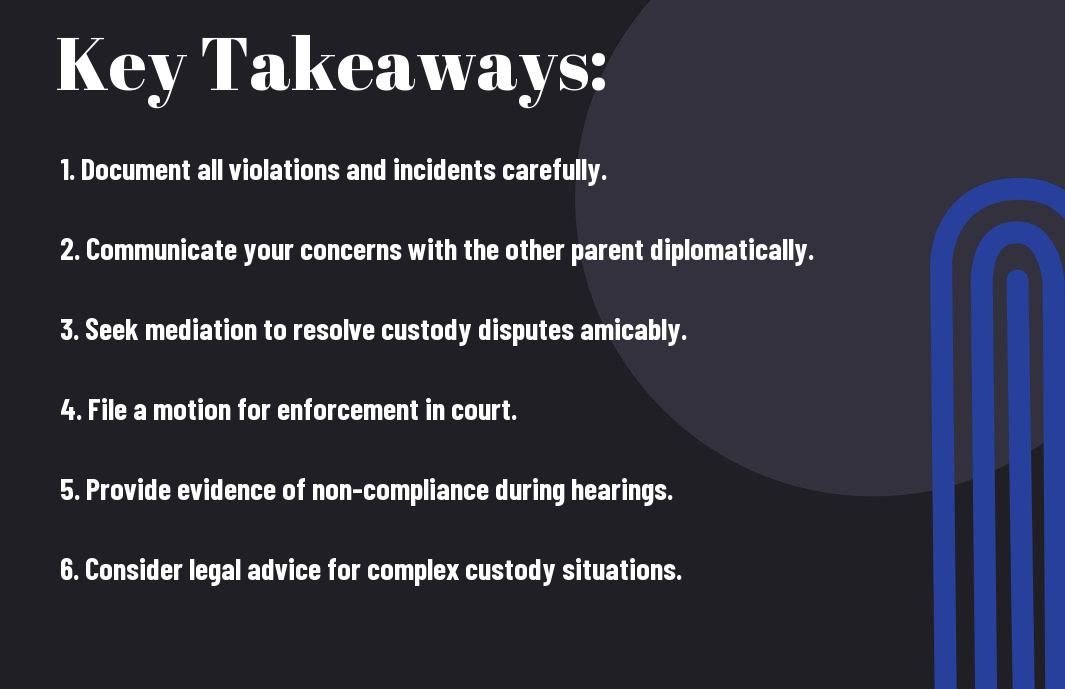
Summing up, if you find that the other parent is violating your custody order, it’s important to take action to protect your rights and your child’s best interests. Start by documenting any violations, then communicate with the other parent to address the issue. If necessary, seek legal advice or consider filing a motion with the court to enforce the order. Staying proactive and informed about your options will help you navigate this challenging situation effectively, ensuring that you uphold the custody agreement in place.