

It’s vital to understand how child support influences custody agreements when navigating the complexities of co-parenting. As you enter this process, you may find that child support not only affects financial responsibilities but also plays a significant role in determining custody arrangements. By grasping the interplay between these elements, you can better advocate for your interests and ensure a balanced approach that prioritizes your child’s well-being. This guide will provide you with valuable insights to navigate child support and custody effectively.
Understanding Child Support
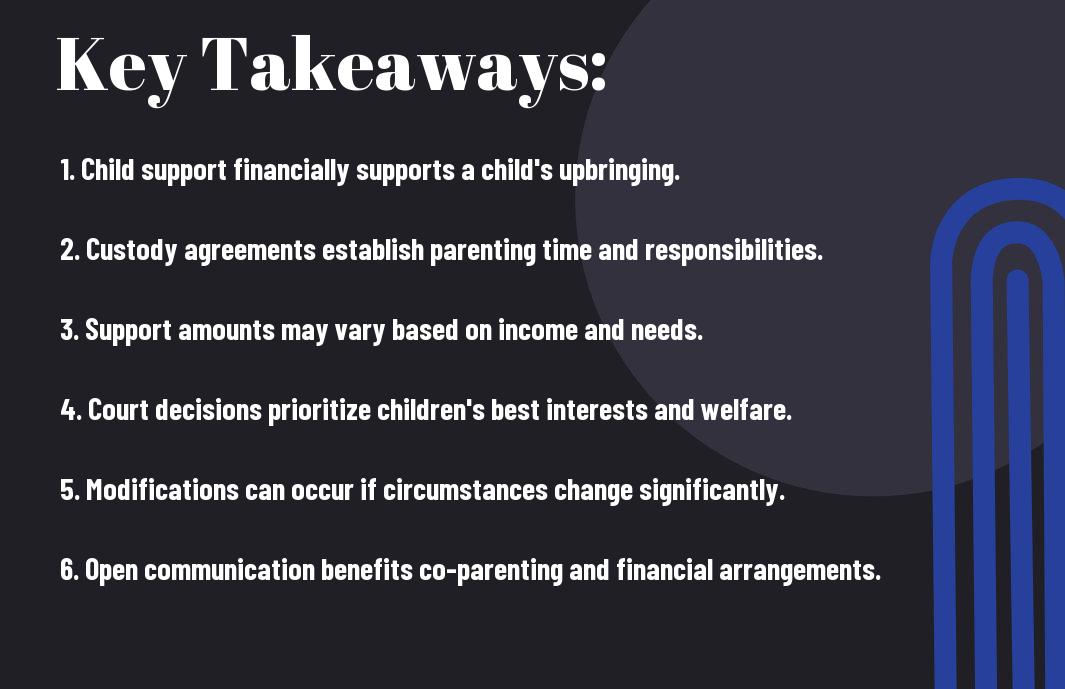
Your understanding of child support is fundamental in navigating custody agreements. It serves as a financial plan designed to meet your child’s basic needs, including education, healthcare, and daily living expenses. Your awareness of child support will empower you to ensure that your child receives the necessary resources for their growth and well-being during and after a separation or divorce.
Definition of Child Support
Below is a clear definition of child support: it is a legal obligation for one parent to provide financial assistance to the other parent, primarily for the upbringing of their child. This financial support can cover expenses related to food, shelter, clothing, and healthcare, ensuring that your child’s needs are consistently met despite changes in family dynamics.
Importance of Child Support in Custody Agreements
On recognizing the importance of child support within custody agreements, you will appreciate how it helps establish a stable environment for your child. Child support ensures that the custodial parent has the necessary funds to provide for the child’s everyday needs, fostering a nurturing environment that promotes your child’s emotional and physical well-being.
Hence, understanding the importance of child support in custody agreements extends beyond mere financial transactions. It represents a commitment between parents to prioritize their child’s welfare and needs. When both parents actively participate in fulfilling this obligation, it creates a cooperative co-parenting dynamic. This balance significantly reduces conflict and lays down a solid foundation for your child’s development, encouraging a harmonious co-parent relationship critical for their adjustment during this transition. By prioritizing child support, you help secure your child’s future.
Legal Framework
You need to understand that child support is governed by specific laws that ensure both parents contribute to their child’s upbringing, regardless of custody arrangements. These laws vary by state and typically focus on the child’s best interests, taking into consideration factors such as income, expenses, and overall family dynamics. Familiarizing yourself with the legal framework can help you navigate your responsibilities and rights effectively.
State Regulations and Guidelines
At the state level, regulations and guidelines dictate how child support is calculated and enforced. Each state has a unique formula that considers factors such as income, the number of children, and parenting time. By examining your state’s guidelines, you can gain clarity on what to expect in terms of support amounts and modifications.
Enforcement of Child Support Orders
With child support orders established, enforcing them becomes imperative for ensuring that the financial needs of your child are met consistently. Each state has mechanisms in place to facilitate enforcement, which may include wage garnishments and tax refund intercepts to secure owed payments.
And if a non-custodial parent fails to comply with child support orders, various legal actions can be initiated. This might involve seeking changes in custody arrangements or even pursuing legal sanctions against the non-payer. Understanding these enforcement options not only protects your finances but also reinforces the importance of supporting your child’s needs. In situations where compliance is lacking, seeking legal advice can provide you with the strategies necessary to take effective action.
Impact on Custody Arrangements
To understand how child support influences custody arrangements, it is imperative to recognize that financial contributions can directly impact the living conditions and emotional well-being of the child. When both parents fulfill their financial obligations, it can lead to a more stable and supportive environment, which is a fundamental aspect of custody agreements. This stability can often sway the court’s decisions regarding custody arrangements, ensuring that the best interests of the child are prioritized.
Financial Stability for the Child
Behind every custody agreement lies the need for financial stability, which plays a significant role in securing the welfare of your child. Adequate child support allows your child to have access to necessary resources such as education, healthcare, and extracurricular activities. It creates an environment where they can thrive, contributing positively to their emotional and psychological development.
Influence on Custodial Decisions
Above all, child support significantly shapes custodial decisions made by the courts. When you provide consistent financial support, it demonstrates your commitment to your child’s well-being. Courts often view this as a positive factor, influencing their decisions on who will have primary custody or visitation rights. The financial responsibilities you uphold can signal stability and readiness for sharing parental duties.
And, in many cases, courts may lean towards awarding custody to the parent who can offer a more stable financial environment. This perception can sometimes overshadow other important factors, such as the child’s emotional needs or the quality of the relationship with each parent. Therefore, understanding that your financial responsibilities extend beyond mere payments to encompass the overall quality of life for your child is vital when navigating custody agreements.
Modifications and Changes
Many individuals may experience changes in their financial or personal circumstances after a custody agreement is established. These modifications can necessitate adjustments in child support amounts. It is necessary to stay informed about the legal options available to you when articulating the need for a modification, as court approval may be required for changes to be implemented effectively.
Circumstances for Adjusting Support
With various life events such as job loss, significant income increases, or changes in custody arrangements, the need to adjust child support payments may arise. These modifications aim to better reflect your current financial situation and ensure the well-being of the child. Understanding the specific circumstances that warrant a review will help you navigate any adjustments required effectively.
Impact of Changes on Custody
Circumstances surrounding the adjustment of child support can significantly affect your custody arrangements. The court often considers your financial stability when making decisions about custody, as a stable environment is vital for the child’s well-being. Thus, if you are seeking to modify support, it’s important to be aware of how the changes may influence your custody agreement and vice versa.
Adjusting your child support might lead to negotiations around custody, particularly if your changes indicate a more stable or unstable environment for your child. If you receive a higher income which allows you to provide more effectively, you may find the custodial arrangements being reviewed to allow for increased parenting time. On the other hand, a decrease in your financial situation might compel the court to reassess your custodial rights to prioritize the child’s best interests. Thus, maintaining transparency and open communication with your co-parent or legal representation can foster understanding and support during these transitions.
Mediation and Negotiation
Keep in mind that mediation and negotiation offer a constructive way to address child support in custody agreements. Through these processes, you can discuss your children’s needs and financial responsibilities amicably, which can lead to a more tailored and agreeable solution for both parties involved. This collaborative approach can significantly reduce conflict and create a more positive environment for your children.
Child Support in Mediation Processes
About child support in mediation, it serves as a focal point for discussions between you and your ex-partner. During mediation sessions, you have the opportunity to openly share your views and concerns regarding financial responsibilities. This allows you both to understand each other’s perspectives and work together towards an arrangement that prioritizes your child’s best interests.
Collaborative Approaches to Agreements
Among the various strategies used to reach an amicable resolution, collaborative approaches foster a spirit of teamwork. This method encourages you to actively engage with your former partner to develop a mutually beneficial agreement regarding child support and custody. By focusing on cooperation rather than conflict, you can create a more peaceful atmosphere and establish a foundation for ongoing communication and collaboration.
Also, by embracing collaborative approaches, you have the opportunity to explore creative solutions that benefit both you and your children. This may include flexible payment arrangements or innovative support options tailored to your family’s unique needs. Working together in this way not only helps you both feel more satisfied with the outcome but also sets a positive example for your children, demonstrating the importance of cooperation and communication in difficult situations.

Challenges and Conflicts
After a custody agreement is established, challenges and conflicts may arise regarding child support. Issues such as changes in income, differing interpretations of financial obligations, or disputes about what qualifies as necessary expenses can create tension between parents. These conflicts not only affect your financial arrangement but can also impact the overall well-being of your child if not addressed. Understanding the potential challenges can help you navigate these complex situations more effectively.
Common Disputes over Child Support
Any agreement regarding child support can lead to disputes, frequently revolving around amounts, payment schedules, and the definition of expenses covered. Parents may disagree over the necessary resources for their child’s education, healthcare, or extracurricular activities. Additionally, a change in one parent’s financial circumstances can provoke arguments over the need for adjustments in support payments, necessitating clear communication to resolve these issues amicably.
Resolution Strategies
Before stepping into conflicts, consider proactive resolution strategies that can help you and your co-parent reach an understanding about child support. Open communication is vital; discuss any concerns as they arise to prevent misunderstandings. If negotiations become difficult, seeking mediation services can facilitate a constructive dialogue, leading to solutions that benefit both parents and your child. Involving a legal professional can also clarify obligations, ensuring that all viewpoints are considered before escalation occurs.
Even when disagreements seem insurmountable, exploring resolution strategies can often lead to positive outcomes. Effective communication techniques, like active listening and empathetic responses, can foster a more cooperative environment. If direct negotiations don’t yield satisfactory results, mediation can create a structured space for both parents to voice concerns while working collaboratively towards a fair resolution. Be mindful of, the ultimate goal is to support your child, so maintaining a focus on their needs during the resolution process can help you navigate conflicts more smoothly.
Conclusion
With this in mind, understanding the role of child support in custody agreements is important for ensuring the well-being of your children. You need to recognize that child support not only provides financial stability but also plays a significant part in maintaining a healthy co-parenting relationship. By prioritizing the financial needs of your children within the context of custody arrangements, you can create a more harmonious environment that fosters their development and emotional security, enabling both parents to focus on nurturing their relationship with the children.