

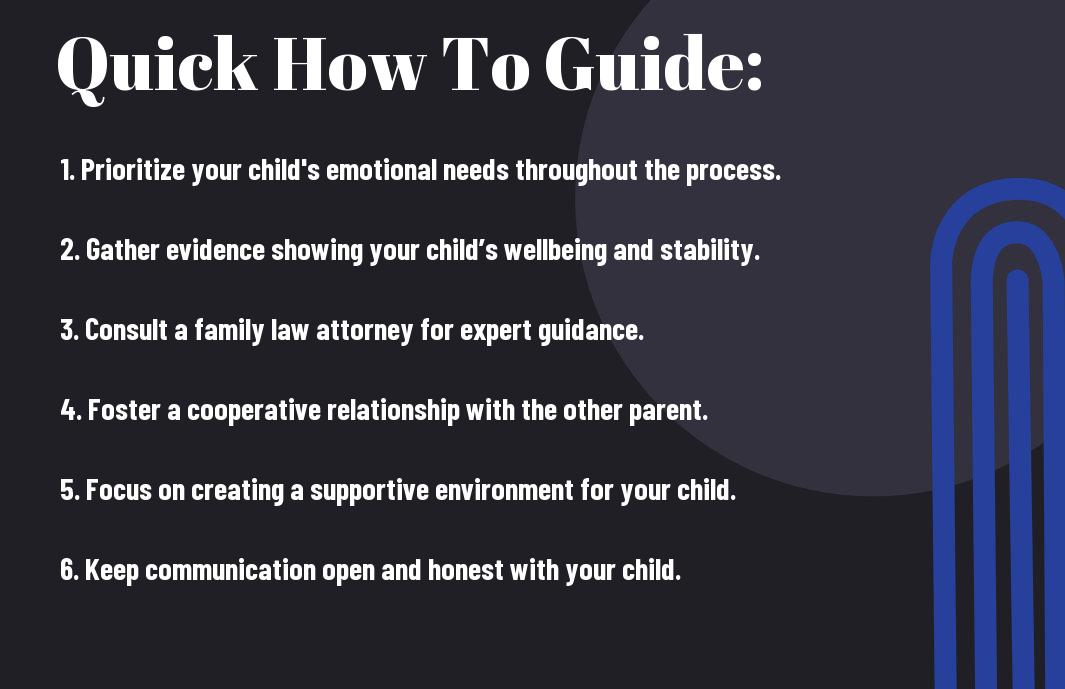
There’s a lot at stake when it comes to custody cases, and it’s important to prioritize your child’s well-being throughout the process. Understanding your rights and advocating for their best interests can make a significant impact on the outcome. In this guide, you’ll learn effective strategies to navigate custody disputes, maintain open communication, and create a stable environment for your child. By following these steps, you can ensure that your child’s needs remain at the forefront of any legal proceedings.
Understanding Custody Cases
For parents navigating the complexities of custody cases, understanding the foundational elements is crucial. Each custody case is unique and influenced by various factors that determine the best living arrangements for children involved. By grasping these critical aspects, you can be better prepared to advocate for your child’s welfare in a legal setting.
Types of Custody
For your reference, here are the main types of custody arrangements:
| Legal Custody | Decision-making authority regarding important life choices for your child. |
| Physical Custody | Your child’s primary residence and day-to-day living situation. |
| Sole Custody | One parent holds either legal or physical custody exclusively. |
| Joint Custody | Both parents share the legal or physical custody responsibilities. |
| Visitation Rights | Defined times when the non-custodial parent can spend time with the child. |
Recognizing the type of custody suitable for your situation can greatly affect the outcome of your case.
Key Factors in Custody Decisions
Some factors significantly influence custody decisions, and understanding them can enhance your ability to advocate effectively. Judges look into various considerations to determine the child’s best interests, which include:
- Each parent’s ability to provide a stable environment.
- The child’s relationship with each parent.
- Your child’s age and needs.
- The presence of violence or substance abuse.
- Each parent’s willingness to encourage a relationship with the other.
Recognizing these factors will help you prepare a strong argument in your custody case.
Factors such as a stable living situation, the child’s emotional well-being, and parents’ cooperation are crucial in custody determinations. Addressing each of these aspects can significantly strengthen your case. You should gather evidence and document interactions that highlight your involvement and commitment to your child’s nurturing and growth.
- The environment each parent provides.
- Your child’s preferences depending on their age.
- The ability to provide consistent support.
- Past interactions with the child.
- Each parent’s relationship with the child.
Recognizing the importance of these elements can lead you to present a compelling case in the courtroom.
Tips for Advocating Your Child’s Best Interests
Any parent involved in custody disputes should prioritize their child’s needs. Consider the following tips to effectively advocate for their best interests:
- Prioritize communication with your child.
- Be mindful of your emotional responses.
- Foster a supportive environment.
- Engage with your child’s support network.
- Stay informed about legal processes.
Recognizing these key areas can enhance your approach and positively impact the outcome of your case.
Communicate Effectively with Legal Counsel
Assuming you have an attorney, clear and honest communication is crucial. Be upfront about your goals, concerns, and any pertinent details that affect your child’s welfare. This transparency will aid your counsel in building a strong case for your child’s best interests, ensuring that your voice is effectively represented in court.
Gather Comprehensive Evidence
The gathering of thorough evidence is vital in showcasing your child’s situation and needs. Document interactions, compile school and medical records, and note any relevant information that supports your claims, as this data can significantly bolster your argument in court.
Communicate regularly with your attorney about the evidence you collect. This includes notes on your child’s behavior, their living conditions, and relationships with both parents. Consistent documentation can establish a pattern that highlights your child’s needs and underscores your commitment to their well-being, thereby strengthening your position during custody proceedings.

The Role of Mediation and Negotiation
All parents involved in custody cases can benefit from mediation and negotiation. These processes allow you to communicate openly with your co-parent and explore mutually agreeable solutions, helping to prioritize your child’s best interests. Mediation can foster a cooperative atmosphere, reducing hostility while encouraging collaboration in decision-making. Ultimately, focusing on your child’s needs can lead to a more favorable outcome for everyone involved.
Benefits of Mediation
Even in high-conflict situations, mediation can help de-escalate tensions, providing a space for constructive dialogue. It promotes better communication and understanding, which are crucial for co-parenting effectively. Moreover, focusing on your child’s welfare during mediation can lead to tailored parenting plans that suit your family’s unique circumstances, all while saving time and resources compared to court proceedings.
Strategies for Effective Negotiations
Little adjustments in your approach can significantly impact the outcome of negotiations. Prioritize active listening to understand your co-parent’s perspective and share your own thoughts clearly and respectfully. You should come prepared with specific goals in mind while remaining flexible enough to consider alternative solutions that still prioritize your child’s welfare.
Benefits of effective negotiations include improved communication and a smoother co-parenting relationship moving forward. It is crucial to outline specific outcomes you wish to achieve, such as visitation schedules or educational decisions, while being open to discussing your co-parent’s ideas and concerns. This collaborative mindset can lead to compromises that respect both parents’ views, ultimately focusing on what is best for your child.
Involvement of Child Advocacy Resources
Not every parent is aware of the extensive resources available to safeguard their child’s best interests during custody cases. Child advocacy resources are invaluable in navigating the complexities of family law, ensuring that your child’s voice is heard. They can provide support, guidance, and expert knowledge that may enhance your understanding of the legal landscape, ultimately leading to more favorable outcomes for your child.
Understanding the Role of Advocates
Clearly, child advocates play a significant role in custody cases by representing and prioritizing the needs of children. They serve as intermediaries between the child and the legal system, ensuring that the child’s perspective is not only considered but also understood in the decision-making process.
Resources for Support and Guidance
You have access to various resources designed to support and guide you through custody matters involving your child. From legal aid organizations to child advocacy groups, these resources are equipped to help parents like you navigate the complexities of custody disputes and empower you to make informed decisions.
Understanding the landscape of available resources can significantly ease the burden of custody cases. Consider reaching out to local child advocacy organizations or legal aid services that specialize in family law. They often provide workshops, informational brochures, and one-on-one consultations to help you comprehend your rights and responsibilities as a parent. Additionally, support groups can connect you with others facing similar challenges, creating a network that allows for shared experiences and advice tailored to your specific situation.
Preparing for Court Appearances
Your preparation for court appearances is crucial to effectively advocate for your child’s best interests. Knowing what to expect and how to approach the courtroom can influence the outcome of your custody case. Ensuring you feel confident and organized will not only help you present your case more effectively but also promote a sense of control during this challenging time.
What to Expect in Court
You will typically find yourself in a formal setting where a judge will oversee proceedings. Expect to present your arguments, provide evidence, and respond to questions from the judge or the opposing party. Court processes can vary, so it’s important to familiarize yourself with the specific protocols of your local court system.
Strategies for Presenting Your Case
Some effective strategies can enhance your presentation in court, boosting your chances of a positive outcome. Focus on being clear and concise about your objectives and the best interests of your child. Bringing well-organized documentation, such as records of your child’s schooling, health, and social interactions, can strengthen your position.
It is beneficial to articulate specific examples that illustrate your ability to care for your child. Use relatable stories that demonstrate your commitment and nurture your child’s needs. Prepare to counter the opposing side’s assertions effectively, and be ready to adapt your arguments based on the judge’s inquiries. Practicing your responses and approaching the case with a calm demeanor can significantly improve your presence in court.
Post-Custody Arrangement Considerations
Despite reaching a custody agreement, your journey doesn’t end there. It is crucial to continuously evaluate and adapt arrangements to suit your child’s evolving needs. This may involve regular check-ins with your co-parent, assessing the effectiveness of your plan, and being open to adjustments that better serve your child’s best interests. Remaining vigilant about these dynamics ensures that you can navigate any challenges that arise while keeping your child’s well-being at the forefront.
Ensuring Compliance with Agreements
There’s a need to ensure that both you and your co-parent comply with the established custody agreement. Regular monitoring of each party’s adherence can help mitigate disputes and foster a more harmonious relationship. Should issues arise, documenting any breaches and addressing them promptly is crucial for maintaining stability for your child.
Importance of Open Communication
One of the cornerstones of a successful co-parenting arrangement is open communication. Establishing a reliable line of dialogue with your co-parent can facilitate smoother transitions and help resolve misunderstandings promptly. Moreover, it allows you to share updates about your child’s needs, activities, or any changes in circumstances, thereby creating a more unified approach to parenting.
Communication not only reinforces the bond between you and your co-parent but also models healthy relationship skills for your child. By discussing your child’s progress and feelings together, you create a supportive environment that promotes their well-being. Regularly checking in with each other can minimize conflicts and enhance trust, as both parties feel informed and involved in the decision-making process. Prioritizing communication helps ensure that you are working together effectively for your child’s benefit.
Summing up
With this in mind, prioritizing your child’s best interests in custody cases involves understanding the legal framework, maintaining open communication, and fostering a supportive environment. Ensure you document any relevant interactions and focus on your child’s emotional well-being. Collaborate with professionals who can advocate for your child, and strive to present yourself as a committed, loving parent. By being proactive and prepared, you can effectively advocate for what is best for your child while navigating the complexities of custody arrangements.