

Just when you thought your custody battle couldn’t get more complicated, you face false accusations that threaten your case and parenting rights. Navigating this difficult situation requires a strategic approach to protect yourself and your relationship with your child. In this guide, you will learn how to respond effectively to these claims, gather supportive evidence, and communicate with legal representation to defend your position. Equip yourself with the knowledge to confront these accusations head-on and maintain your focus on what truly matters—your child’s well-being.
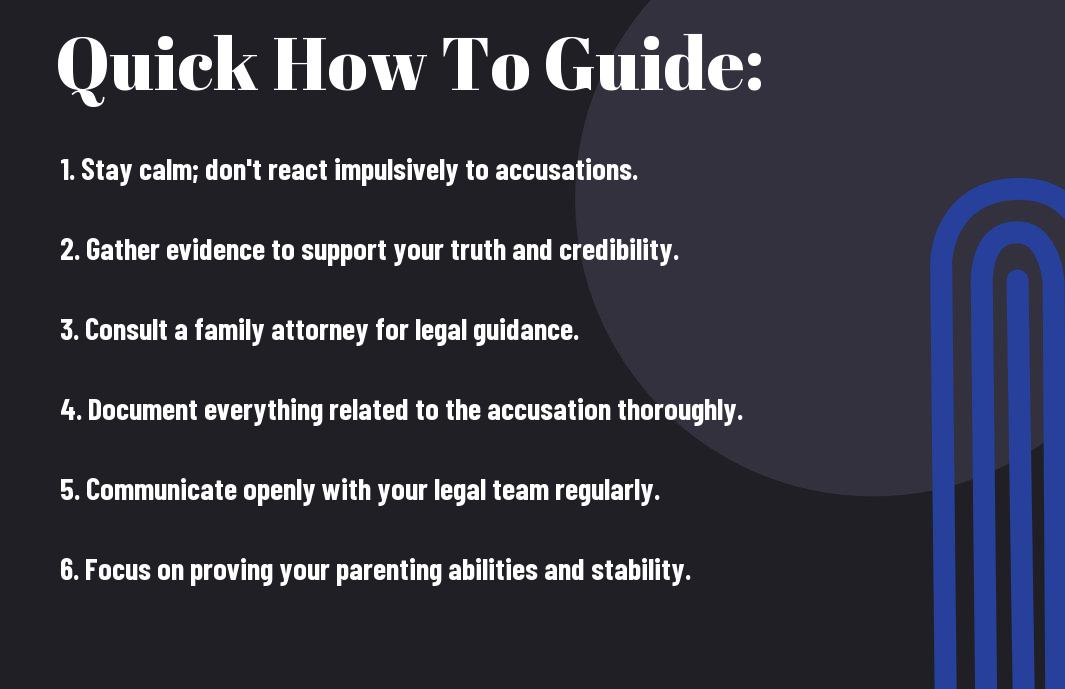

Understanding False Accusations
While navigating a custody battle, it’s vital to understand the concept of false accusations. These are claims made against you that may not hold any truth and can significantly impact your case. False accusations might emerge from misunderstandings, miscommunications, or someone’s desire to gain leverage in the custody dispute. Being aware of how these allegations can arise will better equip you to handle them effectively.
Common Types of False Accusations
While specific allegations can vary, there are some common types that may arise during custody battles:
- Child abuse or neglect
- Substance abuse issues
- Domestic violence claims
- Alienation of affection
- Criminal behavior allegations
Perceiving these accusations as tactics rather than truths can help you maintain focus on your reality in the custody battle.
| Type of Accusation | Description |
| Child Abuse | Claims regarding physical or emotional harm to the child. |
| Neglect | Allegations of failing to meet a child’s basic needs. |
| Substance Abuse | Accusations regarding the use of drugs or alcohol. |
| Domestic Violence | Claims related to physical violence within the home. |
| Criminal Activity | Allegations of engaging in illegal behavior. |
Impact on Custody Battles
Little do many realize that false accusations can have a profound impact on the dynamics of custody battles. Such allegations can not only tarnish your reputation but also sway the opinion of judges and other involved parties, potentially resulting in unfavorable custody arrangements.
Common reactions to false accusations can include feelings of anger and frustration. Still, it’s important to remain composed, as these emotions can play into the narrative created by your accuser. The consequences of these allegations may lead to investigations, legal costs, and extended negotiations to clear your name. Therefore, having a strategic approach to countering these false claims will significantly enhance your chances of securing a fair custody outcome.

Key Factors to Consider
Some important factors to consider when facing false accusations in a custody battle include:
- Your private and public image
- The impact on your relationship with your child
- The potential repercussions in court
- The necessity of legal representation
Perceiving these elements can help you navigate the challenges ahead.
Evidence and Documentation
You need to gather all relevant evidence and documentation to support your case against the false accusations. This can include text messages, emails, photographs, and witness statements. Organizing this information systematically will bolster your position and provide a clear narrative of the situation. Your ability to present compelling evidence can significantly influence the outcome of your custody battle.
The Role of Emotional Support
On your journey through a custody battle, emotional support plays a vital role in managing the stress and anxiety that arises from false accusations. Connecting with family, friends, or support groups can provide you the reassurance you need during this challenging time.
With the right emotional support, you can better focus on your case and maintain a clear perspective. Surrounding yourself with individuals who understand your situation can alleviate feelings of isolation and fear. Additionally, seeking professional counseling may be beneficial for addressing the emotional toll this process takes, allowing you to approach the custody battle with a clearer and more composed mindset.
How to Respond to False Accusations
Your reaction to false accusations can significantly impact your custody battle. It’s vital to approach the situation thoughtfully to protect your interests and maintain your credibility. Start by gathering your thoughts and evidence, while avoiding emotional outbursts. This will help you craft a well-informed strategy to counter the allegations and demonstrate your commitment to your child’s well-being.
Remain Calm and Collected
You need to stay composed when faced with false accusations. Taking a deep breath and pausing before responding allows you to think clearly. Reacting impulsively may worsen the situation, so focus on presenting factual information rather than letting your emotions take over. Staying calm will not only strengthen your case but also reflect positively on you as a parent in the eyes of the court.
Consult Legal Representation
Respond promptly by seeking legal representation. A skilled attorney will navigate the complexities of custody disputes and advise you on the best course of action. They can help you craft an appropriate response to the allegations and ensure your rights are protected throughout the process.
For instance, your attorney can assist in gathering necessary documentation and evidence that can disprove the false claims against you. They may suggest obtaining witness statements or character references that validate your role as a responsible parent. This professional guidance allows you to present a strong defense in court, increasing your chances of a favorable resolution in the custody battle.

Tips for Building Your Case
After facing false accusations in a custody battle, it’s imperative to have a strong strategy for building your case. To bolster your position, consider the following tips:
- Document all interactions with your co-parent.
- Keep records of your child’s wellbeing and development.
- Maintain comprehensive communication logs.
- Gather character references from individuals who support your parenting.
- Seek legal advice to understand your rights and strategies.
The more robust your evidence and support, the better chance you have in your custody dispute.
Gathering Supporting Evidence
Clearly, gathering supporting evidence is key to countering false accusations. This includes maintaining detailed records of any interactions related to the accusations, such as texts, emails, or notes from conversations. Additionally, collecting evidence that reflects your positive involvement in your child’s life, like report cards or participation in events, will strengthen your case. Be thorough and organized in documenting incidents and any witness statements that corroborate your narrative.
Engaging with Professional Evaluators
Professional evaluators can provide an objective assessment of your parenting capabilities and environment. Engaging their services can be beneficial, as they often have experience in navigating custody cases and can offer insights that may help your situation.
Building a collaborative relationship with professional evaluators can enhance your credibility. Be honest and forthcoming when discussing your parenting practices and concerns about your co-parent. Their evaluations can carry significant weight in court, so be prepared to demonstrate your commitment to your child’s wellbeing during these assessments. Engaging positively with these professionals can influence their recommendations, potentially benefiting your custody battle outcome.
Navigating Courtroom Dynamics
Now that you are prepared, understanding the dynamics of the courtroom is necessary in presenting your case effectively. Courtrooms can be intimidating; however, maintaining your composure and showing respect to all parties, including the judge, can significantly influence how your case is perceived. Be aware of the proceedings and strive to communicate clearly and confidently, as this will help establish your credibility during your custody battle.
Preparing for Testimonies
For your testimony to have a maximum impact, practice delivering your statements clearly and concisely. Anticipate potential questions that may arise and formulate your responses accordingly. It’s necessary that you convey your feelings about your children’s well-being and your role as a parent effectively, helping to reinforce your position during the hearing.
Presenting Your Evidence Effectively
While you may have gathered substantial evidence, how you present it can greatly impact its effectiveness. Ensure that your evidence is organized and directly relevant to your case, allowing the judge to easily understand its significance. Present it in a logical sequence, connecting the dots between your evidence and the desired outcome of your custody battle.
Testimonies are critical in illustrating your perspective, but they can also be weakened by disorganization. Create a clear outline for presenting your evidence, including any documents, witness statements, or visual aids that support your claims. By doing so, you not only affirm your stance but also create a compelling narrative that resonates with the judge, enhancing your chances of success in the custody battle.
Protecting Your Reputation
Many individuals find themselves under scrutiny during a custody battle, especially if false accusations arise. It’s important to maintain a positive reputation to ensure that the court views you favorably. Document all interactions and maintain professionalism at all times, as this can significantly influence your case. Surround yourself with supportive individuals who can attest to your character and parenting abilities, emphasizing your commitment to your child’s well-being.
Communication Strategies
There’s a fine line between addressing accusations and escalating conflicts. Be proactive in your communication by remaining calm and clear when discussing the situation with others, including your legal team. Use social media cautiously, avoiding any negative comments about the other parent or the situation, as this could further damage your reputation and credibility.
Rebuilding Trust with Your Child
Communication is key in rebuilding trust with your child. After going through a tumultuous custody battle, it’s important to reassure them that your love and support remain unwavering. Engage in open dialogues, allowing them to express their feelings and concerns. Listening actively will help your child feel valued and understood.
Strategies for rebuilding trust include spending quality time together and engaging in activities your child enjoys. Show consistency in your actions, and be transparent about your feelings while encouraging your child to share theirs. Establish a safe space for discussions and reinforce the message that they are not to blame for the situation. Over time, these efforts will gradually strengthen your bond and help restore any lost trust.
Summing up
Drawing together the strategies for managing false accusations in a custody battle, it’s vital to stay calm and collected. Focus on gathering evidence to support your position and seek legal advice to navigate the complexities of the situation. Maintaining detailed records and staying engaged with court proceedings can bolster your case. Always prioritize your child’s best interests and ensure that any responses are thoughtful and constructive. By staying prepared and proactive, you can effectively protect your rights and demonstrate your commitment to your child’s well-being.