

It’s necessary to understand the ramifications if you find yourself in a situation where your co-parent refuses to comply with a custody order. This can lead to significant emotional and legal challenges for both you and your child. In this post, we will explore the potential consequences for the non-compliant parent, the steps you can take to protect your rights, and how the court may intervene to enforce the order. By knowing your options, you can navigate this difficult scenario more effectively.

Understanding Custody Orders
The custody order is a legal decree outlining the arrangements for the care and control of children following a separation or divorce. This document specifies where children will live, how often they will see each parent, and how major decisions regarding the children will be made. Understanding custody orders is crucial for ensuring that all parties involved, especially children, are supported and protected during a challenging time.
Definition of Custody Orders
Across jurisdictions, custody orders refer to the legal decisions made by a court regarding the physical and legal custody of children. These orders define which parent has the right to make decisions about the child’s upbringing, including education, healthcare, and religious training, as well as where the child will reside and visit.
Importance of Compliance
Below the importance of compliance with custody orders cannot be overstated. Failing to adhere to these agreements can lead to significant consequences, not only affecting parent-child relationships but also resulting in legal repercussions.
Hence, compliance with custody orders safeguards your rights as a parent and promotes stability for your children. When both parents follow the terms outlined in the custody agreement, it fosters a cooperative environment, encouraging healthy relationships between parents and their children. If disputes arise, courts may view non-compliance negatively, potentially influencing custody decisions in future hearings. As such, adhering to your custody order is vital for maintaining trust and a stable family dynamic.

Legal Consequences of Non-Compliance
Even if you may think that ignoring a custody order is a minor issue, it can lead to significant legal consequences. Courts take custody orders seriously, and failure to comply may result in legal penalties against the non-compliant parent, including fines, modification of custody terms, and even potential jail time in severe cases. Understanding the legal implications helps you realize that following custody agreements is necessary for the sake of your child’s well-being and your legal standing.
Potential Legal Repercussions
Above all, failing to adhere to a custody order can result in substantial repercussions that affect your parental rights. The court may view this non-compliance as a sign of irresponsibility or disregard for the child’s best interests, which could lead to a reevaluation of your custody arrangement. In extreme scenarios, you may even lose custody altogether if a court determines that your actions jeopardize the child’s safety or emotional stability.
Enforcement Mechanisms
Around the issue of enforcing custody orders, various legal mechanisms exist to ensure compliance. Courts may employ a range of methods, such as mediation, contempt of court citations, and even modification of custody arrangements. These mechanisms serve to uphold the integrity of custody agreements and protect the interests of the child involved.
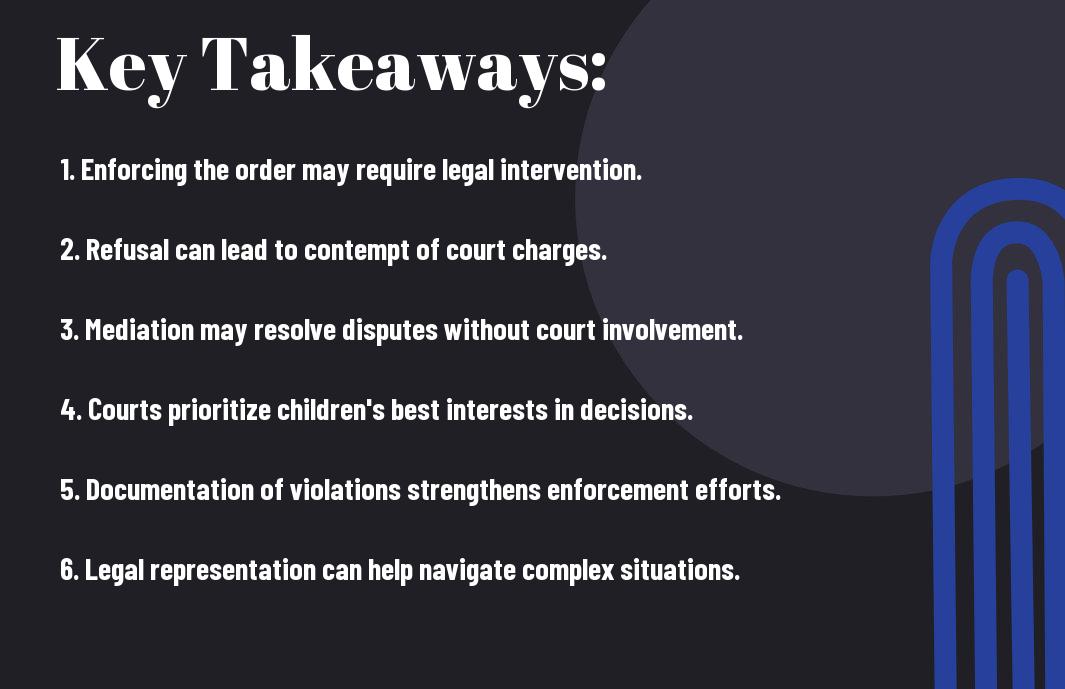
Even if you find yourself in a situation where the other parent is not following the custody order, various enforcement mechanisms can provide you options. You may enlist the help of family court services to mediate compliance or seek legal advice to file a contempt motion. Courts can issue orders that compel the non-compliant parent to adhere to the agreement, and in some cases, sanctions or fines may be imposed as a deterrent against future violations. Utilizing these enforcement mechanisms will help safeguard your custody rights and maintain stability for your child.

Impact on Parenting Relationships
To navigate the complexities of parenting after a custody order, it’s vital to maintain open communication and understanding. When one parent refuses to comply with the custody arrangement, it can create significant strain on the relationship between co-parents. Conflicts may arise as trust deteriorates, leading you to question the other parent’s commitment to shared responsibilities and ultimately affecting the well-being of your children.
Effects on Co-Parenting Dynamics
One parent’s refusal to follow the custody order can severely disrupt the co-parenting dynamics. This may lead to a cycle of conflict and resentment, making it challenging for you to coordinate schedules, share parenting duties, or make unified decisions that are in the best interest of the children.
Emotional Consequences for Children
Behind the scenes of custody disputes, children often bear the emotional weight of their parents’ conflicts. They may feel stressed, anxious, or caught in the middle, leading to confusion about their family structure and stability. You should be aware that these emotions can manifest in various ways, including behavioral issues, declining academic performance, and strained relationships with peers.
It is vital to understand that the emotional consequences for children can significantly impact their development. When they perceive a lack of harmony between you and the other parent, their sense of security may diminish. They might struggle to express their feelings and increasingly internalize stress, which can contribute to long-term emotional challenges. Ensuring that you maintain a cohesive and supportive environment, despite any disagreements, can help mitigate these adverse effects and foster your children’s overall well-being.
Addressing Non-Compliance
Once again, it’s important to address non-compliance with a custody order seriously. Ignoring the legal obligations can lead to significant consequences for both you and your child. You have options for addressing these issues, including seeking modification of the custody order or taking legal action against the non-compliant parent. Documenting every instance of non-compliance provides you with a solid foundation should the situation escalate.
Steps to Take When a Parent Refuses
By taking a proactive approach, you can address the situation effectively. Start by documenting instances of refusal to comply with the custody order. Consider discussing the issue directly with the other parent to see if a resolution can be reached. If needed, consult with a family law attorney who can guide you in enforcing the custody order or recommend steps to take if the situation does not improve.
Mediation and Alternative Dispute Resolution
Around this time, mediation can serve as a beneficial tool when another parent refuses to comply with the custody order. Through mediation, both parties can engage with a neutral third party to facilitate communication and explore potential solutions. This approach often leads to more amicable resolutions, allowing you to focus on what is best for your child while avoiding the adversarial nature of court proceedings.
It is vital to understand the advantages of mediation and alternative dispute resolution in child custody matters. This process encourages open dialogue, helping both parents express their concerns and priorities regarding custody arrangements. Mediation is generally less confrontational than court, making it easier to reach a working agreement. Not only does it save time and resources, but it also fosters a cooperative environment, ultimately benefiting your child’s well-being and stability.
Modifying Custody Orders
Not all custody orders are set in stone; they can be modified when circumstances change. If you find yourself in a situation where the current custody arrangement no longer serves the best interests of your child or your situation has significantly altered, it may be time to seek a modification. Understanding the legal avenues available to you is necessary for navigating these changes effectively.
When to Consider Modifications
Across various circumstances, such as a significant change in income, relocation, or a change in a child’s needs, you may start considering modifications to your custody order. If you believe your child’s well-being is at stake, reassessing the order can lead to a healthier environment for your family.
Legal Process for Changing Custody Terms
The process for changing custody terms typically involves filing a petition in family court. You will need to provide evidence supporting your request for modification, demonstrating how the change serves your child’s best interests. The court will then review the facts and determine whether to uphold or alter the existing custody arrangement.
This process often requires you to gather documentation and potentially include testimonial evidence to support your case. Be prepared to outline the significant changes in your life that necessitate a re-evaluation of custody terms, such as improved living conditions or unstable situations affecting your child’s welfare. Consulting with a family law attorney can also streamline this process and help you effectively present your case.
Resources and Support
Keep in mind that navigating a custody dispute can be challenging. Fortunately, there are numerous resources available to help you through the process. Whether you need legal advice, emotional support, or community services, understanding what is available can empower you to take the next steps in protecting your rights and your child’s well-being.
Legal Resources Available
About legal resources, many organizations offer free or low-cost legal consultations to parents dealing with custody issues. You might consider contacting local family law attorneys, legal aid societies, or online platforms that provide legal information specific to your state. These resources can help you understand your rights, the implications of custody agreements, and the potential legal recourse if orders are violated.
Support Systems for Affected Parents
By reaching out to support systems, you can find emotional and practical assistance to help you cope with the stress of custody disputes. Support groups, therapy, and counseling services are ideal for connecting with others who share similar experiences, allowing you to share insights and strategies for managing your situation effectively.
Resources such as local support groups and online forums can provide a community of understanding and empathy. Seeking help from mental health professionals can also assist you in processing emotions related to custody challenges. Engaging with these support systems will not only give you practical advice but also help you feel less isolated during this difficult time.
Final Words
Conclusively, if you encounter a situation where a co-parent refuses to comply with a custody order, it is vital to understand your options. You may seek enforcement through the court, which can lead to various consequences for the non-compliant parent, including potential modifications to custody arrangements. It’s crucial to document any violations and maintain open communication with your attorney to navigate this challenging situation effectively. Prioritize the best interests of your child while ensuring that your rights are upheld in accordance with the custody agreement.