

Many parents may not realize how their criminal record can significantly influence custody decisions. When determining what is in the best interest of the child, courts closely examine each parent’s background, including any past criminal activity. If you have a criminal record, it’s necessary to understand how it can affect your custody rights and the potential implications for your relationship with your child. This post will explore the key factors that courts consider and offer guidance on how you can navigate these complexities in custody arrangements.

Understanding Custody Decisions
The custody decisions made by the court aim to prioritize the best interests of the child involved. Factors such as the child’s age, emotional needs, and the capability of each parent to provide a stable environment can significantly influence the outcome. Additionally, any history of criminal behavior by a parent may raise concerns regarding their fitness to care for the child. Ultimately, the goal is to ensure a nurturing and safe home for the child.
Legal Standards for Custody
Any custody decision is guided by a set of legal standards that courts follow to determine the most favorable arrangement for the child. These standards often include considerations of a child’s welfare, parenting competencies, and existing relationships with each parent. Courts typically evaluate each case individually, ensuring that the ruling aligns with the child’s best interests and overall well-being.
Factors Influencing Custody Outcomes
Custody decisions involve various factors that can lead to different outcomes based on your unique situation. Some key considerations include:
- The mental and physical health of each parent
- Your involvement in the child’s life and routine
- The child’s preference, depending on their age and maturity
- Any history of domestic violence or substance abuse
The combination of these elements helps the court assess which parent may provide the most supportive environment for the child’s growth and development.
Consequently, understanding how these factors impact custody decisions can aid in presenting your case effectively. Being proactive in demonstrating your commitment to the child’s welfare can make a significant difference. Important factors include:
- Your ability to provide a loving and stable home
- Your history of cooperation with the other parent
- Your capacity to meet the child’s educational and emotional needs
The stronger your position across these factors, the better the chances of achieving a favorable custody arrangement.

The Role of Criminal Records in Custody Cases
Some parents may find that their criminal records significantly influence custody decisions. Courts prioritize the best interests of the child, evaluating whether a parent’s criminal history affects their ability to provide a safe environment. This means that you should be prepared to discuss your past and demonstrate growth, responsibility, and your commitment to parenting.
Types of Criminal Offenses Considered
Some offenses hold more weight than others in custody evaluations. The following are types of criminal offenses that can impact custody outcomes:
- Violent crimes
- Drug-related offenses
- Child abuse or neglect
- Domestic violence incidents
- Sex offenses
Thou should consider how these offenses might affect your situation.
Assessing the Relevance of Criminal History
Above all, not all criminal histories are treated the same in custody cases. Factors such as the nature of the offenses, their recency, and your actions since can greatly influence how the court perceives your situation.
Relevance lies in how your past behavior reflects on your current parenting abilities. Courts examine whether the offenses directly affect your capacity to care for your child. Positive changes you’ve made, such as completing rehabilitation programs or showing stable employment, can mitigate the impact of a criminal record. You must present a compelling narrative of your growth and commitment to being a responsible parent.

Case Law: Precedents and Outcomes
Not all criminal records impact custody decisions equally. Courts typically evaluate the nature and severity of the crime, timing, and your current behavior. Decisions are often swayed by how the criminal history affects your parenting capability and the child’s well-being. This nuanced approach allows judges to consider individual circumstances rather than applying a blanket rule that may not suit every case.
Notable Cases Impacting Custody Decisions
Decisions in landmark cases have significantly shaped how courts handle custody disputes involving a parent’s criminal record. For instance, in cases where a parent has a history of violent crimes, courts often prioritize child safety over parenting rights. Conversely, if the criminal activity is non-violent and the parent has demonstrated rehabilitation, decisions may lean favorably towards custody arrangements.
Trends in Judicial Reasoning
Reasoning in custody cases has evolved, reflecting an increasing awareness of rehabilitation and the potential for change. Courts are beginning to weigh factors such as the length of time since the offense, efforts made towards rehabilitation, and the overall stability of your current life. This trend underscores a shift towards making custody decisions based on what’s in the best interest of the child rather than solely on past behaviors.
But understanding judicial reasoning trends is necessary for you as you navigate custody listening. Judges generally focus on the complete picture, considering your actions, your children’s relationships, and the emotional climate of your home. By presenting evidence of your growth and positive changes since any offenses, you may strengthen your position. This proactive approach emphasizes that past actions do not define your present capability as a parent.
Impact on Parenting Capacity
Once again, the presence of a criminal record may raise concerns about your ability to provide a stable and nurturing environment for your child. Courts often evaluate the extent to which past criminal behavior might affect your parenting, considering factors such as the type of crime, your current lifestyle, and your commitment to positive change. These elements can significantly influence custody decisions as they reflect your parenting capacity and ability to safeguard your child’s best interests.
Evaluating Current Parenting Abilities
Around the time of custody evaluations, you may be assessed based on your current parenting abilities. This includes your involvement in your child’s daily life, the emotional support you provide, and your ability to meet their physical needs. Your past may be taken into account, but your current actions and attitude toward parenting will play a significant role in the outcome of custody decisions.
Long-term Effects of Criminal Behavior
An understanding of long-term effects stemming from criminal behavior can provide insight into how such issues might influence your custody case. Long-lasting consequences can impact your emotional wellbeing, stability, and relationships, which can further shape your parenting approach.
At times, a parent’s criminal actions may lead to enduring impacts that are reflected in their parenting. For instance, if you have faced incarceration, it may hinder your ability to engage fully in your child’s life, potentially affecting their emotional development. Additionally, patterns of behavior centered around criminal activity could perpetuate cycles of instability and distrust, which could be detrimental to your child’s overall wellbeing. Courts will factor in these long-term effects when making decisions about custody, as they ultimately aim to ensure a nurturing and safe environment for the child.
Mitigating Factors
Keep in mind that a parent’s criminal record does not automatically determine custody outcomes. Courts consider various mitigating factors, including:
- The nature and severity of the offense
- The time elapsed since the crime
- Evidence of changed behavior
- Parental involvement since the incident
- Support from family and community
After evaluating these aspects, the court can make a more informed decision regarding custody arrangements.
Rehabilitation and Personal Change
Across many cases, evidence of rehabilitation can significantly impact custody decisions. If you have taken active steps towards personal growth, such as completing counseling, education programs, or substance abuse treatment, these efforts may demonstrate your commitment to being a responsible parent.
Support Systems and Community Resources
To strengthen your case, it’s important to show that you have a solid support system in place. This includes family, friends, or community organizations that can assist you in parenting and provide guidance.
Support networks can play an vital role in your pursuit of custody. They not only offer emotional backing but also practical help, such as childcare services or transportation. Establishing connections with parenting groups or community resources, like family services, can further demonstrate to the court that you have reliable support in your parenting journey. By showcasing these resources, you build a stronger case for your ability to provide a stable and nurturing environment for your child.
Summing up
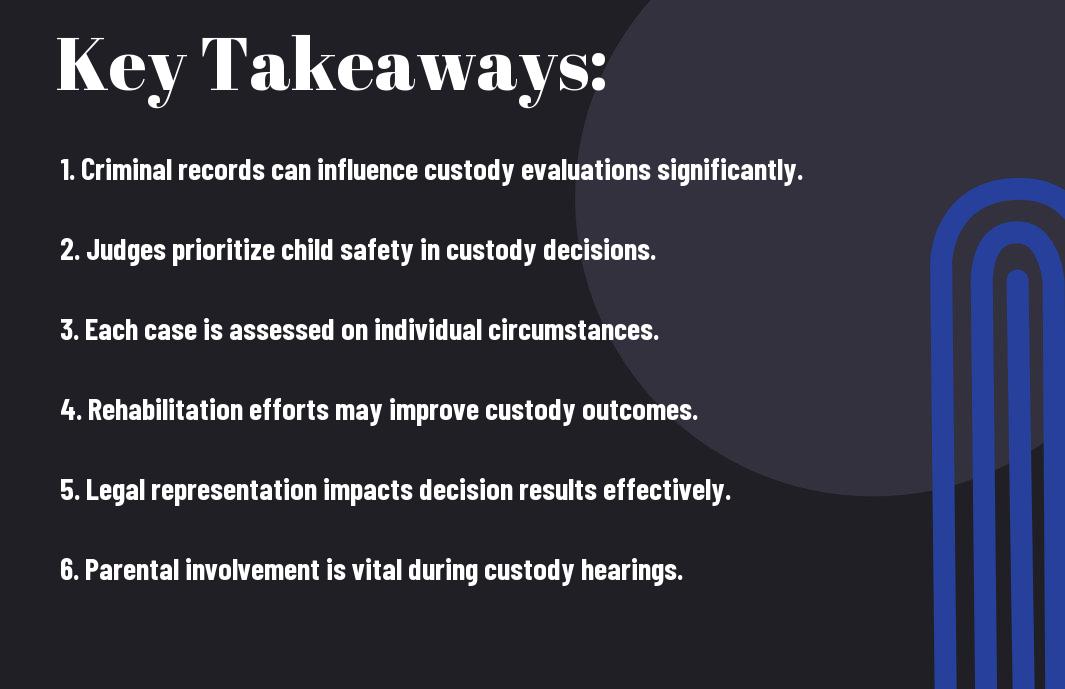
On the whole, the presence of a parent’s criminal record can significantly influence custody decisions, impacting your rights and responsibilities. Courts prioritize the welfare of the child, and any criminal history may raise concerns about your ability to provide a safe and stable environment. It’s important to understand how your past might affect your current custody arrangements and to consider seeking legal advice tailored to your situation. A proactive approach can help you navigate this complex issue and advocate effectively for your parental rights.