

With the evolving landscape of family dynamics, you may find yourself wondering about your rights as a grandparent in child custody cases. Understanding these rights is necessary for maintaining meaningful relationships with your grandchildren, especially in challenging situations such as divorce or parental disputes. This post will guide you through the legal frameworks in place, what you can expect, and the steps you can take to advocate for your role in your grandchildren’s lives.
Legal Framework
For you to navigate the complexities of grandparents’ rights in child custody cases, understanding the legal framework is imperative. This framework includes statutory provisions and relevant case law which together dictate your options and obligations as a grandparent seeking custody or visitation rights. Familiarizing yourself with these aspects can empower you in advocating for your relationship with your grandchildren.
Statutory Provisions
Along with the overarching principles of family law, statutory provisions often dictate the specific rights and processes that govern grandparents’ involvement in child custody cases. Each state has unique laws addressing when and how grandparents can seek visitation or custody, which means it is vital for you to consult the laws applicable in your jurisdiction.
Case Law Examples
Below are key case law examples that have shaped the understanding of grandparents’ rights. These cases provide insight into how courts interpret statutory provisions and the considerations they take into account when making custody decisions involving grandparents. By reviewing these examples, you can gain a clearer perspective on potential outcomes in your own situation.
A few noteworthy cases include Troxel v. Granville, which underscored the importance of parental rights, and cases that have addressed specific situations in which grandparents were granted visitation or custody rights despite parental objections. These judicial rulings highlight the delicate balance courts must strike between the rights of grandparents and the rights of parents, and understanding these nuances can better prepare you for legal proceedings. Familiarizing yourself with such precedents will strengthen your position when advocating for your grandparental rights.

Types of Grandparents’ Rights
While grandparents’ rights can vary significantly, they generally fall into a few key categories. These may include:
- Visitation Rights
- Custody Rights
- Legal Guardianship
- Emergency Custody
- Financial Support Rights
Any grandparent seeking rights should understand the specific laws in their state as they can influence your legal standing and potential outcomes in child custody cases.
Visitation Rights
By seeking visitation rights, you can ensure that your grandchild maintains a relationship with you, even after divorce or separation of their parents. Many states encourage grandparents to stay involved in the lives of their grandchildren, which can foster emotional well-being for all parties involved.
Custody Rights
Behind custody rights, you may find yourself advocating for a deeper role in your grandchild’s life. These rights can allow you to make decisions about their welfare and upbringing, especially in cases where the parents are unable to provide a stable environment.
Further exploring custody rights, you should be aware that these rights often require a formal court proceeding where you will need to present compelling reasons for seeking custody. Factors that the court may consider include the child’s best interest, your relationship with the child, and any issues pertaining to the parents’ ability to provide adequate care. Understanding this process will empower you as you navigate the complexities of custody in your particular situation.
Factors Influencing Court Decisions
Many elements can sway a court’s judgment regarding custody cases involving grandparents. Key factors include:
- The stability of the home environment
- The relationships within the family
- Parental fitness of the child’s parents
- The child’s wishes, depending on age
Recognizing these factors can help you understand how courts evaluate grandparent custody requests.
Best Interests of the Child
Around the legal framework, the principle guiding custody decisions is the best interests of the child. This encompasses emotional, physical, and developmental needs that must be prioritized in any custody arrangement.
Grandparent-Child Relationship
Interests surrounding the grandparent-child relationship play a significant role in custody cases. Your bond with the grandchild can impact the court’s decision-making process as it reflects the emotional and supportive resources you provide.
Due to the significant influence grandparents can have on a child’s well-being, courts often examine the history of interaction and connection between you and your grandchild. Evidence of a strong and nurturing relationship may enhance your case for custody, demonstrating that your involvement contributes positively to the child’s life and emotional stability.
Filing for Grandparents’ Rights
Once again, navigating the legal system for grandparents’ rights can be challenging. To initiate this process, you typically need to file a petition for visitation or custody in your local court. It’s imperative to understand your state’s specific laws and procedures, as they vary significantly. Seeking legal advice can help ensure that you are fully prepared to advocate for your role in your grandchild’s life.
Legal Processes
For grandparents, the legal process often begins with the completion of the appropriate forms and filing them with the court. Following this, you may be required to attend a hearing where you can present your case for the rights you seek. Depending on your jurisdiction, mediation may also be recommended to resolve disagreements amicably.
Required Documentation
One of the most important aspects of filing for grandparents’ rights is gathering the necessary documentation. This may include any evidence supporting your relationship with your grandchild, along with relevant medical or educational records that demonstrate your involvement in their life.
Plus, you should also include documents that show any existing family dynamics, such as custody agreements or evidence of your grandchild’s best interest being served by your involvement. Additional materials like photographs or affidavits from others who support your claim can further strengthen your case. Proper documentation can significantly increase the chances of a favorable outcome in your petition.
Challenges and Obstacles
Not every grandparent who wishes to obtain custody or visitation rights faces smooth sailing. Various challenges and obstacles may arise, particularly in navigating conflicting interests between family members and the legal system. Understanding these hurdles is vital to effectively advocating for your rights and those of your grandchildren.
Parental Opposition
For many grandparents, the most significant barrier in custody cases is the opposition from parents. When parents are unwilling to grant custodial or visitation rights, it can create a contentious environment where you must assert your case convincingly, often requiring legal support and thorough knowledge of the law regarding grandparent rights.
Legal Limitations
Obstacles arise not only from familial relationships but also from the legal framework governing custody. There are specific laws in each state that dictate when and how grandparents may seek rights, and these can often be restrictive. You need to familiarize yourself with local statutes and guidelines to effectively navigate these legal limitations.
At times, these legal limitations can complicate your efforts to obtain custody or visitation rights. Laws may vary significantly by state, often requiring you to demonstrate a strong emotional bond with your grandchildren or prove that access would be in their best interest. Understanding these nuances is necessary to crafting a viable approach in advocating for your rights as a grandparent.
The Role of Mediation
Now, understanding the role of mediation in child custody cases is key to navigating disputes involving grandparents’ rights. Mediation offers a structured environment where you can discuss your concerns and desires regarding custody arrangements with the help of a neutral third party. This process can promote open communication and may lead to a resolution that benefits both you and your grandchildren.
Benefits of Mediation
Any time you opt for mediation, you are choosing a less adversarial approach that can reduce stress and foster collaboration. This method often allows for quicker resolutions, saving you time and money compared to traditional court proceedings. By participating in mediation, you also retain more control over the outcome, leading to solutions that better suit your family’s specific needs.
Alternative Dispute Resolution Options
An effective way to pursue child custody agreements is through alternative dispute resolution (ADR) options, which include negotiation and arbitration. These methods offer flexibility and can often result in more amicable outcomes, allowing you to focus on creating a positive environment for your grandchildren rather than engaging in lengthy court battles.
For instance, negotiation allows you to engage directly with the other party to reach a mutually acceptable arrangement concerning custody. This direct communication can help maintain family relationships and create a less combative atmosphere. Arbitration, while more formal, provides you with the opportunity to present your case to an impartial arbitrator who makes a binding decision. Exploring these ADR options can lead to resolutions that serve your family’s best interests while minimizing conflict and uncertainty.
To wrap up
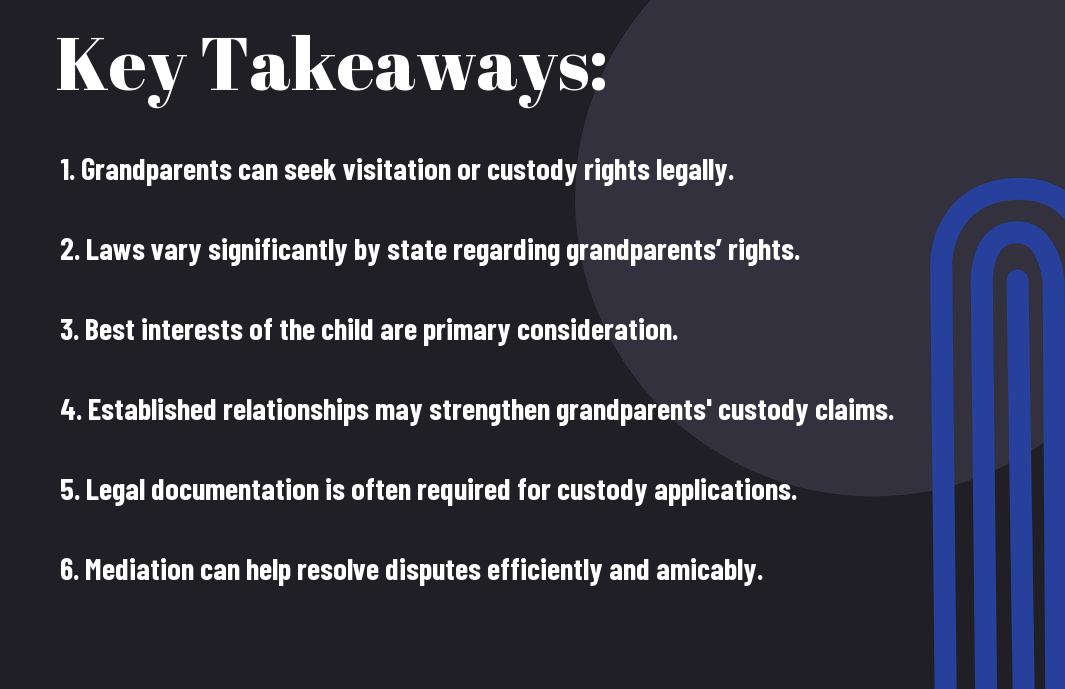
Presently, understanding grandparents’ rights in child custody cases is crucial for you if you are navigating family law. As a grandparent, you may play a significant role in your grandchild’s life, and there are legal avenues available to seek visitation or custody. Depending on your state’s laws, you may be able to initiate legal proceedings if you believe it is in your grandchild’s best interest. Educating yourself about these rights and seeking legal advice when necessary will empower you to advocate effectively for your family’s needs.