

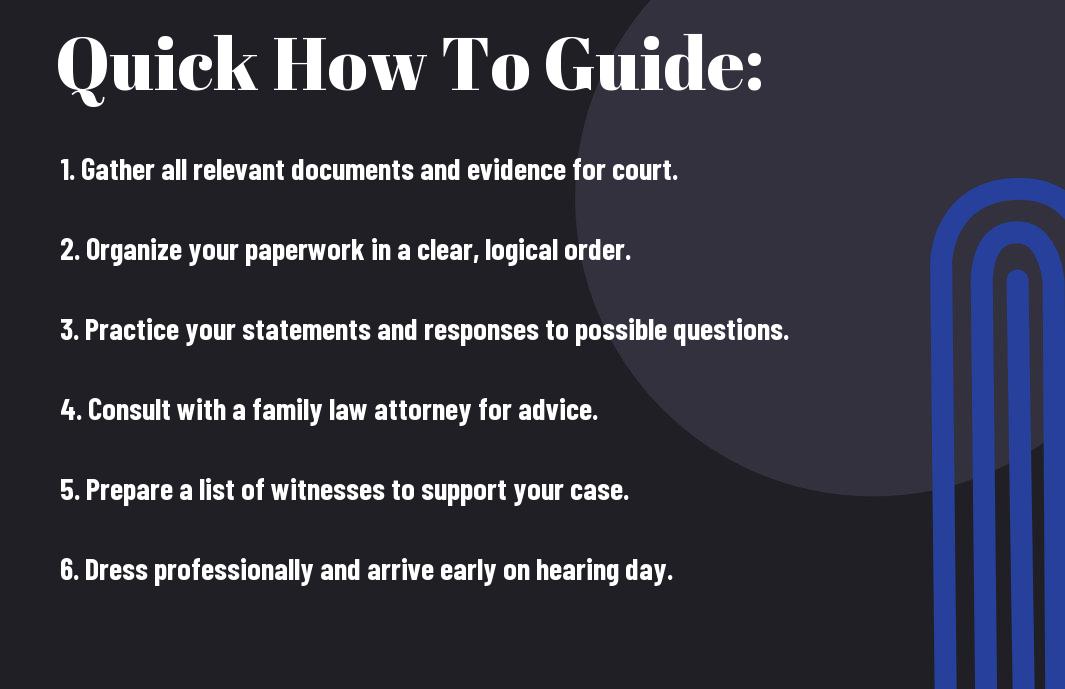
Court proceedings can be overwhelming, especially when it comes to child custody hearings. To advocate effectively for your child’s best interests, you must be well-prepared. This guide will provide you with crucial steps and strategies to navigate the complexities of family court. From gathering necessary documentation to understanding courtroom etiquette, you’ll learn how to present your case confidently and ensure that your voice is heard during this important time in your life.
Understanding Child Custody
The child custody process can be complex, and understanding the various aspects of custody is crucial for any parent involved in family court. It is vital to grasp the legal definitions, types of custody arrangements, and factors that influence custody decisions to effectively advocate for your child’s best interests.
Types of Custody Arrangements
Custody arrangements can vary significantly, impacting how you and your child experience post-separation life. Common types include:
- Physical Custody
- Legal Custody
- Sole Custody
- Joint Custody
- Visitation Rights
Knowing these types will help you understand what to request or negotiate for in your custody arrangement.
| Type of Custody | Description |
| Physical Custody | Where the child lives and spends time. |
| Legal Custody | Right to make significant decisions affecting the child. |
| Sole Custody | One parent has exclusive rights and responsibilities. |
| Joint Custody | Both parents share rights and responsibilities. |
| Visitation Rights | Schedule for the non-custodial parent to spend time with the child. |
Factors Influencing Custody Decisions
Types of custody decisions depend on various factors evaluated by the court. You should be aware of the following influencing elements:
- Child’s Age
- Parental Stability
- Parental Relationship with Child
- Living Situation
- Child’s Wishes
Recognizing these factors can guide you in preparing your case and demonstrate your commitment to your child’s welfare.
To effectively position yourself in a custody hearing, consider how each factor applies to your situation. Evaluating your child’s relationship with you, your stability, and other relevant circumstances can provide crucial insights as you prepare for the hearing.
- Emotional Support
- Financial Stability
- Community Ties
- Co-parenting Ability
- Child’s Needs
Recognizing these elements can strengthen your case for the type of custody arrangement you seek.
Preparing Documentation
Some preparation for a child custody hearing involves gathering necessary documentation that supports your case. This includes various forms of evidence such as parenting plans, communications, and financial records. By organizing these documents effectively, you can present a strong case in family court and demonstrate your commitment to your child’s wellbeing.
Essential Records to Gather
To prepare for your hearing, compile crucial records including your child’s school and medical records, any prior custody agreements, and evidence of your involvement in their life. Additionally, communications with the other parent and any relevant witnesses can reinforce your position, ensuring you present a comprehensive view of your parenting abilities.
Organizing Your Evidence
Some effective organization of your evidence can significantly enhance your presentation during the hearing. Create categorized folders for different types of documentation, such as financial records, emails, or text messages, and label them clearly. This enables you to quickly retrieve information during the hearing, making your arguments more logical and coherent.
Organizing your evidence not only aids in your presentation but also helps you understand the strengths and weaknesses of your case. Consider using chronological order for events or records to create a narrative that flows seamlessly. This method allows you to highlight important points effectively and ensures you don’t miss any critical details during your hearing.
Developing Your Case Strategy
To effectively prepare for your child custody hearing, you need to develop a comprehensive case strategy. This involves outlining your goals, understanding the factors that influence custody decisions, and deciding on the best approach to present your case. The strategy should reflect your child’s best interests while showcasing your ability to provide a stable and supportive environment.
Identifying Key Points to Address
Case preparation involves identifying key points to address that will support your position. Focus on elements such as your parenting style, your relationship with your child, and any relevant factors that showcase your ability to provide a nurturing environment. Being clear about your priorities will help you communicate effectively during the hearing.
Engaging Supportive Witnesses
Your success in family court can be significantly enhanced by engaging supportive witnesses. These individuals can provide testimony that strengthens your case by highlighting your parenting capabilities and your relationship with your child.
Strategy in finding supportive witnesses should include identifying friends, family members, or professionals who can speak positively about your parenting and character. Ensure these witnesses are willing to testify and understand the importance of their role. Prepare them by discussing potential questions and key points they should emphasize, making sure they align with your overall case strategy.

Tips for Courtroom Etiquette
Many parents underestimate the importance of courtroom etiquette during a child custody hearing. To maintain a respectful atmosphere, consider the following tips:
- Arrive on time and be prepared.
- Stand when speaking to the judge.
- Address the judge as “Your Honor.”
- Keep emotions in check and stay calm.
- Do not interrupt when others are speaking.
Recognizing the impact of your behavior in court can greatly influence the outcome of your case.
Dress and Presentation
Now is the time to focus on your appearance for the hearing. Dressing appropriately demonstrates respect for the court and the seriousness of the proceedings. Opt for business attire rather than casual clothing to convey your commitment to the process. Ensure that you are well-groomed, as how you present yourself can leave a lasting impression on the judge and others involved.
Communication with the Judge and Opposition
Any interactions with the judge and the opposing party should be conducted professionally and respectfully. It’s important to address the judge directly and clearly, articulating your thoughts and feelings. Speak in a calm manner and avoid any confrontational behavior with the opposition, as this will reflect positively on your character.
Opposition parties may provoke a reaction, but maintaining your composure is vital. Focus on articulating your points respectfully and directly to the judge. Use clear language when discussing your perspective, and always be truthful in your statements. By doing so, you not only assert your commitment to an amicable resolution but also establish yourself as a credible and reasonable party in the eyes of the court.
Anticipating Possible Challenges
Unlike a standard hearing, a child custody hearing can bring unexpected challenges. You should be prepared for various scenarios that may arise, such as last-minute evidence submissions or emotional outbursts. Anticipating these obstacles allows you to maintain composure and present your case effectively. By anticipating potential challenges, you can create a strategic plan to address them calmly and confidently in court.
Common Objections from the Other Party
While preparing for your hearing, it’s important to consider the objections the other party may raise. They may argue about your parenting abilities, financial stability, or any past behavior that could be seen as a disadvantage. Understanding these common objections will help you prepare a comprehensive response and present your case more effectively.
Preparing Rebuttals
Now that you are aware of possible objections, developing strong rebuttals is crucial. Your rebuttals should directly address each challenge posed by the other party, using factual evidence and clear explanations to reinforce your position.
Other effective rebuttals include emphasizing your strengths as a parent and presenting a consistent, stable environment for your child. Gathering supporting documents, such as witness statements or character references, can also bolster your arguments. Anticipating these objections and crafting well-thought-out responses can significantly influence the court’s perception of your case.
Understanding the Legal Process
Keep in mind that navigating the legal process during a child custody hearing can be complex. Familiarizing yourself with family court procedures will help you feel more confident as you present your case. Understanding how the court operates, what to expect, and the roles of various legal professionals involved will enable you to adequately prepare and advocate for your child’s best interests.
Key Steps in the Hearing Process
Assuming you have gathered all necessary documentation and evidence, the next steps in the hearing process generally involve filing your case, attending mediation sessions if required, and participating in a preliminary hearing. Each step is designed to facilitate a resolution that considers your child’s welfare, so it is crucial to approach each stage thoughtfully and with a clear plan.
Timeline Expectations
There’s no definitive timeline for child custody hearings, as the length can vary based on numerous factors, including the specifics of your case and the court’s schedule. Generally, after filing, you may need to wait several weeks for a hearing date, and the process could take months to resolve fully.
Another factor to consider is that unforeseen delays may occur. For instance, if additional evidence is required or if there are continuances, it could push back your hearing. Being aware of this variability can help you manage your expectations and plan accordingly. Staying organized and responsive during this waiting period will keep your case moving forward as efficiently as possible.
Final Words
Presently, preparing for a child custody hearing in family court requires careful planning and organization. You should gather all relevant documents, understand the legal framework surrounding custody, and prepare to articulate your parenting capabilities clearly. Consider your child’s best interests as you create your case, and practice presenting your arguments with confidence. Seeking legal advice can enhance your preparedness and understanding of courtroom procedures. By taking these steps, you position yourself as a thoughtful and responsible parent ready to advocate for the needs of your child.