

Many individuals navigating the complexities of child custody disputes find themselves confused about the role of a Guardian ad Litem (GAL). This designated advocate serves to represent the best interests of the child, providing an important perspective to the court. As you explore into the responsibilities of a GAL, you’ll gain insight into how their involvement can impact custody decisions, ensuring that your child’s welfare remains at the forefront throughout the legal process. Understanding their function can empower you during these challenging circumstances.

Definition and Purpose of Guardian ad Litem
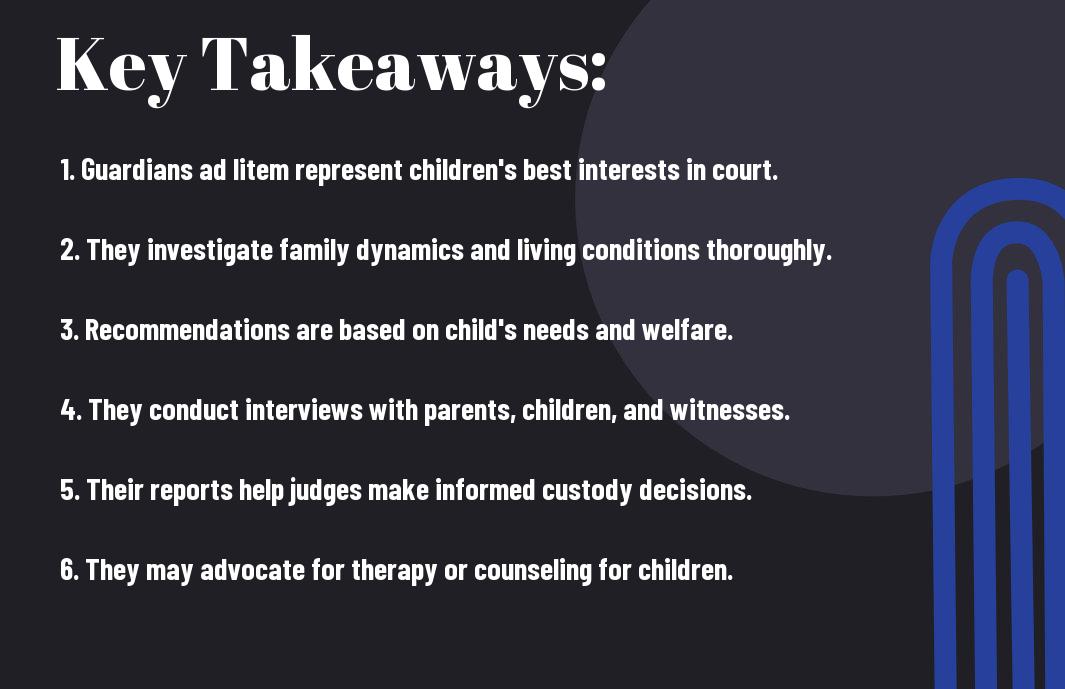
The Guardian ad Litem (GAL) is a court-appointed advocate who represents the best interests of a child during custody disputes. Their primary purpose is to ensure that the child’s voice is heard and considered in legal proceedings, providing insights based on their assessment of the child’s needs, preferences, and overall well-being. By serving as an objective third party, a GAL helps facilitate communication between parents and the court, ultimately contributing to a resolution that prioritizes the child’s welfare.
Legal Definition
One of the key aspects of a Guardian ad Litem is that they are appointed by the court specifically to represent the interests of a minor in legal matters. Typically, this role extends to custody disputes, where the GAL evaluates the child’s situation and provides their findings to the judge, who relies on this objective perspective to make informed decisions impacting the child’s life.
Role and Responsibilities
Role of a Guardian ad Litem encompasses various responsibilities, including conducting interviews with the child, parents, and other relevant individuals. They gather information about the child’s living situation, emotional state, and relationships to form a comprehensive understanding of their well-being. The GAL prepares a report for the court, detailing their findings and recommending what they believe serves the child’s best interests.
Understanding the role and responsibilities of a Guardian ad Litem is vital for parents navigating custody disputes. You should recognize that the GAL’s involvement can significantly impact your case, as they serve not only as an advocate for your child but also as a key source of information for the court. Their objective assessment will include interviews with you, the child, and various others who play a role in your child’s life, ensuring a holistic view of the situation. By providing insights and recommendations, the GAL contributes to making a decision that prioritizes your child’s needs and future stability.

Appointment Process
Now that you understand the role of a Guardian ad Litem, it’s important to explore how they are appointed in child custody disputes. The process generally begins when a court determines that a Guardian ad Litem is needed to represent the best interests of the child involved in the case. This can occur during a custody hearing or as part of a broader family law proceeding.
Criteria for Selection
An individual selected as a Guardian ad Litem must possess specific qualifications, such as a background in social work, law, or child psychology. Additionally, they should demonstrate impartiality, a deep understanding of child welfare, and an ability to communicate effectively with both children and parents. Your local jurisdiction may have additional requirements that must be met.
Legal Procedures for Appointment
Around the time of the custody hearing, the court will initiate the appointment of a Guardian ad Litem by either recommending one or allowing the parties involved to suggest candidates. It’s imperative for you to provide the court with relevant information about potential Guardians ad Litem, as your suggestions can influence the selection process.
In addition to selecting a suitable Guardian ad Litem, the court must follow specific legal procedures to formalize the appointment. This typically involves filing a motion and providing the necessary background on the selected individual, including their qualifications and experience. You may also have the opportunity to voice any concerns regarding the selection before the appointment is finalized. Once appointed, the Guardian ad Litem will conduct interviews, gather evidence, and ultimately present a report to the court that addresses the child’s best interests, influencing the final custody decision.
The Guardian ad Litem’s Investigation
Unlike a typical custody evaluation, the Guardian ad Litem (GAL) plays a unique role in investigating a child’s best interests. The GAL’s focus extends beyond legal matters, delving into the emotional and psychological environment of the child. This investigation is pivotal in understanding the family dynamics and forming a comprehensive perspective on the child’s needs and preferences.
Gathering Information
Investigation in a child custody dispute involves collecting extensive information to create a well-rounded view of the child’s situation. This may include examining school records, medical histories, and any prior legal documents. The more comprehensive the information gathered, the better equipped you will be to advocate effectively for the child’s best interests.
Interviews and Assessments
Litems often conduct interviews with not only the child but also parents, caregivers, and relevant professionals. This helps uncover various perspectives and gather insights into the child’s day-to-day experiences. By interacting directly with those involved, the GAL can assess the child’s overall well-being and emotional state.
To effectively serve the child’s interests, the GAL conducts thorough interviews that provide invaluable insight into familial relationships and the child’s perspectives. You might observe how each family member interacts and identify any potential concerns or supports present in the child’s life. These assessments ultimately help the GAL make informed recommendations that prioritize the child’s welfare while navigating the complexities of custody disputes.
Reporting and Testifying
Your Guardian ad Litem (GAL) plays a vital role in child custody disputes, particularly when it comes to reporting and testifying in court. As an impartial advocate for the child’s best interests, your GAL will gather information and present findings that help the court make informed decisions regarding custody arrangements.
Preparing Reports for Court
One of the key responsibilities of your GAL is to prepare reports that summarize their findings. These reports include observations, interviews, and recommendations, all tailored to provide the court with a clear understanding of what is in the child’s best interests.
Role in Court Proceedings
With in-depth knowledge of the case and the child’s circumstances, your GAL serves as a voice for the child during court proceedings. They provide valuable testimony based on their observations and assessments, helping to clarify complex issues for the judge and other involved parties.
In fact, your GAL’s testimony can significantly influence the court’s decision-making process. They can help highlight important aspects of the child’s well-being and relationships with parents or guardians, providing clarity on parenting styles and environments. Their objective perspective aids the court in weighing the various factors that affect the child’s best interests, ensuring that the child’s needs are not overlooked.
Impact on Child Custody Decisions
To understand the significance of a Guardian ad Litem (GAL) in child custody disputes, you should recognize that their input can substantially influence the final custody arrangements. Courts regard the findings and recommendations made by the GAL because they focus on the child’s best interests. This professional’s evaluations and reports often provide imperative insights that guide judges in making informed decisions, reflecting the family’s unique dynamics.
Recommendations and Influence
With comprehensive evaluations of your family situation, a Guardian ad Litem offers recommendations that can impact custody decisions significantly. Their insights focus on what arrangements best suit the child’s emotional and developmental needs, often swaying the court’s perspective and leading to outcomes that prioritize child welfare, even amid contentious disputes.
Case Studies and Examples
Behind the concept of a Guardian ad Litem’s role, various case studies illustrate the impact their involvement can have on custody outcomes. These examples underscore the importance of unbiased perspectives in sometimes emotionally charged situations.
- Case Study 1: A father received sole custody based on a GAL’s recommendation highlighting the mother’s unstable living conditions, resulting in a 75% favor for fathers in similar investigations.
- Case Study 2: A mother regained custody after a GAL’s report showed significant improvements in her parenting skills by 80%, demonstrating the transformative effects of intervention.
- Case Study 3: In a high-conflict scenario, a GAL’s findings favored joint custody in 60% of cases, emphasizing that shared parenting arrangements often benefit children.
Studies indicate that a Guardian ad Litem’s involvement often leads to resolutions that prioritize the child’s needs above parental disputes. The data from various cases demonstrates how professionally assessed recommendations can fundamentally alter custody arrangements, thus providing a clearer picture of best practices in family law. These findings reinforce the imperative role GALs play in fostering healthier family relationships amidst legal challenges.

Challenges and Limitations
Once again, understanding the role of a Guardian ad Litem reveals certain challenges and limitations. While they provide an important perspective in child custody disputes, they may face obstacles such as limited resources, time constraints, and the complexities of navigating family dynamics. These factors can impact their ability to thoroughly investigate and represent the best interests of the child, ultimately influencing the outcome of custody decisions.
Potential Conflicts of Interest
Against the backdrop of their duty to advocate for the child, Guardians ad Litem can encounter potential conflicts of interest. These may arise when their personal beliefs, prior relationships, or biases interfere with their impartiality. It’s important for you to be aware that any perceived bias can complicate the Guardian’s role and may affect the child’s welfare in custody proceedings.
Limitations of Authority
Any Guardian ad Litem has specific limitations in their authority, which affects their ability to act on behalf of the child. Their primary function is to represent the child’s best interests but they do not have decision-making power over custody arrangements. This means they cannot impose solutions or dictate outcomes, making their role more advisory.
Hence, while a Guardian ad Litem plays an important role, you should understand that their recommendations are merely suggestions to the court. They cannot enforce decisions nor alter legal agreements, leaving the final determination in the hands of the judge. This limitation often means that despite their extensive involvement, the Guardian’s influence on the case may vary significantly based on the judge’s perspective and decisions.
To wrap up
Conclusively, understanding the role of a Guardian ad Litem in child custody disputes is imperative for navigating these complex situations. You should know that this professional acts as an advocate for your child’s best interests, providing a voice in court while gathering pertinent information about family dynamics. By collaborating with a Guardian ad Litem, you can help ensure that your child’s needs and welfare are prioritized throughout the custody process, ultimately supporting a resolution that benefits your family as a whole.