

Most parents face the daunting choice between joint custody and sole custody during a separation or divorce. Understanding the pros and cons of each arrangement, as well as the legal implications, is crucial for making the best decision for you and your children. This blog post will guide you through the factors to consider when evaluating your custody options, offering insights into how these choices can affect your parenting journey and your child’s well-being.

Understanding Custody Types
For parents navigating custody arrangements, it’s vital to understand the differences between joint and sole custody. Each type affects your rights and responsibilities toward your child.
- Joint Custody: Shared parenting responsibilities between both parents.
- Sole Custody: One parent holds exclusive rights and responsibilities for the child.
- Legal Custody: The right to make significant decisions about the child’s welfare.
- Physical Custody: Where the child primarily resides.
- Visitation Rights: The schedule for the non-custodial parent to spend time with the child.
Perceiving these distinctions will help you make informed decisions regarding your child’s future.
| Type of Custody | Description |
| Joint Custody | Both parents share legal and physical custody. |
| Sole Custody | One parent has full legal and physical custody. |
| Legal Custody | Authority to make important life decisions for the child. |
| Physical Custody | Where the child lives most of the time. |
| Visitation Rights | Schedule for the non-custodial parent’s time with the child. |
Definition of Joint Custody
Around typically half of all custody arrangements in the U.S., joint custody allows parents to share responsibilities for their child’s upbringing. This setup involves both parents participating in making important decisions regarding education, healthcare, and overall welfare, fostering collaboration and mutual respect.
Definition of Sole Custody
Custody arrangements can also involve sole custody, where one parent has exclusive rights to make decisions about the child’s upbringing. This means that the custodial parent has full control over significant aspects of the child’s life, such as education and healthcare, while the non-custodial parent might only have visitation rights.
A sole custody arrangement generally arises in situations where joint custody is deemed not to be in the child’s best interest, often due to factors like parental conflict or concerns over the child’s well-being. It provides a stable environment for the child, ensuring that one parent can make decisions without opposing viewpoints, which can be beneficial in maintaining consistency and security for the child.
Pros of Joint Custody
If you are navigating custody arrangements, joint custody is often favored for its balanced approach. This arrangement allows both parents to play active roles in their children’s lives, fostering a sense of stability and continuity. By sharing responsibilities, you can maintain a cooperative relationship, which can be beneficial for your family dynamic and your children’s emotional well-being.
Benefits for Children
Before you decide on custody arrangements, consider the numerous advantages joint custody offers for children. They benefit from having meaningful relationships with both parents, which contributes to their social and emotional development. Joint custody can help minimize feelings of loss or isolation, as children feel loved and supported by both households.
Benefits for Parents
Against the common misconception that joint custody complicates parenting, it can actually provide significant benefits for you as a parent. With shared responsibilities, you have the opportunity to collaborate with the other parent on decisions, ensuring consistency in your child’s upbringing. Joint custody also helps you to balance your personal and professional life more effectively, as both parents share the obligations of daily care.
It allows you to actively engage in your child’s life while also giving you respite to focus on other aspects of your life. By working together, you and your co-parent can create a strong support system, allowing each of you to share parenting duties and maintain your individual identities. This partnership can lead to improved communication and a healthier co-parenting relationship, which ultimately benefits your children.
Cons of Joint Custody
Once again, while joint custody can offer a balanced parenting approach, it also comes with several drawbacks. One major disadvantage is the potential for logistical difficulties, as you may need to coordinate schedules and transportation between two households. This can lead to added stress and disruption in your child’s routine, particularly when both parents live far apart or have conflicting schedules. Additionally, if communication breaks down between you and your co-parent, it can create an unstable environment for your child.
Challenges in Co-Parenting
With joint custody, you may face numerous challenges related to co-parenting. Effective communication and collaboration with your co-parent is crucial, but it is not always easy. You may disagree on parenting styles, discipline, or education options, which can lead to confusion for your child and additional stress for both parents. Navigating these differences and maintaining a united front is vital for your child’s well-being, and finding common ground can require significant effort from both you and your co-parent.
Potential for Conflict
Between you and your co-parent, there is a heightened risk of conflict. Disputes may arise over decisions regarding your child’s welfare, leading to uncomfortable and tense interactions. Frequent disagreements can create a hostile co-parenting environment, which can negatively impact your child’s emotional and psychological development.
Understanding how potential conflicts can affect both you and your child is important. It’s crucial to approach disagreements with a focus on effective communication and problem-solving. Prioritizing your child’s needs over your personal grievances can help alleviate tensions. Establishing clear boundaries, sticking to agreements, and considering mediation if necessary can further minimize the likelihood of conflict, fostering a more positive co-parenting relationship.
Pros of Sole Custody
Many parents opt for sole custody due to its potential benefits, which can include enhanced stability for the child and more straightforward decision-making processes. In a sole custody arrangement, one parent is granted full legal and physical custody of the child, allowing them to make decisions without needing to consult the other parent. This can lead to a more consistent environment for the child, making it easier for them to thrive.
Stability for the Child
Behind every sole custody arrangement is a focus on providing the child with a stable and consistent living situation. When you are the sole custodian, you can create a nurturing environment that meets your child’s emotional and developmental needs without external disruptions that might come from frequent co-parenting interactions.
Control for the Custodial Parent
Along with providing stability, sole custody offers you the ability to make significant decisions regarding your child’s upbringing. You have full authority over aspects such as education, healthcare, and daily routines, ensuring that every choice aligns with your values and what you believe is best for your child.
But with that control comes great responsibility. You must consider how your decisions impact your child’s well-being and future. While you may not have to consult with the other parent, it’s still important to communicate openly with your child and involve them appropriately in decisions, fostering their sense of independence and self-worth. Balancing your authority with their needs can create a healthy, supportive environment for your child to flourish.
Cons of Sole Custody
Unlike joint custody, sole custody can place significant strain on the custodial parent, as they bear all the responsibilities of decision-making and parenting. This arrangement may lead to feelings of loneliness or burnout for you, and it can hinder your ability to seek help or share the parenting burden. Additionally, your child may miss out on building a strong relationship with the non-custodial parent, which can impact their overall well-being.
Impact on the Non-Custodial Parent
Around the country, non-custodial parents often experience feelings of exclusion and helplessness in a sole custody arrangement. This can lead to strained relationships and difficulties in co-parenting, as they may not have a say in important decisions regarding your child’s upbringing, education, and healthcare.
Emotional Considerations for the Child
Any child navigating a sole custody arrangement may struggle with feelings of abandonment or loyalty conflicts between parents. This dynamic can shape their emotional development and self-esteem, as they might internalize the separation as a personal failure or question their worth in the eyes of the non-custodial parent.
Indeed, the emotional ramifications for your child can be profound. They may experience anxiety and sadness regarding their relationship with the non-custodial parent, as well as uncertainty about their role within the family structure. It’s important to create an open dialogue with your child about their feelings, ensuring they understand that it’s okay to express themselves and seek support when needed. Addressing these emotional considerations head-on can help them feel more secure and loved despite the circumstances.
Legal Considerations
Your understanding of legal considerations in custody arrangements is vital. Courts typically prioritize the best interests of the child, leading to evaluations that include the parents’ living situations, emotional bonds, and capabilities to provide for the child’s needs. Knowledge of your state’s custody laws and procedures is necessary for navigating the complexities involved in custody agreements.
Factors Influencing Custody Decisions
Around the time of custody determinations, several factors can heavily influence the decisions made by the court, including:
- Parenting skills and involvement
- Child’s age and emotional needs
- Parental conflict levels
- Relationships with siblings
Thou should consider how each factor may impact your custody case.
Legal Processes for Custody Arrangements
Below are the legal processes commonly involved when seeking custody arrangements.
A typical custody case starts with one parent filing a petition for custody, followed by a series of court hearings. The court may require a detailed evaluation, including interviews and home visits. Mediation is often encouraged as a means of resolving custody disagreements amicably. It is advisable to have a lawyer who specializes in family law to guide you through each step and ensure compliance with legal standards.
Summing up
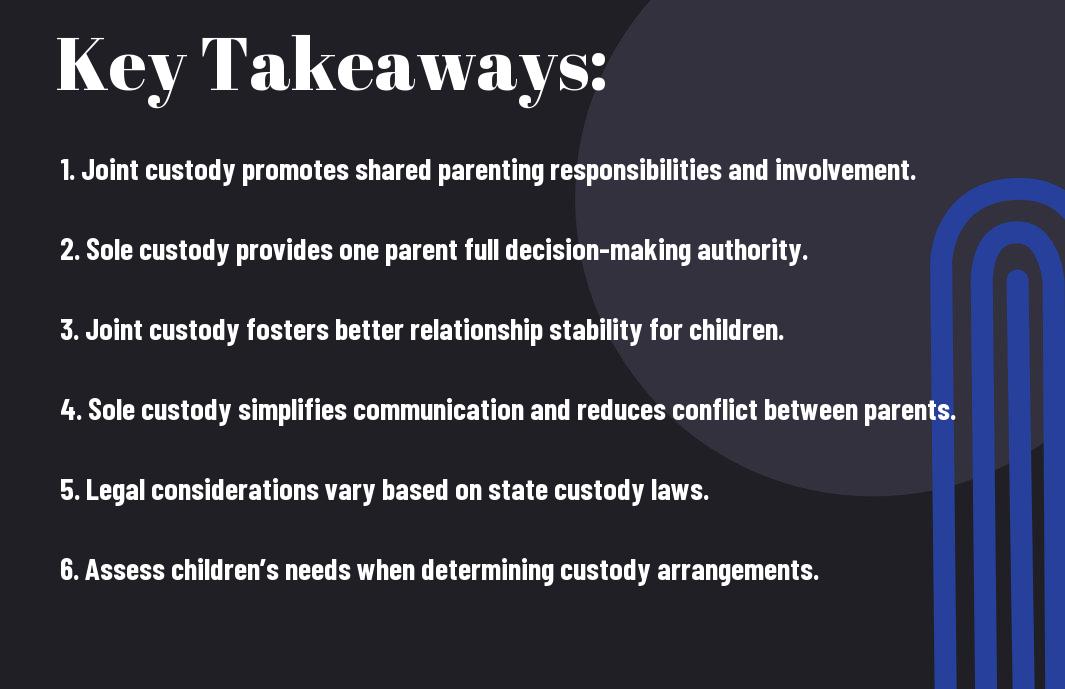
With this in mind, understanding the differences between joint custody and sole custody is crucial for making informed decisions that affect your family’s future. Both custody arrangements come with their own sets of advantages and disadvantages, impacting factors like parenting time and legal responsibilities. You should weigh these elements carefully, considering your child’s best interests while also evaluating your personal circumstances. Consulting with legal professionals can further clarify your options and help you navigate the complexities of custody arrangements effectively.