

You may find yourself facing important decisions regarding custody and relocation if you are a parent considering a move. Understanding the legal implications and how it can affect your parenting rights is necessary. This blog post will guide you through the key aspects of parental relocation, including the factors courts consider, your rights as a parent, and effective strategies for navigating this complex situation. By being informed, you will be better equipped to protect your interests and your child’s well-being during a relocation process.
Understanding Parental Relocation
Your decision to relocate as a parent can significantly impact your custody arrangements and your child’s life. It is imperative to understand the implications of moving, including how it affects your relationship with your child, co-parenting dynamics, and legal responsibilities. Being aware of the factors at play in parental relocation can help you navigate these complex matters more smoothly.
Legal Framework for Relocation
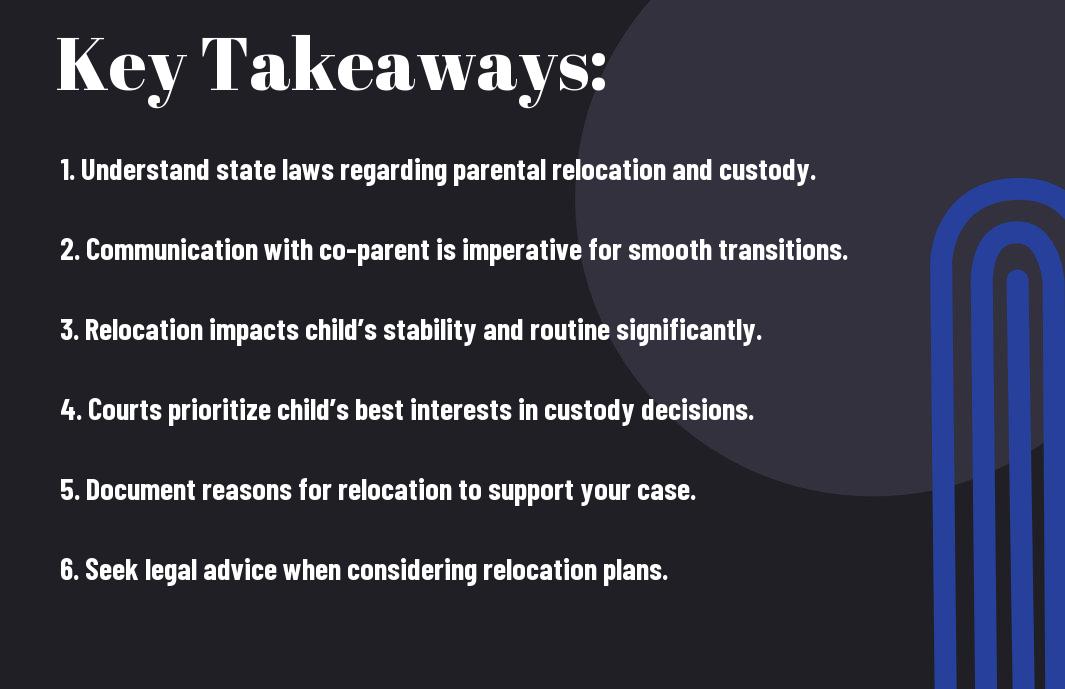
Parental relocation often falls under specific state laws that govern custody and visitation agreements. These regulations can vary widely, so it’s important to familiarize yourself with your jurisdiction’s rules regarding moving away with your child. In many cases, you may be required to notify your co-parent and possibly obtain court approval before making any significant relocation.
Factors Influencing Relocation Decisions
On deciding to relocate, several factors should be considered to determine how your move might affect your child’s best interests:
- The reason for your move
- The distance of the relocation
- Your child’s age and developmental needs
- Your custody agreement terms
- Impact on your child’s current living situation
Recognizing these elements can guide you in making an informed decision that prioritizes your child’s well-being.
Plus, evaluating these factors comprehensively can aid in strategizing your relocation approach:
- Consultation with legal professionals
- Open communication with your co-parent
- Consideration of your child’s emotional stability
- Your support network in the new location
- Potential changes in schooling and extracurricular activities
Recognizing these considerations helps you ensure that your child’s best interests remain at the forefront of your relocation plans.
Custody Agreements and Relocation
Some parents may face challenges when relocating after a custody agreement is in place. It’s important to understand how these changes can impact your custody arrangements and the relationship with your child. You should take the time to review your custody agreement and assess how your move may affect the existing terms, ensuring the child’s best interest remains the priority.
Types of Custody Arrangements
About custody arrangements, there are several types that you should be aware of:
| Type of Custody | Description |
| Legal Custody | Decision-making authority regarding the child’s upbringing. |
| Physical Custody | Where the child lives primarily. |
| Sole Custody | One parent has complete custody rights. |
| Joint Custody | Parents share custody rights and responsibilities. |
- Each arrangement can affect your relocation choices.
- Legal advice can help clarify your options.
- You may need to modify existing agreements.
- Communication with the other parent is imperative.
- Perceiving the situation from the child’s viewpoint is necessary.
Implications of Relocation on Custody
For parents considering relocation, it’s imperative to understand the implications it may have on your custody agreement. Moving can change the dynamics of co-parenting and access, making it necessary to reassess visitation schedules and communication methods. These changes can have lasting effects on your relationship with your child and the other parent.
Further, potential challenges may arise when seeking approval for relocation, particularly if the other parent disagrees. Courts typically evaluate the reasons for the move, the child’s best interests, and the impact on their relationship with the non-relocation parent. Being prepared for these discussions will help you navigate the process more effectively. Open dialogue with the other parent can also lead to more amicable solutions regarding adjustments to your custody arrangement post-relocation.
The Relocation Process
All parents considering relocation must navigate a complex process to ensure their children’s best interests are prioritized. This often involves understanding legal requirements, assessing potential impacts on custody arrangements, and possibly engaging in negotiations with the other parent. Being informed about this process can help you make smoother transitions while still fulfilling your parenting responsibilities.
Notice Requirements
Relocation typically requires you to provide written notice to the other parent, detailing your intent to move and the new location. This notice must be given within a specific timeframe, and it should include relevant information regarding your new living situation. Failing to provide proper notice could result in legal consequences, potentially jeopardizing your custody arrangement.
Court Approval and Hearings
After you have given notice of your relocation, a court approval process may be necessary to finalize the move. This often includes a hearing where both parents can present their case regarding the impact of the relocation on the child’s wellbeing and overall custody arrangement.
Consequently, understanding the court’s stance on parental relocation is important as they weigh factors such as the child’s relationship with both parents, the reasons for your move, and how the relocation will affect the child’s routine. You may be required to provide evidence and articulate how your relocation will ultimately benefit your child. Being well-prepared for these hearings can greatly influence the outcome and help you secure a favorable decision for your family’s future.

Impact on Children
Unlike adults, children may struggle to comprehend the complexities of parental relocation and custody arrangements. The upheaval of moving can affect their sense of stability and connection with familiar surroundings, friends, and caregivers. As they navigate these changes, it’s necessary for you to provide support and reassurance, helping them understand the situation while maintaining their emotional well-being.
Psychological Considerations
Beside geographic changes, the emotional repercussions of relocation can be significant for children. You should be aware that they may experience feelings of anxiety, loss, or isolation. Actively engaging in discussions about their emotions can help them process the transition and build resilience.
Maintaining Relationships
One of the most important aspects of a relocation is how it affects your child’s relationships with family and friends. To ensure that your child maintains meaningful connections, consider incorporating regular communication methods such as video calls, texts, or scheduled visits, allowing them to nurture those relationships despite the distance.
A strong emphasis on maintaining relationships is necessary to your child’s emotional health. You can encourage them to participate in shared activities or hobbies with friends and family, even if these interactions are virtual. By planning visits during holidays or creating a routine that includes regular check-ins, you’ll help your child feel connected and supported through the transition. This proactive approach can alleviate feelings of loneliness and make the new environment feel more welcoming.
Modifying Custody After Relocation
Once again, relocating can significantly impact your custody arrangement. If you or your co-parent has moved, it may be necessary to seek a modification to ensure that the current custody order reflects the new circumstances. Courts typically evaluate the reason for the relocation, the new living situation, and the impact it will have on your child’s life when considering any changes to custody agreements.
Legal Procedures
For modifying custody after a relocation, you will need to initiate legal procedures to formally request a change. This usually involves filing a petition with the family court, outlining the reasons for the modification and how it aligns with your child’s best interests. It’s advisable to seek legal counsel to navigate this process effectively and ensure your rights and concerns are adequately represented.
Best Interests of the Child Standard
Around the issue of modifying custody, courts often apply the “best interests of the child” standard. This means that any custody decision will prioritize your child’s well-being and happiness above all else. Various factors are evaluated, including your child’s emotional needs, educational opportunities, and stability in their new environment, ultimately shaping the court’s determination.
At the heart of the “best interests of the child” standard is the understanding that every child is unique. The court will assess not only how the relocation affects your child’s day-to-day life but also their long-term emotional and social development. Factors such as the child’s age, their relationship with each parent, and their wishes (if they are old enough to express them) will also play a role in the decision-making process. Being prepared to demonstrate how the modification supports your child’s overall well-being can strengthen your case.
Resources for Parents
Many parents facing relocation challenges can benefit from a variety of resources available to help navigate custody matters. From legal assistance to community support groups, these resources empower you to make informed decisions about your family’s future.
Legal Assistance
Legal resources can provide you with expert guidance tailored to your specific circumstances. Engaging a family law attorney can help clarify the implications of relocation on custody arrangements and ensure your interests, as well as those of your children, are adequately protected during any transitions.
Support Groups
Around you, numerous support groups exist that can provide encouragement and insights from parents facing similar situations. These groups foster understanding and can help alleviate feelings of isolation by connecting you with others who share your experiences.
To find support groups, consider looking into local parenting organizations, online communities, or social media platforms dedicated to family law issues. Connecting with people in similar positions can offer valuable perspectives and coping strategies, creating a network of support that can enhance your emotional well-being during challenging times.