

It’s crucial to grasp the distinctions between legal and physical custody when navigating the complex landscape of family law. Understanding these concepts can empower you to make informed decisions about your parenting rights and responsibilities. Legal custody pertains to the right to make significant decisions regarding your child’s upbringing, such as education and healthcare, while physical custody involves where your child resides and the time spent with each parent. This post will break down these terms, helping you comprehend their implications in your custody arrangement.
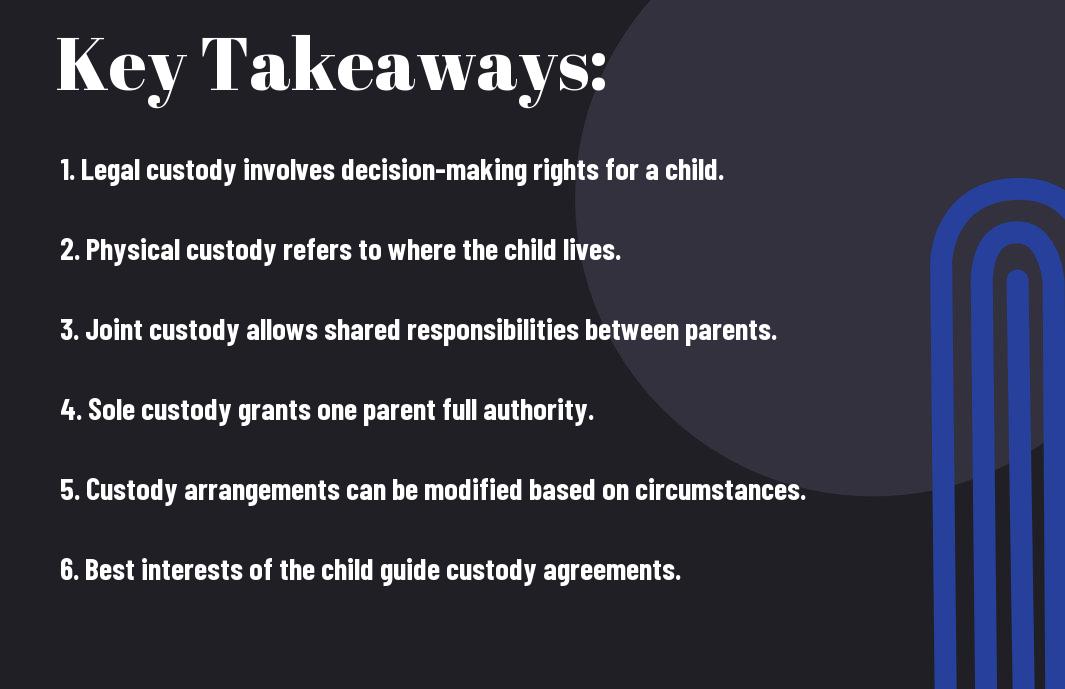

Understanding Custody: Definitions
For anyone navigating the complexities of child custody, grasping the definitions of legal and physical custody is vital. Legal custody refers to the right to make significant decisions about your child’s upbringing, including education and healthcare. In contrast, physical custody pertains to where your child lives and the day-to-day care they receive. Understanding these distinctions will empower you to make informed choices for your child’s future.
What is Legal Custody?
Understanding legal custody means recognizing it as the authority to make important life decisions regarding your child. This authority typically includes choices about education, medical care, and religious upbringing. Legal custody can be held jointly by both parents, or it can be awarded to one parent, depending on circumstances and the best interests of the child.
What is Physical Custody?
Between legal custody and physical custody, the latter focuses on the child’s residential arrangements and daily life. Physical custody determines where your child lives most of the time and with whom. This custody type can also be shared between parents or granted primarily to one, influencing how you and your child experience day-to-day interactions and bonding time.
Considering physical custody involves evaluating the child’s living situation and daily routines. It impacts your child’s stability, emotional well-being, and relationship with each parent. When determining physical custody arrangements, factors such as work schedules, parental involvement, and the child’s preferences may be taken into account to create a supportive environment for your child’s growth.
Key Differences Between Legal and Physical Custody
There’s a fundamental distinction between legal and physical custody that impacts how you navigate your parenting responsibilities. Legal custody pertains to the right to make important decisions about your child’s upbringing, while physical custody involves with whom the child lives and who takes care of them on a daily basis. Understanding these differences can help you better prepare for custody discussions and create a more effective co-parenting arrangement.
Authority and Responsibilities
Behind the scenes, legal custody grants you the authority to decide on your child’s education, healthcare, and religion. This means that if you have legal custody, you are responsible for making significant life choices that affect your child’s future. In contrast, physical custody focuses more on day-to-day well-being and lifestyle, often requiring collaboration with the other parent to ensure your child’s needs are met.
Day-to-Day Care and Living Arrangements
By understanding physical custody, you can clarify who provides day-to-day care for your child. This arrangement stipulates where your child will live and how their immediate needs, such as meals, school, and extracurricular activities, will be met.
Another important aspect of physical custody is the structure it provides for your child’s daily routine. Physical custody arrangements define where your child sleeps and spends their time, which can benefit their emotional stability and development. If you share physical custody, it’s imperative to establish a consistent schedule that promotes cooperation and minimizes disruptions in your child’s life and provides a supportive environment as they transition between homes.
Types of Custody Arrangements
All custody arrangements can be categorized into different types to suit your family’s unique needs. These arrangements can include:
- Sole Custody
- Joint Custody
- Physical Custody
- Legal Custody
- Bird’s Nest Custody
Thou will need to understand these options to make informed decisions about your child’s well-being.
| Type of Custody | Description |
| Sole Custody | One parent has full responsibility for the child. |
| Joint Custody | Both parents share responsibilities and decisions. |
| Physical Custody | Refers to where the child lives. |
| Legal Custody | Involves decision-making authority about the child. |
| Bird’s Nest Custody | Child stays in one home, parents rotate in and out. |
Sole Custody
An arrangement where one parent is given full legal and physical custody of the child. This means that you, as the custodial parent, will make all major decisions regarding your child’s upbringing, education, and health. The non-custodial parent may still have visitation rights, but they do not have a say in daily decisions.
Joint Custody
Below is a shared custody arrangement where both parents retain legal and physical custody of the child. This means you and the other parent will collaborate on decision-making for your child’s life, such as education, health care, and religious upbringing. Joint custody can promote an ongoing relationship between the child and both parents.
A successful joint custody arrangement requires effective communication and cooperation between you and the other parent. This may involve creating a detailed parenting plan that outlines responsibilities, schedules, and key decision-making processes. By working together, you can provide a stable and loving environment for your child, despite the challenges that may arise.
Factors Influencing Custody Decisions
Once again, understanding the factors influencing custody decisions is important for navigating this complex area of family law. Courts take various elements into consideration, including:
- Your child’s age and emotional needs
- Your relationship with your child
- Your ability to provide a stable environment
- The presence of domestic violence or substance abuse
Perceiving these key factors can significantly impact the outcome of custody arrangements.
Best Interests of the Child
Best practices in custody decisions focus on the best interests of your child, which is the primary concern for courts. This determination involves evaluating what will provide a safe, loving, and supportive environment for them as they grow.
Parental Fitness and Stability
Parental fitness and stability are other significant factors that courts evaluate in custody decisions. Your ability to consistently provide emotional support, financial stability, and a nurturing environment are important for determining the custody arrangement.
The overall perception of your parental fitness includes factors like your mental health, history of caregiving, and lifestyle choices. Courts will assess how these elements contribute to your capability of fostering a healthy space for your child. This assessment can influence whether joint or sole custody is awarded, emphasizing the need for you to demonstrate a commitment to maintaining a stable home life.
Common Custody Disputes
Keep in mind that custody disputes often arise from differing perspectives on what is best for the child. These disputes can involve disagreements about legal custody, physical custody, visitation schedules, or even parental responsibilities. Understanding the underlying issues is crucial for effectively navigating the conflict and reaching a resolution that prioritizes your child’s well-being.
Modifications of Custody Orders
Among the numerous legal considerations, modifications of custody orders can arise when there is a significant change in circumstances. Life events such as job loss, relocation, or even a change in a parent’s health can warrant a reevaluation of your current custody agreement. To amend a custody order, you typically need to demonstrate to the court that the change is in the best interest of the child.
Relocation Issues
Before making any decisions about moving, you should understand the implications it may have on your custody arrangement. Relocation can complicate custody agreements and lead to disputes, particularly if it affects the child’s relationship with the non-custodial parent. Courts usually require that you provide notice and potentially obtain permission before relocating with your child.
With relocation often comes the potential for significant changes to visitation schedules and co-parenting dynamics. If you are contemplating a move, it’s important to review your current custody order and consult with a legal professional to assess how your proposed relocation might impact your rights and responsibilities as a parent. Failing to communicate or seek approval can lead to legal consequences and negatively affect your relationship with your child.
Legal Considerations and Procedures
Now that you understand the basic differences between legal and physical custody, it’s vital to probe into the legal considerations and procedures that govern these arrangements. Custody battles can be complex and often involve extensive legal documentation and specific court protocols that must be followed. Familiarizing yourself with these requirements is important for ensuring that your rights are protected throughout the custody process.
Filing for Custody
To initiate a custody agreement, you must file a petition with the appropriate family court in your jurisdiction. This document outlines your relationship to the child and your proposed custody arrangement. It is important to include all required information to avoid delays. You may also need to serve the other parent with these documents, prompting them to respond within a specified timeframe.
Mediation and Court Proceedings
Above settling matters in court, mediation is often encouraged as a means to resolve custody disputes amicably. This process involves a neutral third party who facilitates discussions between you and the other parent, aiming to create a mutually beneficial custody arrangement. Should mediation fail, your case will progress to court proceedings, where a judge will evaluate evidence and testimonies before making a final decision.
Court proceedings can be overwhelming, but understanding the process helps you navigate it more effectively. During these sessions, both parties present their cases, including documentation of their relationship with the child and relevant circumstances. Judges typically prioritize the child’s best interests, considering factors such as stability, emotional bonds, and each parent’s ability to provide care. Being well-prepared with evidence and a clear understanding of your position can significantly influence the outcome.
To wrap up
As a reminder, understanding the difference between legal and physical custody is vital for navigating custody arrangements effectively. Legal custody involves the right to make important decisions regarding your child’s upbringing, while physical custody pertains to where your child resides. Being aware of these distinctions can help you advocate for your rights and ensure that your child’s best interests are prioritized. By familiarizing yourself with these concepts, you can make informed choices that contribute to your child’s well-being and stability.