

Over the years, many parents have grappled with the decision of how to settle child custody disputes. With options like mediation and court proceedings, it’s crucial to weigh the benefits and drawbacks of each method to determine what’s best for you and your family. While court can offer a definitive resolution, mediation may provide a more collaborative and amicable solution, preserving your relationships and allowing for greater flexibility. This blog post will help you navigate the differences between these two approaches, empowering you to make an informed choice regarding your child custody situation.

Understanding Child Custody Mediation
Before exploring your options for child custody arrangements, it’s necessary to understand child custody mediation. This alternative dispute resolution method allows you and your co-parent to negotiate parenting plans with the help of a neutral third-party mediator. Mediation emphasizes communication and cooperation, aiming to create a mutually beneficial agreement while minimizing conflict and maintaining focus on your children’s best interests.
Definition and Process
Any child custody mediation process begins with both parents agreeing to meet with a mediator. During these sessions, you will discuss various aspects of custody, including visitation schedules, decision-making authority, and your children’s needs. The mediator facilitates the discussion, helping you navigate any emotional challenges while keeping the focus on achieving a resolution that works for both parties.
Benefits of Mediation
Custody mediation offers numerous advantages that can significantly benefit you and your children. This process encourages open communication, allowing you to work together to create a tailored parenting plan that addresses your family’s unique needs. Unlike court-imposed decisions, mediation fosters cooperation and can lead to better long-term relationships with your co-parent, all while reducing stress and legal expenses.
Considering the potential advantages, mediation can be a more effective way to handle child custody arrangements than traditional court processes. You maintain greater control over the outcome by fostering collaboration, which often leads to more lasting agreements. Additionally, the often less adversarial environment can help improve future communication with your co-parent, creating a healthier co-parenting relationship for your children.

The Court Process for Child Custody
There’s a clear and structured process when it comes to obtaining child custody through the court system. This process typically begins with the filing of a petition, followed by hearings and potentially a trial, where a judge makes the final determination on custody arrangements. You will need to present your case, including evidence and testimonies, which can be both emotionally challenging and time-consuming. The outcome is legally binding, meaning that the decisions made by the court will directly impact your parental rights and responsibilities.
Overview of Court Proceedings
Above all, court proceedings for child custody involve several key steps, including filing petitions, attending hearings, and possibly engaging in mediation before a judge makes a final ruling. You will find that each state has its own specific procedures and timelines, which can significantly affect the flow of your case. These proceedings are designed to ensure that your child’s best interests are prioritized, culminating in a custody arrangement that a judge enforces. Your participation and representation in this process are vital for achieving a favorable outcome.
Advantages and Disadvantages of Court
Child custody court proceedings come with both advantages and disadvantages. On one hand, you gain a legal decision backed by the authority of the court, which can help enforce custody agreements and ensure compliance. On the other hand, the process can be lengthy, stressful, and adversarial, potentially straining relationships with your co-parent. Additionally, because a judge ultimately makes the decision, you may have less control over the outcome compared to mediation, where you can negotiate terms directly.
Due to the formal nature of court proceedings, they can provide a sense of security as legal decisions are enforceable. This can foster a degree of stability for you and your child, knowing that you have a court-mandated arrangement. However, the disadvantages include the potential for increased conflict and higher costs associated with legal representation. The lengthy process can also lead to emotional strain, making it vital for you to weigh these factors carefully when deciding whether court is the best route for your child custody situation.

Comparing Mediation and Court
Now, choosing between mediation and court for child custody can significantly impact your experience and outcomes. Below is a comparison to help you evaluate which option may suit your situation best:
Comparison Table
| Mediation | Court |
|---|---|
| More collaborative and flexible | More formal and adversarial |
| Usually faster and less costly | Can be lengthy and expensive |
| You retain more control over the outcome | Decisions made by a judge |
| Confidential discussions | Public court hearings |
Cost Considerations
Across the board, mediation tends to be more cost-effective than going through court. Many couples find that the fees associated with filing in court can stack up quickly, especially with potential attorney fees and multiple hearings. Mediation, on the other hand, generally involves lower upfront costs and a streamlined process, allowing you to allocate resources more efficiently.
Emotional Impact on Families
Considerations around emotional upheaval play a significant role in the choice between mediation and court. Each option has its emotional weight, but mediation often fosters a more positive environment conducive to cooperation, which can benefit you and your child in the long run.
The emotional impact of mediation is typically less severe compared to court proceedings, which can be stressful and contentious. Mediation’s focus on communication and problem-solving promotes collaboration, helping to reduce tension and foster a cooperative atmosphere. This can be particularly beneficial for your children, as they often feel the strain of parental conflict, making a smoother transition easier for everyone involved.
Factors to Consider When Choosing
To make an informed decision between mediation and court for child custody, consider the following factors:
- Your communication style with the other parent
- The complexity of your custody situation
- The emotional environment for your child
- Your willingness to negotiate and collaborate
- The potential costs and time involved
Assume that each factor plays a significant role in determining the most suitable path for your unique situation.
Family Dynamics
On evaluating your family dynamics, understand that relationships between parents, and any extended family members, can significantly influence custody outcomes. A collaborative approach in mediation may foster healthier communication, while a court process might escalate tensions, making it necessary to assess how you and the other parent interact.
The Best Interests of the Child
Against the backdrop of child custody decisions, prioritizing the best interests of your child is fundamental. This encompasses emotional, physical, and educational needs, urging you to consider which option—mediation or court—aligns best with your child’s wellbeing.
Consequently, understanding what constitutes the best interests of the child can help you navigate this decision. Factors include the child’s emotional bonding with each parent, stability in living situations, and the capability of both parents to provide a nurturing environment. By prioritizing these elements, you can choose the approach that ultimately supports your child’s growth and happiness.
Success Rates in Mediation vs. Court
Unlike court proceedings, which can often lead to contentious battles, mediation generally promotes cooperation and communication between parents. Many couples find that they achieve better outcomes through mediation, as it allows for greater control over the outcome and fosters a spirit of collaboration. This approach often leads to higher satisfaction rates and compliance with agreements, significantly reducing the likelihood of future disputes.
Statistics and Outcomes
On average, studies indicate that mediation has a success rate of 70-90%. Parents who engage in mediation often reach agreements that are more tailored to their children’s needs. In contrast, court-mandated custody arrangements tend to have a lower satisfaction rate, as these decisions are made by a judge who may not fully understand your family’s dynamics.
Expert Opinions
Success rates in mediation are often bolstered by expert endorsements, highlighting its effectiveness in resolving custody disputes. Many family law practitioners advocate for mediation as the preferred method for settling child custody matters.
Due to the emphasis on collaboration and understanding in mediation, experts frequently point out that this approach allows parents to maintain a better relationship for the sake of their children. While court processes can create animosity and lead to more significant emotional distress, mediation focuses on preventing conflict and fostering mutual respect. These characteristics contribute not only to higher success rates but also to long-term compliance and satisfaction with the arrangements made.
Real-Life Experiences
Your understanding of child custody mediation versus court can greatly benefit from real-life experiences. Hearing about others’ journeys can provide insights that statistics alone may not convey. By exploring case studies and testimonials, you can gain a clearer picture of which approach might be best for your situation.
Case Studies
An analysis of various case studies reveals intriguing insights into custody outcomes:
- 70% of families who chose mediation reported reaching an agreement within 3 sessions.
- Only 30% of court cases were resolved without multiple hearings, leading to longer durations and higher costs.
- 85% of mediated cases resulted in cooperative co-parenting arrangements, compared to 50% from court determinations.
- Families using mediation spent an average of $3,000, while court cases averaged over $15,000.
Testimonials
Above all, personal accounts from those who have navigated custody disputes can offer valuable perspectives. Hearing how others approached the mediation or court process can alleviate some of the anxiety surrounding your own situation.
It is common for people to share how mediation allowed for more open communication, ultimately leading to a more amicable solution. These testimonials often highlight not just the financial benefits, but the emotional relief from avoiding a contentious court battle. Understanding their experiences can guide you in making your own informed decision.
To wrap up
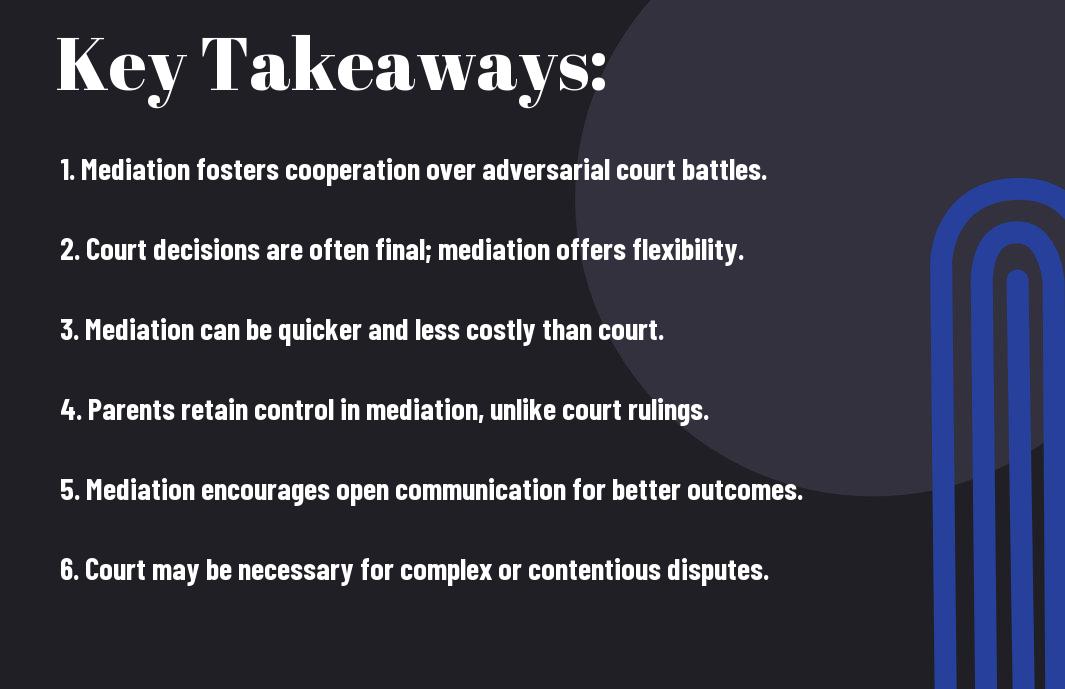
Ultimately, choosing between child custody mediation and court proceedings depends on your unique situation. Mediation can offer you a more collaborative and less adversarial environment, often leading to faster resolutions and less emotional strain on you and your children. However, court may be necessary if disputes are severe or involve domestic violence. Carefully consider your goals, your children’s needs, and the potential benefits and drawbacks of each option before making a decision. Seeking professional advice can also guide you in making the best choice for your family’s future.