

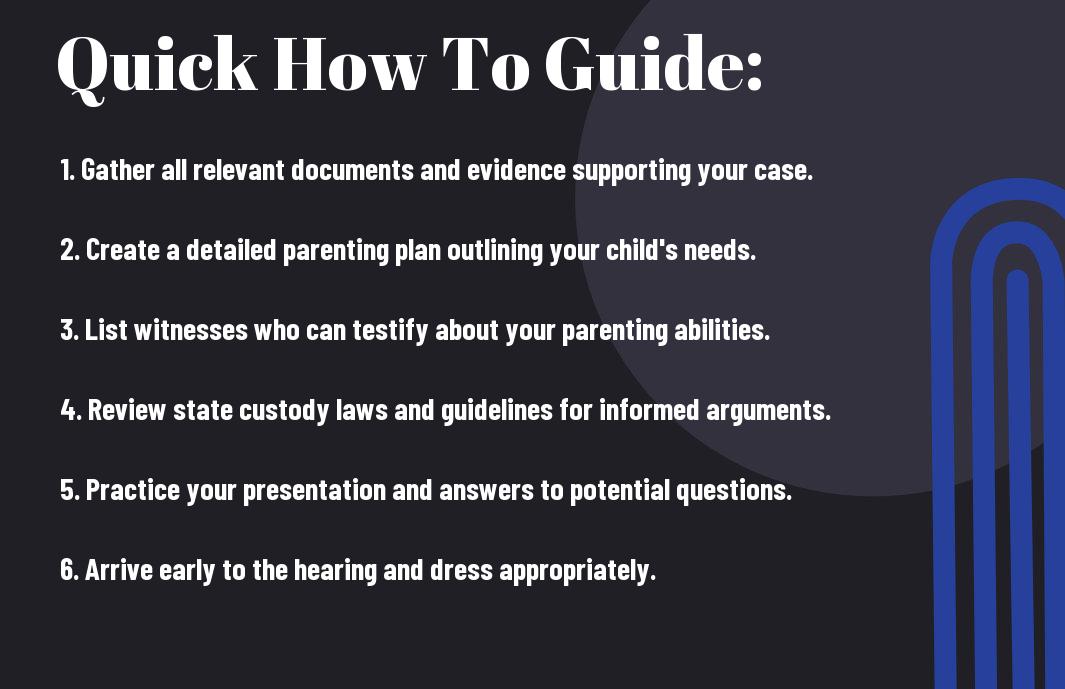
There’s no denying that preparing for a child custody hearing can feel overwhelming. However, with the right guidance and steps, you can approach this process with confidence. In this step-by-step guide, you’ll learn how to gather evidence, organize your thoughts, and present your case effectively in court. By following these actionable tips, you can set yourself up for success and ensure that your child’s best interests remain at the forefront of your efforts.
Understanding Child Custody
A child custody hearing is a vital process where a court determines the arrangement for the care and control of your child. Understanding the different types of custody and the factors that influence decisions will better prepare you for this significant event.
Types of Custody Arrangements
If you are navigating a child custody hearing, it’s crucial to know the types of custody arrangements available:
| Physical Custody | The child lives primarily with one parent. |
| Legal Custody | One or both parents have the right to make decisions about the child’s upbringing. |
| Sole Custody | One parent has full responsibility for the child. |
| Joint Custody | Both parents share the responsibilities and rights. |
| Bird’s Nest Custody | The child stays in one home while parents take turns living with them. |
- Perceiving these arrangements will help you advocate for the best situation for your child.
Key Factors in Custody Determination
Custody decisions are influenced by various key factors that aim to serve the child’s best interests:
- The child’s age and developmental needs.
- Your ability as a parent to provide a stable environment.
- The child’s relationship with each parent.
- Continuity in your child’s education and social life.
- Any history of abuse or neglect.
It’s vital to understand that the court will weigh these factors carefully during your hearing. Effective communication with legal representatives can enhance your presentation:
- Recognizing how these aspects impact your case can improve your chances of a favorable outcome.

Preparing Your Case
One of the most important steps in preparing for a child custody hearing is to develop a strong case that demonstrates your ability to provide a stable and nurturing environment for your child. This involves gathering evidence, outlining your concerns, and presenting your argument clearly and logically. You should be ready to explain why your proposed custody arrangement serves your child’s best interests. Consider all aspects of your child’s life, including their emotional and physical well-being, and be prepared to articulate how you can support their needs moving forward.
Gathering Necessary Documentation
Even if you believe your case is strong, having solid documentation to support your claims is important. Collect records such as school reports, medical records, and any evidence of your involvement in your child’s life, including photos or communication logs that highlight your relationship with them. Organizing these documents not only strengthens your case but also helps you present a compelling argument during the hearing.
Assessing Your Child’s Needs
Now is the time to evaluate what your child truly requires in order to thrive emotionally, physically, and academically. Their needs may include stability, access to education, the ability to maintain friendships, and emotional support, so take a comprehensive view of their daily life. Consider discussing these needs with teachers, caregivers, or counselors who can provide additional insights.
Gathering this information will allow you to demonstrate a deep understanding of your child’s unique needs in court. Consider your child’s lifestyle, hobbies, and any specific challenges they face. Providing a well-rounded view of their situation will strengthen your case by showing the judge that you are not only committed to your child’s well-being but also capable of providing the necessary support for their growth and happiness.

Developing a Parenting Plan
Your parenting plan is central to your child custody hearing as it outlines how you and the other parent will raise your child post-separation. This plan should reflect your child’s best interests, ensuring stability and continuity in their lives. Clearly define decision-making responsibilities, timeshare schedules, and provisions for holidays or special occasions. A well-thought-out parenting plan demonstrates your commitment to co-parenting effectively and prioritizing your child’s needs.
Guidelines for Creating a Balanced Plan
Assuming you prioritize your child’s well-being, start by discussing the daily routines, education, and healthcare needs with the other parent. Create a plan that balances both parents’ time, considers each parent’s work schedules, and addresses possible contingencies. Ensure flexibility, as life circumstances may change, while maintaining clear communication regarding any modifications.
Tips for Negotiating with the Other Parent
You should approach negotiations with an open mind, aiming for a cooperative and respectful dialogue. Consider these tips to foster a productive discussion:
- Use “I” statements to express your feelings and needs
- Focus on the child’s interests rather than personal grievances
- Stay calm and avoid confrontational language
- Be willing to compromise on certain issues
Assume that a collaborative effort will yield a better plan for your child, enhancing the chances of a smooth co-parenting relationship moving forward.
Parenting is a shared responsibility, and navigating negotiations can be challenging. By remaining patient and committed, you can facilitate a healthier exchange. Additional tips for successful negotiations include:
- Listening actively to the other parent’s concerns
- Keeping communication focused on your child’s needs
- Utilizing mediation if discussions become too contentious
Assume that being open to dialogue can lead to mutual understanding and a more effective co-parenting plan. Aim to build a positive partnership for your child’s benefit.
Legal Representation
Once again, having proper legal representation is imperative during a child custody hearing. An experienced attorney will not only guide you through the complex legal process but also advocate for your rights and your child’s well-being. They will help you gather necessary documentation, prepare your arguments, and represent you effectively in court. Having an expert by your side can greatly improve the chances of reaching a favorable outcome.
Choosing the Right Attorney
Any decision regarding legal representation should not be taken lightly. Look for an attorney specializing in family law, particularly in child custody cases. Their experience in navigating similar cases can provide you with invaluable insights and strategies tailored to your situation. Trust, communication, and compatibility with your attorney are also key elements to consider during your search for the right fit.
Understanding Legal Costs
Choosing a legal representative means you’ll need to understand the associated costs. Legal fees can vary significantly depending on the attorney’s experience, complexity of your case, and geographic location. Being clear about your budget and discussing potential costs upfront with your attorney can prevent any surprises down the line.
For instance, some attorneys charge a flat fee for custody cases, while others work on an hourly basis. It’s important to request a breakdown of potential costs, such as filing fees, consultation fees, and any additional expenses that could arise during your case. Understanding these financial aspects will allow you to plan effectively and ensure that you can secure the representation you need without compromising your budget.
Courtroom Etiquette
Unlike what you may see on television, courtroom proceedings require a respectful atmosphere that upholds the dignity of the court. As you prepare for your child custody hearing, it’s important to understand the expected etiquette, which includes dressing appropriately, being punctual, and refraining from any loud or disruptive behavior. Following these guidelines will demonstrate your seriousness about the proceedings and help create a positive impression on the judge.
Proper Conduct during the Hearing
An important aspect of courtroom etiquette is maintaining proper conduct during the hearing. You should address the judge as “Your Honor” and wait your turn to speak. Avoid interrupting others, even if you feel strongly about what is being said. This respectful behavior not only reflects well on you but also creates a more conducive environment for presenting your case.
Tips for Presenting Your Case Effectively
Now, to effectively present your case during the custody hearing, consider the following tips:
- Organize your documents and evidence beforehand.
- Practice your main arguments before the hearing.
- Be clear and concise when speaking.
- Stay calm and composed, even if discussions become heated.
This will help convey your position passionately and persuasively.
Effectively presenting your case requires thorough preparation and strategic communication. Ensure you are well-versed in all relevant details, as this builds your credibility. You may also want to anticipate potential counterarguments to address them confidently. Additional helpful practices include:
- Use visual aids if necessary to clarify your points.
- Keep your tone optimistic and constructive.
- Be ready to answer questions directly and thoughtfully.
This approach will further enhance your ability to make a compelling case in court.

Common Mistakes to Avoid
For those navigating a child custody hearing, avoiding common mistakes can significantly impact your case’s outcome. Failing to comply with court orders, showing disrespect during proceedings, or overlooking relevant documentation can weaken your position. Staying aware of these pitfalls can help you better prepare and present your case effectively.
Missteps That Can Affect Your Case
With each action you take, it’s vital to recognize missteps that may negatively influence your custody hearing. Engaging in negative conversations about the other parent or making hasty decisions without legal counsel can lead to unfavorable perceptions and legal consequences. It’s important to remain composed and strategic in your approach.
Strategies to Stay Focused and Organized
Common strategies to enhance focus and organization during this process involve maintaining detailed records, setting timelines, and prioritizing tasks. Creating a clear outline of your case with necessary documentation can significantly aid in efficient preparation.
Missteps in your organization can lead to increased stress and potential oversights in your case. Consider using checklists to track important documents and deadlines while dedicating specific time blocks for preparation. This structured approach will help you manage information effectively, ensuring that you are ready and confident when it’s time to present your case in court.
Summing up
Upon reflecting on how to prepare for a child custody hearing, it is imperative for you to gather all necessary documentation, organize your thoughts, and understand the legal framework surrounding custody issues. Take the time to outline your parenting plan and focus on demonstrating your commitment to your child’s best interests. Practicing with legal counsel or a trusted advisor can also help you to present your case effectively. By following these steps, you will be better equipped to navigate the hearing with confidence and clarity.