

There’s a significant need for a well-structured parenting plan when navigating custody arrangements. This document serves as a roadmap for co-parenting, detailing everything from visitation schedules to decision-making responsibilities. By having a clear plan in place, you can minimize conflicts and ensure that your child’s needs are prioritized. Understanding the components of a parenting plan will empower you to create a supportive environment for your child, ultimately fostering their emotional and developmental well-being.
Understanding Parenting Plans
While navigating custody arrangements, it’s vital for you to have a clear understanding of parenting plans. These structured outlines serve as a roadmap for co-parenting, allowing you to make informed decisions that prioritize your child’s well-being. By establishing guidelines and expectations, parenting plans can help minimize conflicts, ensuring that both parents remain actively involved in their child’s life post-separation or divorce.
Definition of a Parenting Plan
At its core, a parenting plan is a written agreement between parents that outlines how they will share responsibilities and make decisions regarding their child’s upbringing. This document details aspects such as custody arrangements, visitation schedules, and methods for communication. By formalizing these elements, you can create a stable environment that fosters healthy relationships between you, your co-parent, and your child.
Key Components of an Effective Parenting Plan
Across various custody arrangements, an effective parenting plan typically includes provisions for physical custody, legal custody, visitation schedules, and decision-making responsibilities. These components are vital in ensuring that both parents understand their roles and obligations, ultimately providing a clear framework for raising your child collaboratively.
Even though every family situation is unique, certain elements remain fundamental in an effective parenting plan. You should include detailed visitation schedules that define where your child will be on specific days and holidays. It’s also wise to establish how you will handle decisions regarding education, healthcare, and religious upbringing. Additionally, effective communication strategies, like regular check-ins and conflict resolution methods, can prevent misunderstandings. Ultimately, a well-crafted parenting plan lays the groundwork for a supportive co-parenting relationship that benefits your child’s development and emotional health.
Legal Considerations
There’s much to consider when it comes to the legal aspects of custody arrangements and parenting plans. Understanding how your state’s laws apply to your specific situation is necessary. The stipulations in a parenting plan are not only guidelines but are influenced by state custody laws, which ultimately dictate how the plan is structured and implemented. Ensuring your agreement aligns with legal standards helps protect your rights as a parent and the best interests of your child.
Custody Laws and Parenting Plans
Around the nation, custody laws vary significantly, affecting how parenting plans are drafted and executed. Each state has its own guidelines to ensure that the child’s welfare is prioritized. Familiarizing yourself with these laws is vital because they will inform your decisions and help shape a comprehensive parenting plan that meets legal standards.
Enforceability of Parenting Plans in Court
Along with understanding custody laws, the enforceability of your parenting plan is paramount. A well-structured parenting plan that complies with legal requirements can be upheld in court, ensuring that both parents adhere to the agreed-upon arrangements. This gives you peace of mind knowing that modifications or disputes can be resolved through legal channels if necessary.
And while having a parenting plan is important for guiding co-parenting arrangements, its enforceability plays a key role in ensuring compliance. Clearly defined parameters within the plan offer you a reference point in case of disagreements, allowing for mediation or court intervention if required. By establishing a legal framework within your parenting plan, you empower yourself to protect your rights and advocate for the best interests of your child in any future disputes.
Benefits of a Parenting Plan
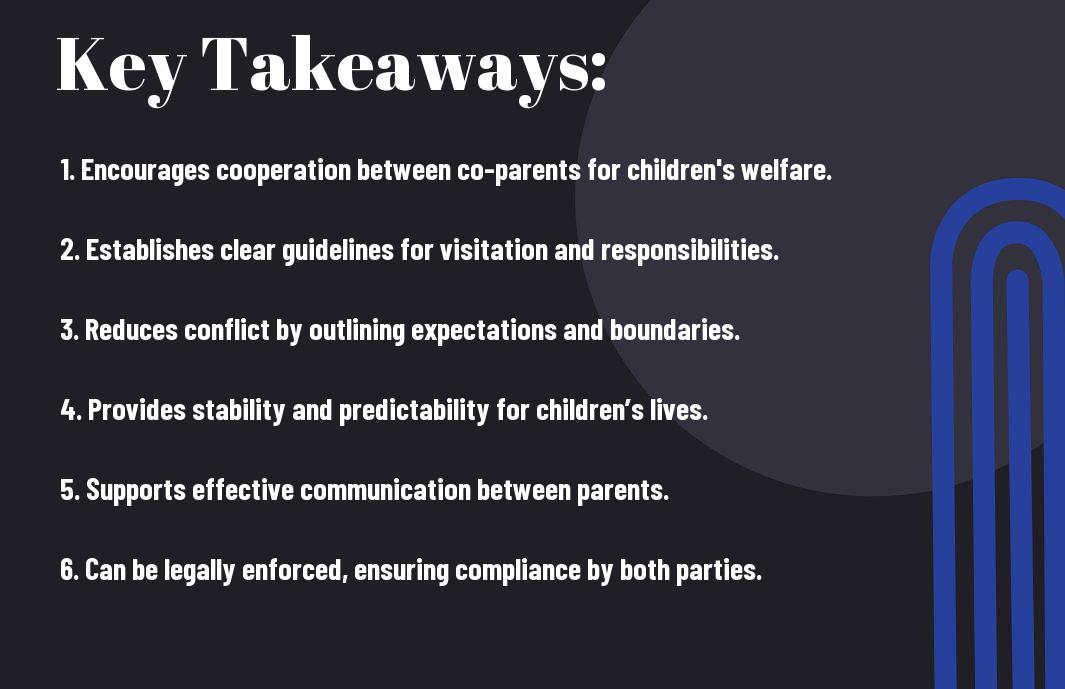
Unlike informal arrangements, a well-structured parenting plan provides clear guidelines that help streamline custody arrangements. By outlining responsibilities, visitation schedules, and decision-making processes, you create a roadmap that benefits not only you but also your children. This clarity reduces misunderstandings, lowers conflict, and promotes a harmonious co-parenting experience.
Stability for Children
Across various studies, children who have a structured parenting plan tend to experience increased stability and emotional security. When you offer your children a consistent environment, it fosters their sense of well-being, allowing them to thrive even amid change. Your efforts in maintaining a balanced schedule can make a significant difference in their development.
Communication and Cooperation Between Parents
At the core of a successful parenting plan is effective communication and cooperation between you and your co-parent. It cultivates an atmosphere where both of you can express your concerns and address issues promptly, enhancing the overall parenting experience.
In fact, maintaining open lines of communication not only helps you in coordinating schedules and activities but also sets a positive example for your children. When you demonstrate respect and collaboration, you are teaching them valuable lessons about resolving conflicts and working together as a team. This cooperative spirit can significantly alleviate stress and foster a more positive co-parenting relationship, benefiting everyone involved.
Common Challenges
Many parents encounter various challenges when navigating a parenting plan in custody arrangements. These challenges can arise from differing perspectives on child-rearing, misunderstanding of the plan’s terms, or external factors that affect the ability to comply. You might find it difficult to maintain a consistent routine, especially if communication with your co-parent is strained. Addressing these issues early on can help foster a healthier co-parenting relationship and provide stability for your child.
Disagreements in Parenting Plans
An effective parenting plan may not eliminate all disagreements between you and your co-parent, as differing parenting styles can lead to conflicts. It’s imperative to communicate openly with your co-parent and work toward solutions that prioritize your child’s best interests. You can benefit from mediation or seeking advice from legal professionals to address and resolve these disputes amicably.
Modifying an Existing Parenting Plan
Common life changes, such as relocation, changes in work schedules, or significant developments in your child’s life, might necessitate modifications to your existing parenting plan. It’s important to review and update the plan regularly to ensure it reflects your family’s current needs.
Another aspect to consider is that when modifying an existing parenting plan, it’s imperative to go through the proper legal channels. You should document any changes and ideally reach a mutual agreement with your co-parent to minimize disputes. Keeping the communication lines open can facilitate this process and help maintain stability for your child while allowing for necessary flexibility in your arrangement.

Tips for Creating a Successful Parenting Plan
All aspects of your parenting plan should be clear and specific to meet your family’s needs. Consider the following tips:
- Outline parenting schedules, including weekdays and weekends.
- Detail holiday and vacation arrangements.
- Include communication methods between parents.
- Discuss decision-making responsibilities regarding education and health care.
- Review and adjust the plan as necessary over time.
Assume that flexibility and open communication will help you navigate changes smoothly.
Collaborative Approaches
Around the creation of your parenting plan, aim for a collaborative approach with your co-parent. Engaging in discussions together, while prioritizing your children’s best interests, fosters a cooperative atmosphere. Active listening and acknowledging each other’s perspectives can contribute to a healthier partnership moving forward.
Seeking Professional Guidance
With the complexities involved in custody arrangements, seeking professional guidance can be beneficial. Consulting a family law attorney or a child psychologist provides you with insights tailored to your situation, which can help you navigate the challenges more effectively.
Professional support ensures that both parents’ views and the child’s needs are accurately represented. Attorneys can help you understand the legal implications, while child specialists offer valuable perspectives on developmental needs. This balanced approach often leads to better outcomes for everyone involved, making it easier to create a parenting plan that works for your family.
Resources for Parents
To effectively navigate custody arrangements and develop a strong parenting plan, you can access various resources designed to support you throughout this process. These resources can help you gather information, seek legal guidance, and gain the skills necessary for co-parenting success.
Legal Aid and Support Services
An array of legal aid and support services is available to assist you in understanding your rights and responsibilities in custody matters. These services often provide free or low-cost legal advice, helping you navigate the complexities of family law and ensuring that your parenting plan is fair and in the best interest of your children.
Parenting Classes and Workshops
Around your community, you may find various parenting classes and workshops designed specifically for parents navigating custody arrangements. These programs offer valuable insights into effective communication, conflict resolution, and co-parenting strategies that can enhance your parenting experience.
Workshops often cover a range of topics, including child development, emotional support for children during transitions, and practical tips for managing co-parenting relationships. By attending these workshops, you’re investing in your parenting skills and fostering a healthier environment for your children. Many organizations also provide certification upon completion, which can be beneficial in court to demonstrate your commitment to responsible parenting.
Summing up
Drawing together the elements of your custody arrangement, a well-structured parenting plan serves as a guiding document that fosters clear communication and cooperation between you and your co-parent. By outlining expectations and responsibilities, you can minimize conflict and provide stability for your child. A thoughtful plan helps you navigate changes smoothly and promotes a healthier co-parenting relationship. Ultimately, prioritizing your child’s best interests ensures that you create a supportive and nurturing environment for their growth and well-being.