

Many families face complex situations where grandparents may wish to obtain custody or visitation rights for their grandchildren. Understanding the legal grounds and processes for grandparents’ rights can be vital in ensuring that your family’s bond remains intact, particularly in circumstances of parental absence or conflict. This blog post will explore the various factors that influence custody and visitation rulings, as well as the steps you can take to advocate for your relationship with your grandchildren.

Understanding Custody and Visitation Rights
Before you navigate the complexities of custody and visitation rights, it’s necessary to understand what these terms entail. Custody determines who has the legal authority to make decisions regarding a child’s upbringing, while visitation outlines the time a non-custodial parent or relative can spend with the child. Both play critical roles in ensuring the child’s welfare and maintaining familial bonds. Knowing these differences is foundational for grandparents seeking custody or visitation.
Definitions of Custody and Visitation
By understanding the definitions of custody and visitation, you can better prepare for discussions and decisions regarding children’s rights. Custody is generally categorized into physical and legal forms; physical custody refers to where the child resides, and legal custody pertains to decision-making authority. Visitation refers to the scheduled time a non-custodial parent or caregiver can spend with the child.
Types of Custody Arrangements
Custody arrangements can vary significantly based on individual family situations. The main types include sole custody, where one parent has full legal and physical custody, and joint custody, which shares these responsibilities between parents. There can also be variations such as split custody, where siblings are divided between parents, and third-party custody, where someone other than parents is granted custody. You should be aware of these types:
| Sole Custody | One parent has full control and decision-making authority. |
| Joint Custody | Parents share physical and legal custody responsibilities. |
| Split Custody | Siblings are placed in different custodial arrangements. |
| Third-Party Custody | Guardianship granted to relatives or family friends. |
| Bird’s Nest Custody | Children remain in one home while parents alternate living there. |
Recognizing the type of custody arrangement relevant to your situation can guide you in the process of seeking legal advice or initiating custody proceedings.
Visitation Rights
Visitation rights allow you to maintain a relationship with your grandchildren, even if you do not have custody. Visitation can be scheduled, supervised, or unsupervised, depending on the court’s decision and the needs of the child. This framework secures the child’s right to have a meaningful relationship with you, the grandparent. Factors determining visitation rights may include the child’s best interests, existing relationships, and overall family dynamics. Some visitation arrangements include:
| Scheduled Visitation | Set times for visits agreed upon by parents or the court. |
| Supervised Visitation | Visits occur in the presence of a designated supervisor. |
| Unsupervised Visitation | Visits without supervision, typically for trusted family members. |
| Virtual Visitation | Utilizes technology for remote communication and visits. |
| Emergency Visitation | Temporary visits granted in urgent situations. |
Recognizing these visitation types can facilitate a clearer understanding of your rights and the avenues available for establishing or maintaining your relationship with your grandchildren.
Grandparents’ Legal Standing
Some grandparents may be concerned about their legal standing when it comes to obtaining custody or visitation rights. In many jurisdictions, laws exist that allow grandparents to seek these rights, especially if the child’s parents are incapacitated or unfit. These laws vary significantly depending on the state or country, so it’s important to understand the specific regulations in your area.
Legal Framework for Grandparents
Legal options for grandparents seeking custody or visitation often hinge on established state laws. Many states consider the best interest of the child, allowing courts to grant rights based on circumstances like the parents’ relationship with the grandparents or instances of neglect. Familiarizing yourself with these laws can help you navigate the legal landscape more effectively.
Factors Influencing Custody and Visitation Decisions
Legal decisions regarding grandparents’ custody and visitation rights take into account various factors, such as:
- The emotional bond between the grandparent and grandchild
- The parents’ ability to care for the child
- Any history of abuse or neglect
Perceiving these elements in your situation can guide you in presenting your case to the court.
But it’s not just about presenting the facts; the overall context of the family’s dynamics plays a significant role in decisions. You may want to consider additional factors, such as:
- Stability and continuity in the child’s life
- Parental preferences for grandparent involvement
- Any significant disruptions that could affect the child’s well-being
Perceiving these elements holistically can improve your understanding of how the court might view your case.
Process for Obtaining Custody or Visitation
Unlike parents, grandparents seeking custody or visitation rights must navigate specific legal processes. This typically involves submitting a formal petition to the court, providing evidence that supports your case for why it is in the child’s best interest to maintain a relationship with you. The steps can vary by state, so it is necessary to familiarize yourself with local laws and procedures to ensure a smooth process.
Filing for Custody or Visitation Rights
By initiating the process, you will need to file a petition for custody or visitation rights in the appropriate family court. Your filing should include relevant details such as your relationship to the child, the reasons for your request, and any supporting documentation that illustrates your involvement in the child’s life. Additionally, you may need to serve the child’s parents with notice of your petition.
Court Considerations and Proceedings
Across various jurisdictions, courts assess multiple factors when determining custody or visitation for grandparents. These often include the child’s best interests, the existing relationship between you and the child, and the willingness of the parents to cooperate. It’s necessary to present a well-supported case, as the court will prioritize the child’s needs and overall welfare.
Filing your petition is just the first step in a multi-faceted process. As the court reviews your case, it will evaluate factors like your emotional bond with the child and the stability of the environment you can provide. Be prepared to present evidence and potentially participate in a mediation process, which encourages families to reach amicable solutions. Understanding these aspects can significantly impact the outcome of your custody or visitation rights.
State-Specific Laws and Variations
All states have different laws regarding grandparents’ rights to custody and visitation. These variations may depend on several factors, including the child’s best interests, the relationship between the grandparent and the child, and the parents’ rights and circumstances. Understanding your state’s specific regulations is necessary to navigating the legal landscape effectively.
Overview of State Laws
Variations in state laws dictate how grandparents can seek custody or visitation rights. Some states allow for grandparents to petition the court for visitation even if the parents are opposed, while others require specific conditions to be met before the court will consider such requests. Being aware of these differences will help you understand your legal options.
Notable Case Examples
Variations in notable case examples highlight how courts interpret state laws regarding grandparents’ rights. In some cases, courts have prioritized the grandparents’ relationships with the child over parental rights, particularly in situations involving parental unfitness. Analyzing these cases provides insights into how judges may rule in similar circumstances.
Hence, you should familiarize yourself with notable cases in your state to grasp how specific legal principles have been applied. For instance, a case in your state may have set a precedent that favors grandparent visitation when evidence shows a close bond with the grandchild. Such case law can guide your expectations and strategies if you’re seeking custody or visitation rights.

Impact on Children’s Well-being
Despite the potential benefits of maintaining a connection with grandparents, the impact on children’s well-being can vary based on individual circumstances. Involvement with grandparents can provide emotional support and stability, fostering a sense of belonging. However, it is imperative to consider the child’s overall environment and family dynamics, as conflicting interests among caregivers can lead to confusion and emotional distress. Balancing these relationships is key to ensuring a positive outcome for children.
Psychological Benefits of Grandparent Involvement
The involvement of grandparents in your child’s life can significantly enhance their psychological well-being. Grandparents often provide unconditional love, wisdom, and a unique perspective that enriches children’s emotional development. Their presence can create a nurturing environment, fostering resilience and helping children navigate life’s challenges. Additionally, children often benefit from the stories, traditions, and values grandparents pass down, strengthening their sense of identity and belonging.
Challenges and Considerations
Considerations regarding grandparent involvement and custody can bring unique challenges. Family dynamics, legal custody arrangements, and the wishes of both parents are important factors to navigate. The quality of the grandparent-grandchild relationship can impact your child’s emotional and psychological health; therefore, evaluating the existing bond is imperative. Legal disputes might arise if the parents oppose visitation, creating further stress for the children. It’s vital to approach these situations with sensitivity and clarity to prioritize your child’s well-being.
To successfully navigate the challenges and considerations of involving grandparents in your child’s life, be aware of the complexities that may arise. Open communication with parents and grandparents can help establish a collaborative environment that benefits your child’s needs. You should also educate yourself on the legal aspects of custody and visitation rights, as well as seek professional guidance if necessary. Ensuring that the best interests of your child remain the focus during discussions and decisions can lead to more positive outcomes amidst potential conflicts.

Alternatives to Court
Once again, consider exploring alternatives to court when seeking custody or visitation rights as a grandparent. Engaging in alternative dispute resolutions can often lead to more amicable solutions while avoiding the stress and costs associated with litigation. These methods allow you to collaborate directly or with a neutral third party to reach an arrangement that respects the needs of both you and your family dynamics.
Mediation and Negotiation
Behind the scenes, mediation and negotiation offer a more peaceful avenue for resolving custody and visitation disputes. By working with a qualified mediator, you can communicate openly with the parents to express your concerns and preferences. This type of dialogue can foster mutual understanding and lead to a viable agreement without the need for court intervention.
Family Agreements and Informal Arrangements
With family agreements and informal arrangements, you have the opportunity to establish guidelines for visitation or custody without formal legal processes. By discussing your desires and the child’s best interests with the parents, you can reach a mutual understanding. These informal agreements can be flexible, accommodating the changing dynamics of family life.
Mediation fosters collaboration, allowing you to express your desires for your grandchild’s upbringing while considering the parent’s viewpoint. When crafting family agreements, it’s necessary to document any arrangements made, ensuring clarity and reducing potential misunderstandings in the future. Though informal, these agreements can serve as a foundation for a strong relationship with your grandchild, supporting their well-being and emotional stability.
To wrap up
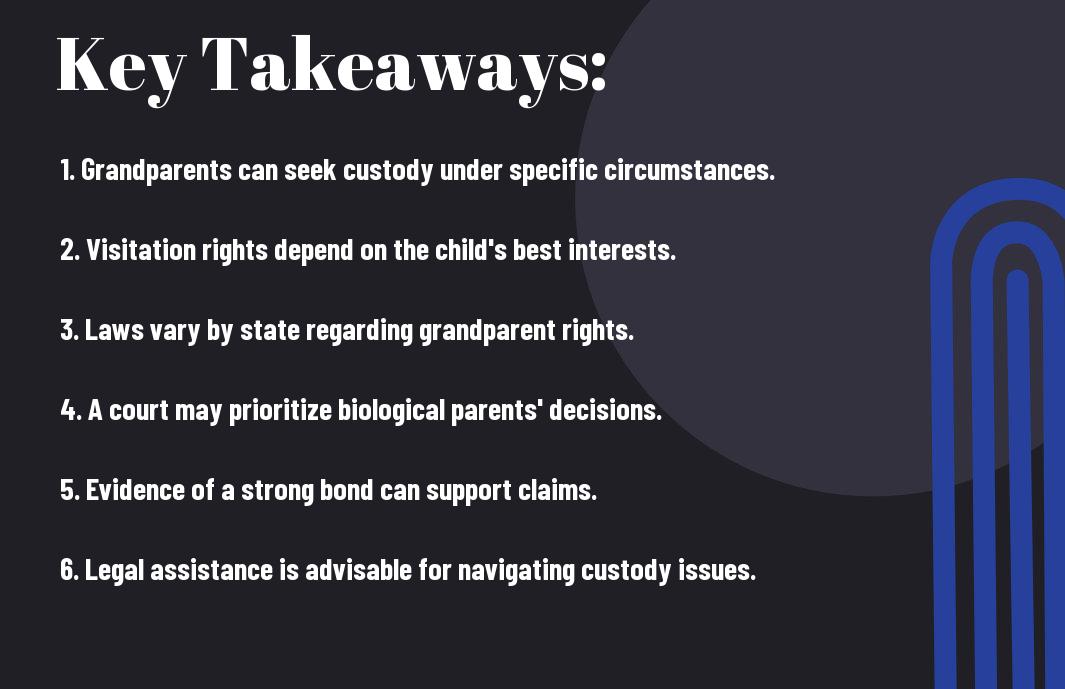
Hence, understanding whether grandparents can seek custody or visitation rights is vital for you if you find yourself in a situation involving family dynamics and child wellbeing. Laws can vary significantly between states, so it’s important that you research specific guidelines applicable to your situation. Whether you are aiming for custody or visitation, engaging with a legal professional can provide you with tailored advice to navigate this complex area effectively, ensuring that your rights and your relationship with your grandchildren are protected.