

Many parents find themselves in situations where their child’s safety is at risk, prompting the need to seek emergency custody orders. This guide will walk you through the circumstances that warrant such urgent action and provide step-by-step instructions on how to file for these orders effectively. Understanding the legal process can empower you to protect your child’s welfare when time is of the essence.

Understanding Emergency Custody Orders
Your awareness of emergency custody orders is imperative, especially when your child’s safety is at risk. These legal tools are designed to provide immediate protection by allowing courts to temporarily place a child under the care of a suitable adult or agency when there are serious concerns for their well-being. Understanding when and how to pursue such an order can make a significant difference in critical situations.
Definition and Purpose
There’s a pressing need for emergency custody orders when a child’s welfare is threatened by factors such as abuse, neglect, or imminent danger. The primary goal of these orders is to ensure the child’s immediate safety while allowing the legal system to investigate and assess the situation thoroughly.
Legal Framework
You must navigate a specific legal framework when seeking an emergency custody order. Each jurisdiction may have different rules and procedures that dictate when and how these orders can be issued, which usually involves presenting clear evidence of the child’s potential danger to a judge.
Understanding the legal standards set forth in your area is vital, as these determine the necessary criteria for granting an emergency custody order. Typically, you will need to demonstrate urgent circumstances that justify immediate intervention, and this requires thorough documentation and potentially witness statements to support your claim. Familiarizing yourself with the local court’s requirements can help streamline the process when time is of the essence.

Determining When to File
While navigating custody matters, it’s important to recognize when to pursue an emergency custody order. Generally, you should consider filing when you believe your child is in immediate danger or their welfare is at stake. Timeliness is key in these situations, as delays can exacerbate risks to your child’s safety and well-being.
Factors to Consider
An effective assessment requires acknowledging several factors, including:
- Evidence of abuse or neglect
- Substance abuse issues
- Involvement with dangerous individuals
- Changes in living conditions
This evaluation is fundamental to determining the necessity of filing an emergency custody order.
Signs of an Immediate Need
Clearly, certain indicators may suggest that the situation demands your immediate action. Look for patterns of behavior or events that could threaten your child’s safety and stability, such as erratic behavior from the other parent or exposure to harmful environments.
Another important aspect to consider is if your child has disclosed incidents of abuse, threats, or has shown signs of distress. Pay particular attention to unexplained injuries, changes in behavior, or reluctance to be around a specific individual. Documenting these signs can strengthen your case and clarify the urgent need for intervention.

How to File for Emergency Custody
Unlike standard custody arrangements, filing for emergency custody requires you to act quickly due to an urgent situation affecting your child’s safety or well-being. This process typically involves presenting your case to a family court that can issue temporary orders immediately. It’s important to gather the necessary documentation and follow the proper legal steps to ensure your child receives the protection they need.
Required Documentation
If you are seeking emergency custody, you’ll need specific documentation to support your claim. This may include affidavits detailing incidents of abuse, neglect, or immediate danger, along with any police reports or medical records that corroborate your assertions. Collecting this information reinforces the urgency of your situation and helps strengthen your case in court.
Step-by-Step Filing Process
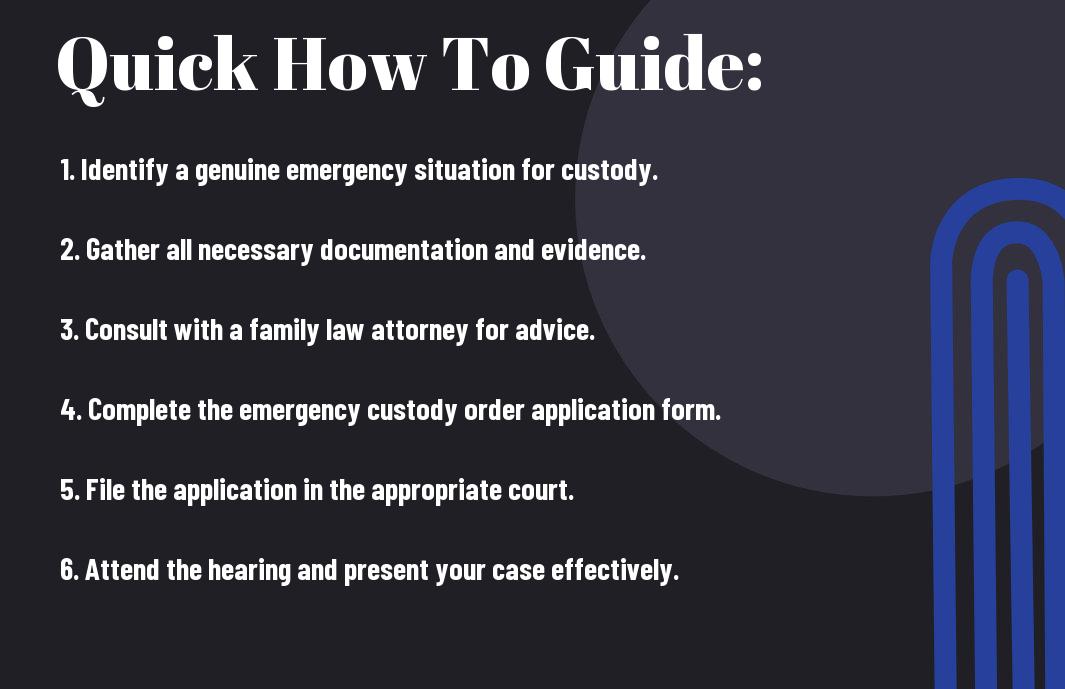
One of the most effective ways to navigate the emergency custody filing process is by following these steps:
| Step | Action |
| 1 | Gather required documentation and evidence. |
| 2 | Complete the necessary court forms. |
| 3 | File your petition at the local family court. |
| 4 | Attend the court hearing. |
| 5 | Receive the court’s decision on custody. |
Custody filing may appear daunting, but understanding the steps can simplify the process. Begin by collating all relevant documentation that demonstrates the need for immediate custody. Complete the court forms accurately and file them with the local family court. Be prepared to present your case at a hearing, where you will explain why emergency custody is necessary for your child’s safety. Following these steps diligently will help ensure that you are taking the right actions to protect your child effectively.
Tips for Successfully Obtaining an Order
Keep the following tips in mind to enhance your chances of successfully obtaining an emergency custody order:
- Gather all relevant documentation
- Ensure you have a valid reason for the emergency
- Be prepared to provide evidence supporting your claims
- Consult with a legal professional for guidance
The more prepared you are, the better your chances of securing the order.
Presenting Evidence Effectively
With the right evidence, you can significantly strengthen your case for an emergency custody order. Ensure that all documents, photographs, or witness statements are organized and pertinent to the situation at hand. Clearly articulate how your evidence supports your claims about the child’s well-being and safety.
Working with Legal Professionals
The guidance of a legal professional is invaluable when navigating the complexities of emergency custody orders. They can help you understand the legal requirements, develop a compelling case, and represent you effectively in court.
Presenting your case without legal representation may lead to oversights that could weaken your arguments. Legal professionals bring expertise in family law that allows them to identify the most persuasive evidence and present it in a manner that resonates with the court. They can also teach you how to articulate your concerns clearly and effectively, ultimately increasing your chance of achieving a favorable outcome.
Common Challenges and How to Overcome Them
Despite the urgency surrounding emergency custody orders, you may encounter several challenges throughout the process. These issues can range from navigating legal complexities to addressing the emotional upheaval for you and the child involved. It’s vital to stay informed and seek support from legal professionals who can guide you through the necessary steps, ensuring that you present a compelling case to the court.
Potential Objections
An opposing party may raise objections to your emergency custody request, arguing that the situation does not warrant such immediate action. They could claim that circumstances are not as dire as you present or question your intentions in seeking custody. To effectively counter these objections, you will need to be well-prepared with evidence and a clear explanation of why the child’s safety and well-being are at stake.
Responding to Counterclaims
Common challenges you face when filing for emergency custody include counterclaims from the other parent or guardian. They may argue that you are acting out of spite or exaggerating risks involved. It is vital to maintain your focus on the child’s best interests and present factual evidence to the court, such as witness statements, police reports, or documentation of harmful behavior.
It is vital to anticipate the counterclaims you may encounter and prepare a solid defense. By documenting any incidents that illustrate the need for emergency custody, you bolster your position. Engage with witnesses who can corroborate your claims or provide character references. Presenting a compelling and well-documented case will help ensure the judge understands your perspective and the urgency of your situation when considering the counterclaims.
What Happens After Filing
After you file an emergency custody order, the court will review your request and may schedule a hearing to assess the situation. The judge will examine the evidence provided and consider the best interests of the child before making a decision. Quick action is often taken to ensure the child’s safety if there are immediate concerns, making it important to be well-prepared for the subsequent steps.
Court Hearings
For the court hearings following your emergency custody filing, both you and the other party will typically be required to attend. During this time, you will present your case, and the judge may ask questions. Evidence can be submitted, and witnesses may be called to support your claims about the child’s welfare.
Temporary vs. Permanent Custody
What you need to understand about temporary versus permanent custody is that temporary custody is issued during a crisis, allowing you to provide immediate care for the child. This arrangement usually lasts until a more thorough investigation can be conducted or until a standard custody hearing occurs. Permanent custody, on the other hand, is the result of a comprehensive legal process that determines long-term parenting arrangements.
With temporary custody, your primary focus is on ensuring the child’s immediate safety and well-being, which can be crucial in emergencies. However, if you seek permanent custody, you’ll need to gather more evidence, often demonstrating a stable environment and a suitable parenting plan. Understanding this difference helps you navigate the legal landscape and make informed decisions about what is best for your child in both the short and long term.
Final Words
The process of filing for an Emergency Custody Order is complex and requires careful consideration of your circumstances. You should be prepared to present evidence that demonstrates an immediate risk to your child’s safety or well-being. Understanding the legal requirements and procedures in your jurisdiction can help you navigate this challenging situation effectively. It is often beneficial to consult with a legal professional to ensure that you are taking the appropriate steps to protect your child’s best interests.