

Just because you want full custody of your child does not mean you have to step into a courtroom. Understanding the options available to you outside of traditional court proceedings can empower you to seek the custody arrangement that best suits your family’s needs. This article will explore the various ways you can potentially achieve full custody without the need for litigation, offering you practical insights into mediation, parental agreements, and other alternatives that might work for you.

Understanding Custody Types
A variety of custody types exist to accommodate different family situations. Here are the main categories:
- Physical Custody
- Legal Custody
- Sole Custody
- Joint Custody
- Visitation Rights
Perceiving these differences can guide you in determining the best approach for your specific situation.
| Type of Custody | Description |
| Physical Custody | Determines where the child lives. |
| Legal Custody | Involves decision-making authority for the child. |
| Sole Custody | One parent has full custody rights. |
| Joint Custody | Both parents share custody responsibilities. |
| Visitation Rights | Non-custodial parent access to the child. |
Physical Custody
About physical custody pertains to where your child will primarily reside. This type of custody can be granted solely to one parent or shared between both parents. It directly impacts daily living arrangements and routines that affect your child.
Legal Custody
Physical custody allows you to make decisions about your child’s day-to-day living arrangements, while legal custody grants you authority over important life decisions such as education, healthcare, and religion. This aspect is vital for ensuring that your child’s best interests are considered in larger life circumstances.
In addition, legal custody can also be shared, giving both parents a voice in critical decisions, thus fostering a cooperative parenting approach. While sole legal custody might be suitable in some cases, fostering communication between both parents is often encouraged, as it promotes stability and consistency for your child.

The Importance of Mediation
Even though many associate custody disputes with court hearings, mediation offers an alternative that can foster collaboration and communication. Through mediation, you and your co-parent can discuss your custody arrangements with a neutral third party, promoting a more amicable resolution that serves the best interests of your child.
Benefits of Mediation
On engaging in mediation, you can enjoy numerous benefits such as reduced stress, lower costs, and greater control over the outcome. This process encourages open dialogue, which can lead to more satisfying and personalized agreements that work for both you and your co-parent.
Limitations of Mediation
With mediation, there are certain limitations that you should consider. While it can be a helpful option, it might not be suitable for all situations, especially where power imbalances or abuse are present.
Understanding the limitations of mediation is imperative for your decision-making process. If there’s a significant power imbalance between you and your co-parent, mediation could exacerbate issues rather than resolve them. Additionally, if your co-parent is uncooperative or unwilling to engage in good faith, mediation may not lead to a fair outcome. In such cases, you might need to explore other options for securing full custody, such as legal intervention.
Alternatives to Court Proceedings
Unlike traditional court proceedings, you have several alternatives to resolve custody issues that can save time, reduce stress, and maintain a more amicable relationship with the other parent.
Negotiation with the Other Parent
Below, you may find that direct communication and negotiation with the other parent can lead to a mutually beneficial agreement regarding custody arrangements. Engaging in open discussions can help both parties express their needs and concerns, allowing you to reach a consensus without court intervention.
Collaborative Law Approaches
With collaborative law, you and the other parent can engage in a structured process that focuses on cooperation instead of conflict. This approach enables both parties to work with specially trained professionals who guide discussions and help facilitate a resolution that prioritizes your child’s well-being.
Parent involvement in collaborative law means that you focus on finding solutions that meet both your needs and those of the other parent. This method encourages open dialogue and creative problem-solving, fostering an environment where you can reach an agreement that you both feel good about. By prioritizing teamwork, you can establish a parenting plan without the high-stakes atmosphere of court, paving the way for a more positive co-parenting relationship moving forward.
Gathering Necessary Documentation
Your success in obtaining full custody without court involvement largely hinges on the documentation you compile. This documentation should clearly outline your child’s needs, your capabilities as a caregiver, and any supporting evidence that demonstrates the current situation. This process involves more than just gathering paperwork; it requires a thoughtful approach to ensuring you have everything required to advocate effectively for your child’s best interests.
Evidence of Child’s Needs
Around your child’s daily requirements, you should collect evidence that showcases their needs, such as educational records, medical documents, and evidence of any special care they may require. This can include reports from teachers or health professionals that highlight your child’s unique circumstances and how you are meeting those needs.
Personal Testimonies
Beside formal documents, personal testimonies play a vital role in substantiating your request for full custody. These can come from friends, family, or professionals who can attest to your parenting skills and the positive environment you provide for your child.
Due to the subjective nature of personal testimonies, they can provide a powerful narrative that supports your application for full custody. Such statements can highlight your involvement in your child’s life, including attendance at school events, involvement in extracurricular activities, and overall emotional support. Collecting testimonies from individuals who are actively engaged in your child’s life emphasizes your dedication and commitment to their well-being, offering a personalized view that documents your parenting strengths effectively.

Exploring State-Specific Laws
Many factors influence custody arrangements, and these can vary significantly from state to state. It is imperative to understand your local laws, as each state has different stipulations regarding custody determination and the process of obtaining full custody without court involvement. By researching the specific requirements in your state, you can make informed decisions as you navigate your custody situation.
Variations in Custody Laws
An examination of state laws reveals varying criteria for establishing custody, including factors such as child welfare, parental fitness, and existing arrangements. Additionally, the process for obtaining custody—whether through mediation, negotiation, or agreement—can differ widely. Knowing these variations can help you approach your situation with greater clarity and confidence.
Understanding Your Rights
On a practical level, being informed of your rights is vital when seeking full custody. Each state has specific laws that dictate parental rights, and knowing where you stand can greatly influence your outcome. By familiarizing yourself with these rights, you can advocate effectively for your child’s best interests without necessarily resorting to court proceedings.
For instance, you have the right to pursue custody agreements directly with your co-parent, allowing you to negotiate terms that suit your family’s needs. Understanding the legal framework in your state can help you understand what is possible regarding visitation, support, and living arrangements. By being aware of your parental rights, you can better navigate communication and mediation processes, ultimately working towards an amicable solution that prioritizes your child’s well-being.
To wrap up
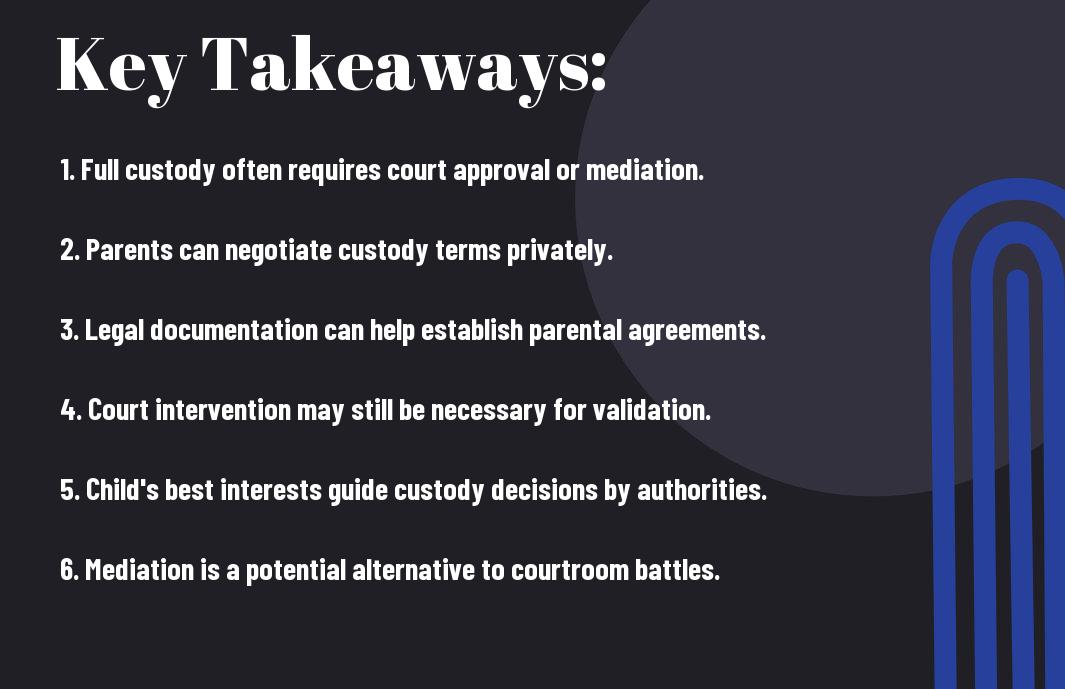
From above, it’s clear that while it is possible to secure full custody without going to court, the process requires careful negotiation and agreement with the other parent. You must ensure that all arrangements are clearly documented and legally recognized, often through mediation or informal agreements. However, should disputes arise, or if you feel your child’s best interests are not being met, seeking court intervention may ultimately be necessary. Always prioritize the well-being of your child while considering your options in this complex area of family law.