

There’s no doubt that navigating child custody issues can be overwhelming, but choosing the right lawyer can significantly impact your case. You need an attorney who understands your unique situation and can advocate for your interests effectively. In this guide, we’ll explore imperative factors to consider when selecting a child custody lawyer, ensuring you make an informed decision that best supports your family’s needs.
Understanding Child Custody
Before you begin the custody process, it’s vital to understand the different aspects of child custody. Child custody refers to the legal arrangement determining where your child will live and who will have the authority to make decisions regarding their upbringing. Understanding the nuances of custody can significantly impact your situation and guide you in choosing the right lawyer for your case.
Types of Custody Arrangements
Some typical types of custody arrangements include:
| Physical Custody | The primary residence of the child. |
| Legal Custody | The right to make important decisions for the child. |
| Sole Custody | One parent has full custody rights. |
| Joint Custody | Both parents share custody rights and responsibilities. |
| Visitation Rights | Scheduled time the non-custodial parent can spend with the child. |
After reviewing these options, determine which arrangement aligns best with your child’s needs and your situation.
Factors Affecting Custody Decisions
Clearly, several factors can influence custody decisions in your case. Courts prioritize the child’s well-being, taking into account factors such as the child’s age, physical and emotional needs, and the parents’ living situations. They may also evaluate your relationship with your child and each parent’s ability to provide a stable environment.
- Child’s wishes, depending on their maturity
- Each parent’s mental and physical health
- Parental involvement in the child’s life
- History of domestic violence or substance abuse
- Potential relocation of either parent
Thou should evaluate these factors carefully to prepare for your custody case.
Custody decisions are based on a variety of factors that courts consider when determining the best interests of your child. In some cases, the judge may even conduct an investigation into each parent’s lifestyle and suitability. It’s vital to provide evidence that demonstrates your commitment to and capability of meeting your child’s needs.
- Stability of each parent’s environment
- Educational opportunities
- Parental cooperation and communication
- Support systems available
- History of caregiving responsibilities
Thou must present your case thoroughly to improve your chances of a favorable custody outcome.
Importance of Hiring a Lawyer
While navigating the complexities of child custody disputes, having a skilled lawyer by your side is important. These professionals not only understand the legal landscape but also help you strategize effectively to protect your parental rights. By hiring a lawyer, you gain access to invaluable resources and knowledge that can significantly impact the outcome of your case, allowing you to focus on what matters most—your child’s well-being.
Legal Expertise
The guidance of a lawyer can make a significant difference in your custody case. They are well-versed in family law, ensuring that you are informed about your rights and responsibilities. Their expertise enables them to navigate the court system efficiently, potentially leading to a favorable outcome for your family.
Emotional Support
Clearly, child custody battles are emotionally taxing. The involvement of a lawyer provides not only professional guidance but also emotional reassurance during a challenging period. Their support can help you maintain focus and grant you the strength needed to overcome the emotional hurdles of your case.
A lawyer serves as a stabilizing force, offering empathy and understanding in times of distress. They can help you process your emotions and keep you grounded through every step of the legal process. Having an experienced professional on your side allows you the space to address your feelings while knowing that your legal matters are handled competently, ensuring that your focus remains on securing the best possible outcome for you and your child.

How to Find a Child Custody Lawyer
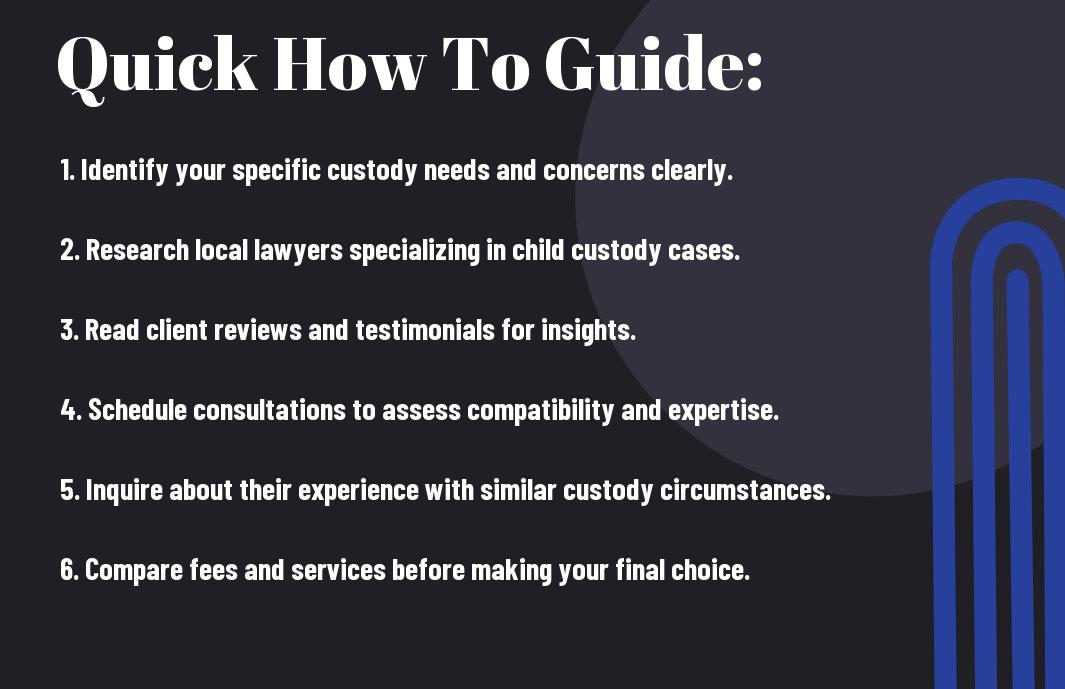
Not every attorney specializes in child custody matters, so it’s important to seek out a lawyer who focuses on this area of family law. Begin by identifying local family law firms or solo practitioners who have specific experience in handling custody cases. Make sure to ask about their qualifications and approach to ensure they align with your needs.
Research and Referrals
Child custody can be emotionally taxing, and finding a good lawyer starts with thorough research. Ask friends, family, or colleagues for referrals to attorneys they have had positive experiences with. You can also check local bar association directories for reputable lawyers who specialize in child custody.
Online Reviews and Ratings
Any information you can gather online is valuable when choosing your attorney. Look for reviews and ratings on legal services websites to gauge previous clients’ experiences. Pay attention to feedback on how well the lawyer communicates and handles cases, as these aspects can significantly impact your custody journey.
Referrals and online reviews provide insight into a lawyer’s track record and reputation in family law. Spend time reading both positive and negative reviews to fully assess their abilities and dedication to clients. Resources like Google, Avvo, or Yelp can offer additional perspectives that may help solidify your decision as you navigate your custody case.
Questions to Ask Potential Lawyers
To find the right child custody lawyer, you should prepare a list of questions that address your specific concerns and needs. Inquire about their experience, approach, and how they envision handling your unique situation. This will help you gauge their suitability and ensure that you feel comfortable and confident in your choice.
Experience and Specialization
Potential lawyers should have a solid background in family law, particularly in child custody cases. Ask about their years of experience, the number of custody cases they’ve handled, and any specialized training they have received. It’s important that they understand the nuances of your particular custody issue.
Approach to Custody Cases
Little varies exist in how different lawyers manage custody cases, so it’s crucial to ask about their approach. How do they typically communicate with clients? What strategies do they use to advocate for your rights and your child’s best interests?
It’s beneficial to understand how a lawyer plans to represent you. Some may adopt a more aggressive stance, focusing on court battles, while others might prioritize mediation and amicable resolutions. Knowing their preferred strategies will help you align with someone whose philosophy complements your own vision for the case and your family’s future.
Evaluating Lawyer Compatibility
Keep in mind that finding a lawyer who aligns with your values and expectations is necessary for a productive working relationship. Your child custody case will involve sensitive topics, and connecting with your lawyer can greatly impact the outcome. Take the time to assess potential lawyers for their compatibility with you, as this can lead to a smoother process and better results.
Communication Style
The way your lawyer communicates with you can significantly influence your case. Consider how they explain legal concepts and whether they encourage dialogue or merely provide information. An ideal lawyer will be approachable and patient, ensuring that you fully understand each aspect of your case.
Trust and Comfort Level
For a successful attorney-client relationship, you must trust your lawyer and feel comfortable sharing personal details. Trust ensures that your lawyer has the necessary information to advocate for your best interests effectively. Feeling at ease with your legal counsel will allow you to openly discuss your concerns and expectations regarding the custody process.
Level of trust can take time to develop, but it’s vital to prioritize it when evaluating potential lawyers. Feeling comfortable sharing your situation without fear of judgment will create a stronger partnership. Pay attention to your instincts during initial meetings. A lawyer who listens attentively, values your input, and fosters an open environment will likely be someone you can rely on throughout your custody journey.
Tips for Working with Your Lawyer
Now that you have chosen your child custody lawyer, working collaboratively will be key to achieving a favorable outcome. To ensure a productive relationship, keep these tips in mind:
- Be honest about your situation
- Set realistic expectations
- Stay organized and responsive
- Ask questions whenever you’re uncertain
Any cooperation and open communication can significantly enhance the effectiveness of your legal representation.
Clear Communication
Clearly sharing your thoughts and concerns with your lawyer will enable them to represent you more effectively. Being transparent about your feelings regarding custody can help your lawyer tailor their strategies to your specific needs. Don’t hesitate to voice your opinions during your discussions.
Providing Necessary Documentation
One of the best ways to assist your lawyer is by providing all necessary documentation relevant to your case. This includes financial records, parenting plans, communication logs, and any court documents.
Your thoroughness in gathering and providing these documents can streamline the process, allowing your lawyer to build a stronger case. The more information you can supply, the better equipped your lawyer will be to advocate for your interests. Ensure you keep your documentation organized and readily available for quick reference during discussions or court appearances.
To wrap up
On the whole, selecting the right child custody lawyer for your case requires careful consideration of various factors including their experience, approach, and communication style. You should evaluate their track record, assess your comfort level with them, and ensure they understand your unique situation and needs. By taking the time to research and consult with potential lawyers, you can find someone who will advocate effectively for you and your child, ultimately supporting your goals in navigating the complexities of custody arrangements.