

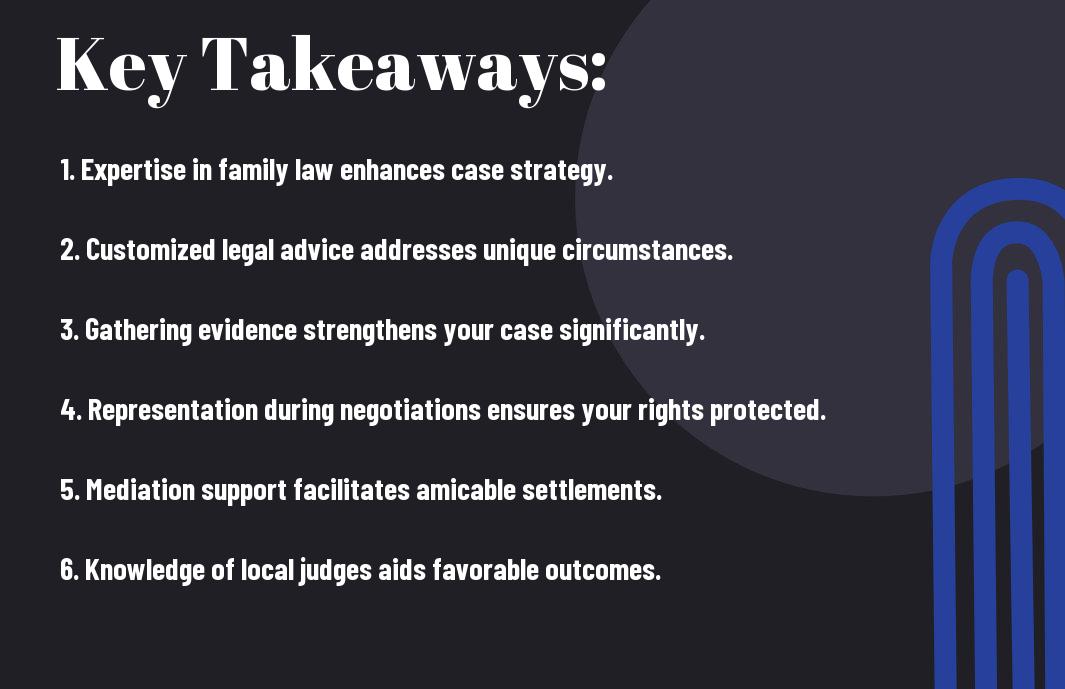
Over the course of your child custody case, having a knowledgeable lawyer by your side can significantly increase your chances of a favorable outcome. A skilled attorney understands the complexities of family law, ensuring that your rights are protected while advocating for your child’s best interests. They can help you navigate through legal documents, provide expert advice on court procedures, and represent you during negotiations or trials. With their support, you can build a strong case that emphasizes your commitment to your child’s well-being.
Understanding Child Custody Laws
The landscape of child custody laws can be complex and varies by jurisdiction. It is vital for you to familiarize yourself with your local laws, including the definitions and standards judges use when determining custody arrangements to ensure you are adequately prepared for your case. Each state has different regulations, which can influence the outcome significantly.
Types of Custody Arrangements
The types of custody arrangements can vary, but generally fall into two main categories: legal custody and physical custody. Legal custody grants a parent the right to make significant decisions regarding a child’s upbringing, while physical custody pertains to where the child resides.
| Legal Custody | Physical Custody |
| Sole Legal Custody | Sole Physical Custody |
| Joint Legal Custody | Joint Physical Custody |
| Temporary Custody | Visitation Rights |
| Shared Custody | Split Custody |
Assume that your custody arrangement is tailored to the child’s best interests rather than a one-size-fits-all scenario.
Factors Influencing Custody Decisions
Before engaging in a custody battle, it is vital to understand the various factors influencing custody decisions. Courts generally focus on what arrangements will serve the child’s best interests, considering aspects such as the child’s age, health, emotional ties with parents, and parents’ ability to provide a stable environment.
- The child’s emotional and physical needs.
- The parent’s living situation.
- The child’s preference, if they are mature enough to express it.
- The involvement of each parent in the child’s life.
- Recognizing the importance of maintaining a healthy relationship with both parents.
Decisions made during custody proceedings can shape your child’s future significantly. Understanding emotional stability, parental fitness, and existing relationships allows you to present your case more effectively.
- The stability of your living environment.
- Your mental and emotional wellness.
- Your relationship with the child.
- Your capacity to co-parent effectively.
- Recognizing the factors that will best serve your child’s needs.

The Role of a Lawyer in Custody Cases
While navigating the complexities of child custody cases, having a lawyer by your side can significantly influence the outcome. Your attorney can provide expert guidance on legal matters, emotional support during the stressful process, and a strategic approach tailored to your specific situation. By understanding your goals and priorities, a lawyer can help you build a compelling case that meets your child’s best interests.
Legal Representation and Advocacy
Any skilled attorney will serve as your advocate in court, presenting your case in the most favorable light. They will prepare all necessary documents, represent you during negotiations, and provide valuable insights on how to strengthen your position. Their expertise in family law ensures that you have a knowledgeable ally fighting for your rights and your child’s well-being.
Navigating Court Procedures
Along with providing legal representation, your lawyer will assist you in navigating the often-complex court procedures involved in custody cases. They will guide you through filing deadlines, court appearances, and required documentation, ensuring you are well-prepared at every step.
Another imperative aspect of navigating court procedures is understanding the various local rules and regulations. Your lawyer will help you manage timelines for filing motions, responding to them, and preparing for hearings. This familiarity with the court’s process can alleviate stress, allowing you to focus on what truly matters—your child’s future. With your lawyer’s guidance, you can confidently approach each stage of the proceedings, ensuring that you fulfill all legal requirements.

Preparing for Your Custody Case
All aspects of your custody case require thorough preparation to ensure you present the best possible case for your child. Engaging with an experienced lawyer will help guide you through this process, providing you with vital insights into what needs to be done. You should focus on gathering evidence, developing a solid strategy, and staying organized throughout the proceedings to increase your chances of a favorable outcome.
Gathering Evidence and Documentation
Beside gathering necessary documents like financial statements and correspondence, it is imperative to collect evidence that showcases your parenting strengths and your child’s needs. This may include school records, medical reports, and testimonies from teachers or family members that support your case. Your lawyer can help you identify which documents will be most persuasive in demonstrating your suitability for custody.
Building a Comprehensive Custody Plan
Along with collecting evidence, developing a well-thought-out custody plan will greatly strengthen your position in court. A comprehensive plan should articulate your vision for parenting, addressing factors such as living arrangements, schooling, and healthcare. It should also highlight your commitment to cooperating with the other parent to ensure your child’s best interests are met.
Case preparation is enhanced by a thoughtful custody plan, which should prioritize your child’s emotional and physical needs. Outline schedules for visitations, holidays, and special occasions, demonstrating your ability to co-parent effectively. Include provisions for conflict resolution and communication with the other parent to show the court you are focused on fostering a cooperative environment for your child. This plan serves not only as a proposal but also as evidence of your dedication to being an engaged and responsible parent.
Negotiation and Mediation Strategies
For many parents, navigating a child custody case can be an emotionally charged experience. This is where a lawyer can guide you through negotiation and mediation strategies designed to achieve favorable outcomes while minimizing conflict. Legal professionals can help you create a structured approach to dialogue with the other parent, focusing on your child’s best interests and promoting cooperative solutions. With their expertise, you can maximize your chances of securing a resolution that works for both parties involved.
Encouraging Settlements Outside of Court
Beside courtroom battles, your lawyer can facilitate settlements outside of court, which often leads to quicker and less stressful resolutions. By encouraging open dialogue, your attorney aims to foster a cooperative environment where both parents can consider the needs of their child. This approach not only helps reduce hostility but also allows you to retain control over the outcome.
Effective Communication Techniques
Communication is the cornerstone of successful negotiation in child custody cases. Your lawyer will assist you in employing effective communication techniques that promote clarity and understanding during discussions. This may involve active listening skills, presenting your concerns calmly, and articulating your goals clearly. By fostering a respectful dialogue, you can create an atmosphere more conducive to reaching an agreement.
It’s important to convey your thoughts and feelings in a way that encourages collaboration rather than confrontation. When discussing custody arrangements, focus on the child’s needs, and express your willingness to consider the other parent’s perspective. Your lawyer may suggest using ‘I’ statements to avoid sounding accusatory, thus enabling a more productive conversation. By adopting these techniques, you can enhance your chances of reaching a mutually satisfying agreement.

Presenting Your Case in Court
Your lawyer will guide you through the process of presenting your case in court, ensuring that you effectively communicate your position regarding child custody. They will provide valuable insights and strategies tailored to your specific situation, allowing you to articulate your goals clearly and persuasively. By preparing you for possible questions and counterarguments, your attorney will help you feel more confident and prepared for the proceedings ahead.
Courtroom Etiquette and Protocol
Presenting yourself appropriately in court minimizes distractions and reflects your respect for the legal process. Dress in a professional manner, maintain a calm demeanor, and listen attentively during proceedings. Your attorney will equip you with the necessary court etiquette, such as addressing the judge properly and waiting for your turn to speak, ensuring that you leave a positive impression as you advocate for your child’s best interests.
Preparing Witnesses and Testimonies
After identifying the witnesses who can support your case, it is important to prepare them for what to expect during their testimonies. Your lawyer will help them understand the courtroom setting and key points to emphasize, ensuring their statements align with the overall narrative of your case.
This preparation might include mock questioning sessions, where your witnesses practice answering potential questions from the judge or opposing counsel. By guiding your witnesses through the process, your lawyer will help them feel more comfortable and confident during their testimonies. This systematic approach enhances the credibility of their statements and strengthens your case, increasing your chances of achieving a favorable custody arrangement.
Post-Custody Arrangements
To navigate the complexities of post-custody arrangements, it is vital to have an experienced lawyer by your side. A lawyer can help you understand your rights and obligations, ensuring you remain compliant with the custody agreement while advocating for your best interests. They help facilitate communication with the other parent, address any disputes, and modify arrangements as necessary to reflect changing circumstances.
Modifying Custody Orders
Below, we discuss how modifying custody orders can be necessary if there are significant changes in your situation. Whether it’s a change in employment, relocation, or new relationships that might impact your child’s welfare, your lawyer can guide you through the legal requirements to petition for a modification. This process can ensure that the custody arrangement remains relevant and beneficial for your child.
Enforcing Custody Agreements
With the best intentions, sometimes you might encounter difficulties in enforcing custody agreements. If the other parent fails to adhere to the terms set forth in the order, it’s important to take appropriate action. Your lawyer can help identify the necessary steps to enforce compliance effectively and legally.
Indeed, enforcing custody agreements is a critical aspect of maintaining stability for your child. You must document any violations of the agreement and communicate them to your lawyer. They can advise you on how to proceed, which might include mediation or seeking a court’s intervention. By proactively addressing violations, you can help ensure that your child’s best interests are consistently prioritized and that the agreed-upon terms are respected by both parties.
Conclusion
Considering all points, enlisting the help of a lawyer can significantly enhance your chances of winning your child custody case. A skilled attorney will provide you with expert guidance throughout the legal process, ensuring that your rights and your child’s best interests are prioritized. They will help you navigate the complex legal landscape, prepare crucial documentation, and present a strong case in court. By having a lawyer on your side, you can focus on what matters most—finding the best outcome for you and your child.