

It’s vital to grasp the complexities of child custody laws and parental rights to navigate the legal landscape effectively. When facing custody issues, understanding your rights and responsibilities can greatly influence the decisions you make for your child’s future. This guide will provide you with clear insights into the various types of custody arrangements, the factors courts consider when making decisions, and how you can advocate for your parental rights. With this knowledge, you can approach custody matters with confidence and clarity.
Overview of Child Custody Laws
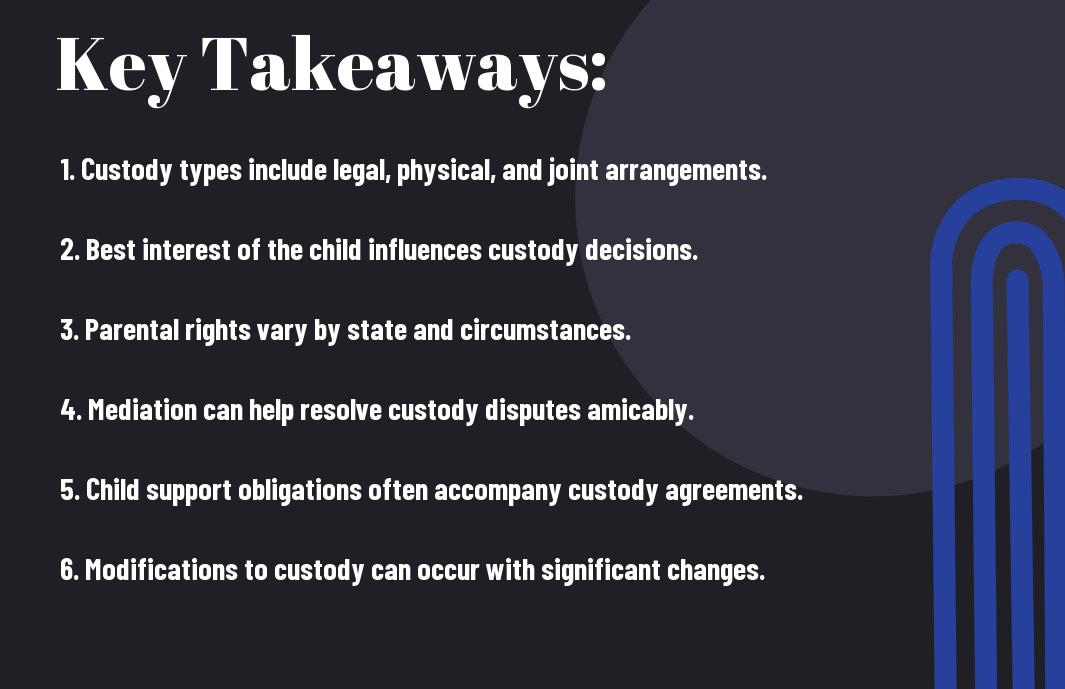
While navigating child custody laws can seem overwhelming, understanding their fundamental principles will help you make informed decisions. Child custody is governed by state laws, which aim to serve the best interests of the child. It’s important to familiarize yourself with how custody arrangements work and the factors considered by courts in determining custody. This knowledge will empower you to advocate for your rights and those of your child during custody proceedings.
Legal Framework
Overview of child custody laws indicates they are typically framed within state statutes. Each state has its specific guidelines that dictate how custody decisions are made, often considering the child’s age, relationship with each parent, and overall welfare. Your local family court will ultimately apply these laws, serving as the venue for custody disputes. Thus, understanding your state’s legal framework can greatly influence the outcome of your custody arrangement.
Types of Custody
Types of custody can be categorized into several distinct forms, each with unique implications for your parental rights. Understanding these can help you effectively navigate your situation:
| Physical Custody | Child lives primarily with one parent. |
| Legal Custody | Parent has rights to make decisions about the child’s upbringing. |
| Sole Custody | One parent has full custody rights. |
| Joint Custody | Both parents share custody responsibilities. |
| Visitation Rights | Non-custodial parent’s time with the child. |
Indeed, the type of custody you pursue can significantly impact your relationship with your child and your role in their life. It’s imperative to understand the implications of each type:
- Physical custody focuses on where the child will primarily reside.
- Legal custody pertains to decision-making power regarding the child’s welfare.
- Sole custody grants exclusive rights to one parent.
- Joint custody fosters cooperation between parents.
- Visitation rights ensure that non-custodial parents remain involved.
Perceiving these types of custody can guide your discussions and negotiations related to custody agreements, ultimately benefiting your child’s stability and well-being.
Factors Affecting Custody Decisions
Any child custody decision is influenced by multiple factors that the court considers to determine the most suitable living arrangement for your child. These factors include:
- Your child’s age and health
- The emotional ties between you and your child
- Your living situation and financial stability
- Your child’s preference, depending on their age
- Your co-parenting abilities
Any decision made by the court aims to prioritize the child’s welfare while balancing the rights and responsibilities of both parents.
Best Interests of the Child
After examining the various factors, the court ultimately acts in your child’s best interests, aiming to ensure a stable and supportive environment. This philosophy governs all custody determinations, focusing on what will nurture your child’s emotional, physical, and educational needs.
Parental Fitness
Above all, the court evaluates your parental fitness, which encompasses your capability to provide for your child’s emotional and physical needs. Your lifestyle choices, behavior patterns, and relationship with the child are closely scrutinized during the custody process.
Custody decisions heavily rely on your parental fitness, which is judged based on your ability to provide a safe, nurturing, and stable environment. This includes evaluating your mental and physical health, history of substance abuse, and your willingness to encourage your child’s relationship with the other parent. The court often seeks to ensure that you can effectively meet the demands of parenting, demonstrating a commitment to the child’s well-being.

Types of Custody Arrangements
Keep in mind that custody arrangements vary based on each family’s unique circumstances. Understanding these options can help you make informed decisions regarding your child’s upbringing. Here are the main types:
- Sole Custody
- Joint Custody
- Physical Custody
- Legal Custody
- Visitation Rights
Thou must choose the arrangement that best suits your family’s needs.
| Type of Custody | Description |
| Sole Custody | One parent has full custody rights. |
| Joint Custody | Both parents share custody responsibilities. |
| Physical Custody | Where the child lives most of the time. |
| Legal Custody | Decision-making authority for the child. |
| Visitation Rights | Non-custodial parent’s time with the child. |
Sole Custody
Arrangements involving sole custody designate one parent as the primary caregiver, granting them the responsibility and authority to make major decisions about the child’s life. This arrangement often occurs when one parent is deemed unsuitable or when parents cannot work together effectively for the child’s best interest.
Joint Custody
Around half of custody cases result in joint custody, where both parents share legal and/or physical custody of the child. This arrangement allows for cooperative parenting, enabling both parents to be actively involved in their child’s life and decision-making. It aims to maintain strong relationships between the child and both parents.
The joint custody arrangement not only benefits your child socially and emotionally but also fosters a sense of teamwork between you and your co-parent. Effective communication and flexibility are key elements to ensure that both parents stay informed and involved in school and extracurricular activities. A well-structured joint custody agreement can lay the foundation for a healthier co-parenting relationship, creating stability and security for your child.
Understanding Parental Rights
Despite the emotional complexities that accompany custody arrangements, understanding your parental rights is vital for navigating these situations effectively. Your rights as a parent are grounded in law, with the intention of promoting the best interests of your child. This knowledge empowers you to advocate for yourself and your children during custody disputes, ensuring you are adequately informed about what you are entitled to in various circumstances.
Legal Rights of Parents
To comprehend your position in custody matters, it’s important to know that parents typically have legal rights that can include custody, visitation, and decision-making authority regarding education and healthcare. These rights can fluctuate based on marital status, the type of custody arrangement, and any existing court orders. By being aware of these rights, you can better assert your role and responsibilities in your child’s life.
Rights during Custody Disputes
Around custody disputes, your rights as a parent become central to how matters are resolved. You have the right to be heard, to present evidence in your favor, and to contest any allegations made against you. You should also have access to legal representation to navigate these challenges effectively and ensure your perspective is understood in court or mediation sessions.
Plus, being aware of your rights during custody disputes can significantly influence the outcome of your case. You have the right to seek modifications to existing orders if circumstances change, and to maintain a relationship with your child, even when challenges arise. This period can be overwhelming, but knowing your legal options and obligations can aid in establishing a resolution that serves the best interest of you and your child.
Modifications and Enforcement of Custody Orders
For parents navigating custody arrangements, understanding the procedures for modifying and enforcing custody orders is imperative. Changes in circumstances, such as relocation or shifts in a child’s needs, may prompt a need for adjusting existing orders. Awareness of these processes can help you advocate effectively for your rights and your child’s best interests.
Grounds for Modification
Along with changing life circumstances, various grounds can justify the modification of custody orders, such as changes in the parent’s situation, the child’s needs, or parental behavior. If you can demonstrate a significant change that affects the child’s wellbeing, you may be able to secure a modification that better serves your family’s needs.
Enforcement Mechanisms
One effective way to ensure compliance with custody orders is through specific enforcement mechanisms designed to address violations. These might include mediation, filing a motion with the court, or seeking a court hearing to address the non-compliance. Understanding these tools helps you take the right steps when facing challenges in enforcing custody arrangements.
Also, employing enforcement mechanisms can facilitate resolution without escalating conflicts. Often, mediation serves as a first step, allowing both parties to reach an agreement. If mediation fails, courts can issue sanctions, including modifying custody orders or imposing penalties. By being knowledgeable about these options, you can effectively protect your rights and your child’s wellbeing in the custody process.
Resources for Parents
All parents navigating child custody laws should be aware of the various resources available to assist in understanding their rights and responsibilities. From legal assistance to community support, these resources can provide valuable guidance throughout the process.
Legal Resources
Resources such as legal clinics, local bar associations, and online platforms can offer you much-needed legal advice, templates for paperwork, and information about your rights in custody matters. Consulting with a family law attorney can also help clarify your options and strategy moving forward.
Support Networks
Against the isolation that often comes with custody disputes, finding a supportive community can be invaluable. You may wish to explore local parenting groups, online forums, or social services that offer emotional and practical support to parents dealing with similar issues.
Further, these support networks not only provide emotional relief but also practical resources and shared experiences that can help you make informed decisions. Connecting with others who are in or have been in your situation can create a sense of belonging and empower you to navigate the often complex landscape of child custody laws effectively.
To wrap up
Now that you have a better understanding of child custody laws and parental rights, it’s vital to apply this knowledge to your unique situation. You should familiarize yourself with the factors that courts consider in custody cases, and recognize how to effectively advocate for your rights as a parent. By doing so, you can work towards achieving a custody arrangement that is in the best interest of your child while also respecting your role in their life. Being informed empowers you to navigate the complexities of custody matters with confidence.