

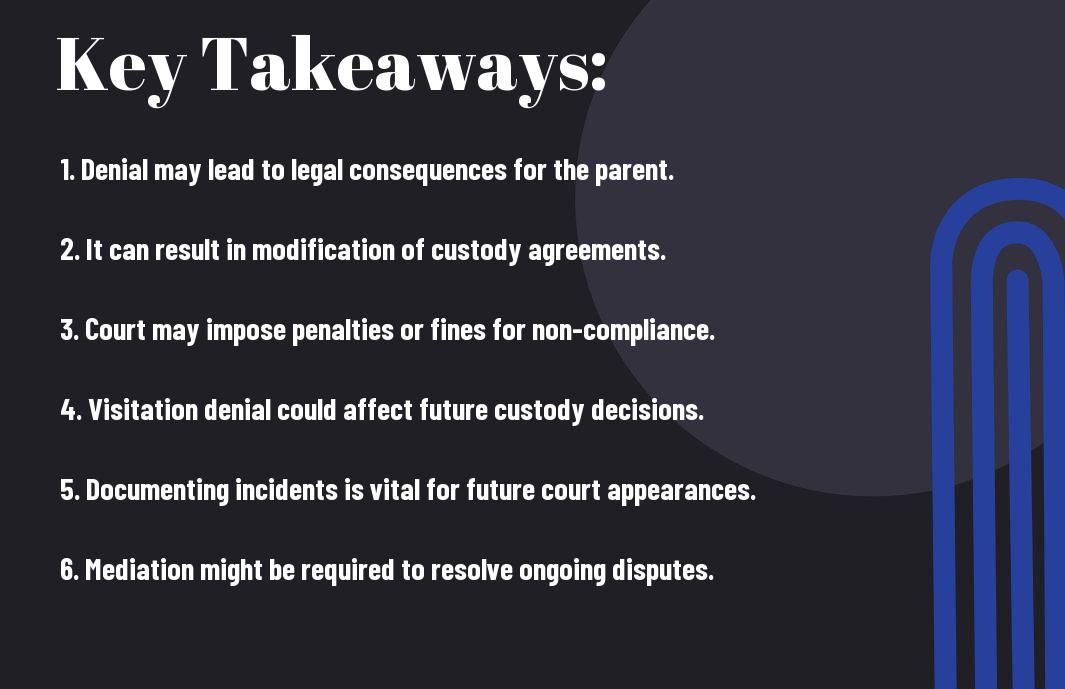
With a court order in place for visitation, it’s important to understand the consequences if a parent denies you access to your child. This denial can lead to serious legal repercussions, including potential modifications to custody arrangements and enforcement actions by the court. In this post, you will learn about your rights, the possible legal remedies available to you, and the steps you can take to ensure compliance with the court’s order. Understanding these aspects can empower you to act in the best interest of your relationship with your child.

Understanding Court-Ordered Visitation
Before delving into the specifics of court-ordered visitation, it’s important to recognize that these arrangements can profoundly impact your child’s well-being and your relationship as a parent. Court-ordered visitation is a legal decree meant to ensure that a child has a chance to maintain a meaningful relationship with both parents, fostering stability in their lives.
Definition and Importance
The purpose of court-ordered visitation is to establish a structured schedule that outlines when and how a child will spend time with each parent. This arrangement is significant not only for preserving parental relationships but also for providing consistency and emotional security for the child.
Legal Framework Surrounding Visitation Rights
An understanding of the legal framework surrounding visitation rights is crucial for ensuring compliance and protecting your rights as a parent. Courts typically issue visitation orders based on the best interests of the child, taking into account various factors, including the child’s emotional needs and the relationship with each parent.
Frameworks for visitation rights vary by jurisdiction, but they generally involve state laws that prioritize a child’s welfare. When a court determines visitation, it considers factors such as the child’s age, the needs of the parents, and the child’s relationship with each parent. Understanding these legal standards can help you navigate disputes and enforce your visitation rights effectively, ensuring a positive environment for your child.
Consequences of Denying Visitation
One of the most significant consequences of denying court-ordered visitation is the potential legal fallout you may face. Ignoring court orders can lead to several repercussions, including the possibility of losing custodial rights or facing sanctions from the court. Ensuring compliance with visitation agreements is vital for maintaining a healthy co-parenting relationship.
Legal Repercussions for the Denying Parent
Below are some legal repercussions you may encounter if you deny court-ordered visitation. Courts may hold you in contempt, leading to fines or mandated compliance with visitation arrangements. In severe cases, you risk losing primary custody, as courts prioritize the best interest of the child in their rulings.
Impact on Child Relationship and Well-being
Across the board, denying visitation can have lasting effects on your child’s emotional and psychological well-being. The absence of a parent figure can create feelings of abandonment and confusion, affecting their ability to form healthy relationships in the future.
Indeed, the impact of denying visitation extends well beyond legal ramifications. A child may struggle with trust issues, anxiety, or low self-esteem if they perceive that a parent does not want to spend time with them. Maintaining consistent visitation provides your child with a sense of stability and security, fostering a healthier emotional landscape as they navigate their family dynamics.

Remedies for the Affected Parent
Now, if a parent denies court-ordered visitation, you have several remedies available to address the situation. Understanding these options can empower you to take action to ensure you can maintain a relationship with your child. This can range from seeking legal intervention to modifying existing agreements.
Legal Options Available
Affected parents can explore multiple legal avenues if visitation is denied. You may choose to file a motion for enforcement in court, which compels the other parent to comply with the visitation order. Additionally, you could seek mediation to resolve the issue amicably or pursue a modification of the visitation schedule if circumstances have changed.
Seeking Modification of Visitation Orders
At times, it may be necessary to seek a modification of visitation orders to better fit your current circumstances or needs. If the denial of visitation is making it difficult for you to maintain a relationship with your child, you can file a request for modification in family court.
Due to changes in life circumstances or parenting dynamics, adjustments to visitation agreements can be beneficial. The court will consider various factors, including the best interests of the child, when deciding whether to modify the order. It’s important to provide evidence that supports your case and demonstrates how the modification would enhance your ability to positively engage with your child.
Mediation and Conflict Resolution
All parents facing visitation disputes can benefit from mediation as it fosters open communication and collaborative problem-solving. This approach can help you and your co-parent navigate tensions while focusing on your child’s best interests. By engaging in mediation, you may find creative solutions to visitation issues that respect both parents’ rights and promote a healthy co-parenting relationship.
Role of Mediation in Visitation Disputes
Resolution through mediation allows you to address conflicts in a constructive environment, minimizing the emotional toll on both you and your children. A neutral mediator can facilitate discussions, ensuring both parties have an opportunity to express their perspectives. This process often leads to more satisfactory outcomes than traditional court proceedings, empowering you to create a customized visitation plan.
Collaborative Approaches for Co-Parenting
An effective way to address co-parenting and visitation issues is by embracing collaborative approaches. These strategies promote teamwork among parents, emphasizing shared goals and the well-being of your children while respecting each parent’s role.
Considering collaborative approaches means focusing on open dialogue and mutual respect to create a parenting plan that works for you both. This process encourages you to set aside differences and work together, fostering a supportive environment for your children. By prioritizing cooperation, you can build a foundation for positive co-parenting that benefits everyone involved, ultimately leading to better outcomes for your children.

When to Consult Legal Counsel
Keep in mind that navigating visitation issues can be complicated. If you find yourself facing consistent denial of court-ordered visitation, it’s important to seek legal counsel. A family lawyer can help you understand your rights, the legal implications, and the steps necessary to enforce your visitation order.
Situations Requiring Legal Advice
To determine when you need legal advice, consider situations such as repeated denial of visitation, threats of parental alienation, or changes in circumstances that affect your ability to see your child. Consulting with a lawyer can provide guidance tailored to your specific situation.
Finding the Right Family Lawyer
Before you choose a family lawyer, assess your needs and clarify what you’re seeking from legal representation. Look for someone with experience in family law, especially in visitation issues, to ensure they understand your unique situation.
Hence, conducting thorough research on prospective lawyers is imperative. Read reviews, ask for recommendations, and schedule consultations to discuss your case. This will help you gauge their expertise and approach to family law. A lawyer who understands your perspective and is dedicated to advocating for your rights will be invaluable in navigating the complexities of visitation disputes.
Preventive Measures and Best Practices
Not having a clear plan in place for visitation can lead to misunderstandings and conflicts. To avoid issues, it’s vital to establish a comprehensive visitation schedule that both parents agree upon and adhere to. Consider involving a mediator if necessary, and keep lines of communication open so that any concerns can be addressed promptly. Documenting all interactions and agreements can also help ensure compliance with the court’s orders, reducing the likelihood of complications down the road.
Effective Communication Strategies
Beside establishing a visitation schedule, effective communication is imperative in co-parenting. Utilize tools such as co-parenting apps, emails, or text messages to keep each other informed about changes in schedules and important events. Approach conversations with empathy and clarity, and always focus on what’s best for your child. This proactive communication can help prevent misunderstandings and foster a cooperative relationship.
Maintaining a Healthy Co-Parenting Relationship
One of the key elements to successful co-parenting is maintaining a healthy relationship with your ex-partner. Prioritize respect and collaboration, and be open to compromise on parenting decisions. Acknowledge each other’s efforts and share responsibilities, ensuring that both parents are actively involved in the child’s life. This cooperative dynamic not only benefits your child but also minimizes potential conflicts in the future.
Understanding that a positive co-parenting relationship is fundamental to your child’s well-being can go a long way. It involves being patient and taking the time to discuss parenting strategies, addressing mistakes with grace, and supporting each other’s decisions. Regular check-ins to discuss your child’s needs can create a sense of teamwork. By focusing on fostering mutual respect and shared parenting goals, you can cultivate an environment that is beneficial for everyone involved.
Conclusion
On the whole, if you are a parent who denies court-ordered visitation, you may face serious legal consequences, including potential modification of custody arrangements or even sanctions from the court. It is important to understand that adhering to these orders is not just a legal obligation, but also imperative for maintaining a healthy relationship between your child and the other parent. If you have concerns about visitation, it’s advisable to seek legal guidance rather than unilaterally deciding to deny access.