

Most custody cases hinge on demonstrating the fitness of each parent, and you may find yourself needing to prove that your co-parent is unfit to ensure the best environment for your child. Understanding the various factors that courts consider—such as substance abuse, neglect, or emotional instability—can help you build a strong case. In this guide, you’ll discover the important steps to effectively present your concerns and gather the necessary evidence to support your position in a custody battle.

Understanding Unfit Parenting
To navigate the complexities of custody cases, it’s vital to grasp the concept of unfit parenting. This understanding allows you to identify behaviors or circumstances that may jeopardize your child’s well-being and helps you build a case in support of your custody claims.
Definition of Unfit Parenting
One aspect of unfit parenting is a parent’s inability to fulfill their responsibilities to provide a safe, stable, and nurturing environment for their child. This may include neglect, substance abuse, or exposure to harmful situations that directly impact the child’s well-being.
Legal Standards for Custody Cases
While evaluating custody cases, courts follow specific legal standards to determine what constitutes unfit parenting. These standards often focus on the child’s best interests and entail an examination of various factors, including the parent’s mental and emotional health, stability, and ability to provide a supportive environment.
It is important to understand that these standards can vary from jurisdiction to jurisdiction. Courts typically prioritize the child’s safety and overall welfare, assessing how each parent’s behavior impacts that. Factors such as history of abuse, neglect, domestic violence, or inability to meet a child’s basic needs are taken seriously. Familiarizing yourself with these legal benchmarks will be vital as you present your case.
Key Factors to Prove Unfitness
While each custody case is unique, several key factors can help demonstrate a parent’s unfitness. These include:
- Substance abuse issues
- Emotional and mental health concerns
- Domestic violence incidents
- Neglect or failure to provide basic needs
- Inability to provide a stable living environment
Knowing these factors can significantly impact the custody determination process.
Substance Abuse Issues
You should document any instances of substance abuse that may affect a parent’s ability to care for their child. This could include evidence of drug or alcohol addiction, failed rehabilitation attempts, or arrests related to substance use. Such documentation can play a vital role in illustrating the risks involved in granting custody.
Emotional and Mental Health Concerns
Emotional and mental health concerns can significantly impact a parent’s ability to care for a child. It’s important to evaluate how mental health conditions may affect parenting capabilities.
This may involve gathering evidence such as medical records, therapy notes, or witness testimonies that highlight concerning behaviors or patterns. Signs of instability can include untreated mental health disorders, erratic behavior, or an inability to provide a nurturing environment. By presenting this evidence, you can show the court that the parent’s mental well-being poses a risk to the child’s safety and stability.

Gathering Evidence
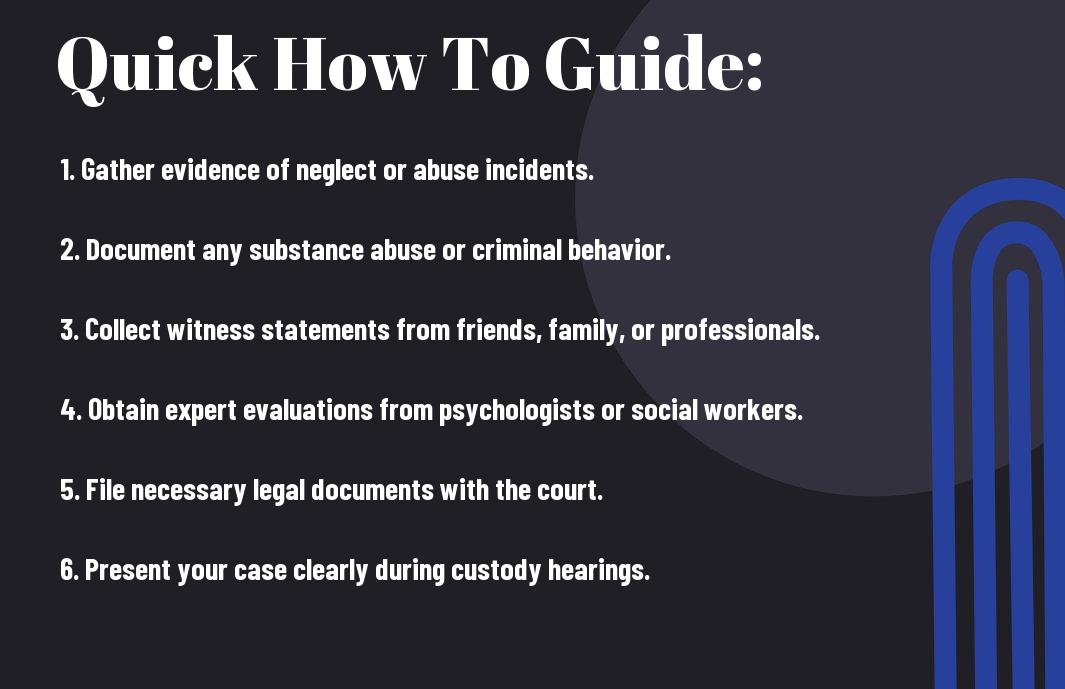
After deciding to prove a parent is unfit in a custody case, the next step is gathering concrete evidence. This can significantly strengthen your position when presenting your case in court. Collect various types of evidence that showcase the other parent’s behavior, living conditions, and overall ability to care for the child. This may include photographs, medical records, or police reports, all of which play a vital role in demonstrating unfitness.
Documentation and Records
Evidence can include important documentation such as medical records, school reports, and any history of domestic violence. These records provide valuable insight into the other parent’s lifestyle and parenting capabilities, illustrating patterns that could impact the child’s well-being.
Witness Testimonies
Some individuals, such as friends, family, or professionals, can provide testimonies that support your claims about the parent’s unfitness. Their first-hand observations can enhance the evidence you present and give the court a clearer understanding of the situation.
Understanding the importance of witness testimonies can greatly influence your custody case. These witnesses can share their experiences and observations about the other parent’s behavior, parenting style, and interactions with the child. Their testimonies provide context and credibility to your claims, offering the court insight into the daily reality of the child’s life. Selecting credible witnesses who are willing to speak on your behalf can significantly bolster your argument for seeking custody.

Presenting Your Case Effectively
Your ability to effectively present your case in a custody dispute can significantly impact the outcome. To do this, you must focus on providing clear, concise evidence and maintaining a calm demeanor. Be prepared for questioning and present your materials in a logical order, ensuring that your arguments are easy for the court to follow. Highlight the facts that demonstrate your claims about the unfit parent while remaining composed and respectful throughout the proceedings.
Legal Representation Strategies
The guidance of a skilled attorney can greatly enhance your chances of success in a custody case. Collaborate with your lawyer to develop a tailored strategy based on your unique circumstances, including which evidence to present and how to question witnesses effectively. Engaging legal support enables you to navigate the complexities of family law and ensures that your rights are adequately protected.
Organizational Tips for Court
Clearly organizing your documents and evidence is crucial for making a strong presentation in court. Take the time to compile and categorize relevant materials, such as witness statements, records of incidents, and any evidence of the other parent’s unfitness. Key organizational tips include:
- Create a checklist of all documents you must bring.
- Label and separate evidence into distinct folders.
- Prepare a summary of important points for easy reference.
Recognizing the importance of thorough preparation will help you feel confident and focused during the hearing.
It is vital to have a well-organized plan for presenting your case in court. Utilizing visual aids, such as charts or timelines, can provide clarity and strengthen your arguments. Ensure your evidence supports your case and is easy to access when needed. Consider rehearsing your presentation to enhance your confidence and familiarity with the material. Key practices include:
- Organizing evidence chronologically for logical flow.
- Using tabs or dividers in your folder for quick access.
- Practicing your arguments aloud to improve delivery.
Recognizing these organizational strategies will enable you to convey your message effectively and make a compelling case.
Common Pitfalls to Avoid
Keep your focus on presenting legitimate evidence when navigating a custody case. Avoid getting sidetracked by emotional arguments or irrelevant information that can weaken your position. It’s imperative to stay organized and focused on the specific aspects that make a parent unfit, steering clear of distractions that could undermine your credibility.
Making False Claims
False claims can severely damage your credibility in a custody case and backfire, affecting your chances of winning custody. Such allegations not only harm your relationship with the court but can also lead to legal repercussions and diminish your overall standing in the judicial system. Accurate documentation and honest testimony are vital to your case.
Ignoring Your Own Parental Responsibilities
Clearly, neglecting your own responsibilities as a parent can weaken your case against the other party. Courts evaluate not just the other parent’s fitness, but also your capability to ensure a safe and supportive environment for the child. Demonstrating your commitment to healthy parenting practices is imperative for a favorable outcome.
Plus, if you fail to meet your own parental obligations, it raises questions about your competence and reliability. Courts often seek to place children in homes where they see active, caring parental figures. If you cannot show that you fulfill your role as a responsible parent, it may diminish your ability to argue that the other parent is unfit. Focus on maintaining a positive parenting record to strengthen your position.
Tips for Supporting Your Child Through the Process
Many parents overlook the importance of emotional support for their children during a custody case. Providing reassurance and being attuned to their feelings can greatly ease their stress. Here are some tips to help your child navigate this challenging time:
- Encourage open communication about their feelings.
- Maintain a routine to foster a sense of security.
- Validate their emotions and let them know it’s okay to be upset.
- Reassure them that they are loved and supported.
Knowing that your child feels supported can make a significant difference in their wellbeing during this process.
Emotional Support Strategies
Support your child by actively listening to their concerns and validating their feelings throughout the custody process. Encourage them to express their thoughts openly and remind them that their emotions are important. Be present and approachable, allowing them to share their worries without judgment. Engaging in activities together can also serve as a means of bonding and distraction from any stress they may feel.
Maintaining Stability in Their Life
Through consistency and routine, you can provide your child with a more stable environment during the upheaval of a custody case. Keep their daily activities, such as school, extracurriculars, and social interactions, as stable as possible to help minimize disruptions in their life.
To effectively maintain stability for your child, establish a predictable routine that includes regular meals, homework time, and family activities. Ensuring they have a consistent schedule creates a sense of normalcy, fostering emotional security. During this time, try to avoid making drastic changes to their living situation or lifestyle. Consistent communication with both parents regarding activities and responsibilities can also contribute to a smoother transition for your child, reinforcing that they remain a priority in both of your lives.
Summing up
On the whole, proving a parent is unfit in a custody case requires you to gather substantial evidence that highlights any negative behaviors or situations affecting the child’s well-being. This may include documenting instances of substance abuse, neglect, or domestic violence, as well as gathering testimonies from witnesses. You should also focus on showing how the other parent’s behavior impacts the child’s emotional and physical health. By presenting solid evidence and articulating your concerns clearly, you can strengthen your case for why custody should be awarded in your favor.