

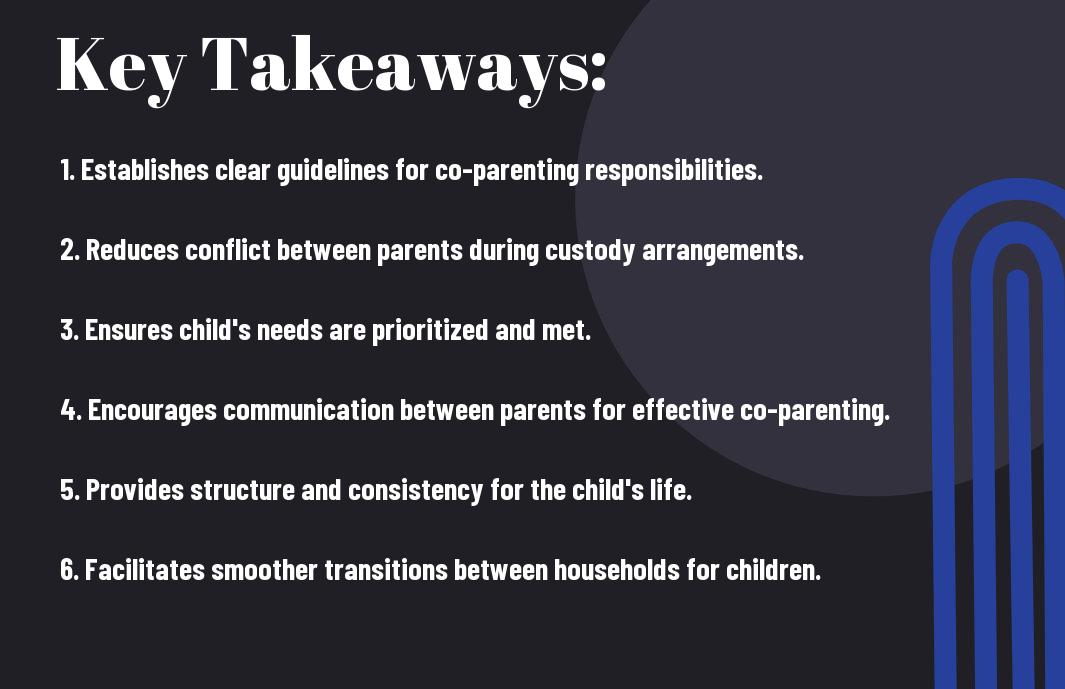
It’s important for you to understand the role of a parenting plan in custody agreements, as it serves as a roadmap to navigate your co-parenting journey. A well-crafted parenting plan outlines the responsibilities, schedules, and communication strategies between you and your co-parent, ensuring that your child’s needs remain the top priority. By formalizing your expectations and agreements, you can reduce conflicts, promote stability, and create a positive environment for your child to thrive in, making your parenting partnership more effective and harmonious.
Understanding Custody Agreements
For parents navigating separation or divorce, understanding custody agreements is important. These legal documents outline how parenting responsibilities and rights are divided between you and your co-parent, ensuring that your children’s needs are met while providing a stable framework for decision-making and support.
Definition of Custody Agreements
Any arrangement that addresses the legal and physical custody of your children is considered a custody agreement. It delineates where the children will live, how decisions regarding their welfare are made, and outlines each parent’s responsibilities. Establishing a clear custody agreement can alleviate uncertainties and promote a collaborative parenting approach.
Types of Custody Arrangements
There are several types of custody arrangements that you may encounter. Understanding these variations can help you determine what best suits your family’s needs:
- Legal Custody: Parents share the right to make important decisions about the child’s life.
- Physical Custody: Where the child physically resides, with one or both parents.
- Sole Custody: One parent has full custody rights, while the other has limited or no rights.
- Joint Custody: Both parents share custody responsibilities, whether legal, physical, or both.
- Shared Custody: A balanced arrangement where the child spends significant time with both parents.
Perceiving these arrangements will help you navigate custody discussions more effectively.
| Type of Custody | Description |
| Legal Custody | Both parents make decisions about the child’s welfare. |
| Physical Custody | Where the child primarily resides. |
| Sole Custody | One parent holds all custodial rights. |
| Joint Custody | Both parents share rights and responsibilities. |
| Shared Custody | The child spends time with each parent equally. |
Custody arrangements can be complex and vary significantly from one family to another. It’s important to evaluate your specific situation to ensure that the decisions made are in your children’s best interests. By understanding the different types of custody, you can provide input effectively during negotiations:
- Consider how each type impacts your child’s day-to-day life.
- Assess your co-parent’s willingness to share responsibilities.
- Weigh the stability each arrangement provides for your children.
- Factor in distance and logistics when determining living arrangements.
- Explore flexible options that cater to your family’s unique dynamics.
Perceiving these considerations can lead to a more harmonious custody agreement.
| Consideration | Impact on Children |
| Daily Life Stability | Routine and predictability enhance emotional security. |
| Co-Parenting Willingness | Collaborative parents create a supportive environment. |
| Distance and Logistics | Travel time affects schooling and activities. |
| Flexibility | Adaptability is key to meeting children’s evolving needs. |
| Emotional Support | A stable support system fosters resilience and growth. |
What is a Parenting Plan?
There’s a growing recognition of the need for a parenting plan in custody agreements, serving as a comprehensive roadmap for co-parenting after a separation or divorce. This formal document outlines the expectations, responsibilities, and guidelines for both parents regarding their child’s education, healthcare, and overall wellbeing. By creating a structured parenting plan, you ensure effective communication and coordination, making it easier to navigate the complexities of shared parenting.
Key Components of a Parenting Plan
Above all, a well-structured parenting plan should include crucial components such as custody arrangements, visitation schedules, decision-making authority, and communication methods. You will also want to document your child’s educational needs, health care decisions, and any relevant holiday or special occasion arrangements. By addressing these components, your parenting plan provides clarity and sets the foundation for a positive co-parenting relationship.
The Role of Parenting Plans in Custody Agreements
Custody agreements benefit significantly from parenting plans, as they lay down the specific terms of your arrangement. This clarity helps prevent misunderstandings and minimizes conflict between parents, fostering a cooperative parenting atmosphere. Additionally, a well-executed parenting plan can be reviewed and modified as your child’s needs evolve, ensuring that both parents remain engaged and focused on their child’s best interests.
Considering the importance of adaptability, your parenting plan should be a living document that evolves as your child’s needs change and as circumstances shift. Engaging in regular communication with your co-parent about potential modifications allows you both to stay aligned and effectively manage any disputes. Ultimately, a strong parenting plan supports your child’s emotional and developmental welfare, helping to create a stable environment in which they can thrive.
Benefits of a Parenting Plan
To foster a healthy co-parenting relationship, a well-defined parenting plan offers numerous benefits that support both parents and children. By establishing expectations, schedules, and responsibilities, you can ensure a smoother transition for your child between homes, promoting stability and consistency in their lives. A thorough parenting plan can ultimately lead to better emotional well-being for your children and create a framework for effective communication between you and your co-parent.
Clarity and Structure for Children
Parenting plans provide children with the clarity and structure they need to navigate their lives after separation. By outlining specific visitation schedules, holidays, and important events, you help your child understand what to expect from each parent, reducing anxieties or uncertainties. This clear framework fosters a sense of security and allows children to thrive during a challenging transition.
Reducing Conflict Between Parents
Against the backdrop of separation, a well-drafted parenting plan serves as a reliable tool to minimize conflict between co-parents. By clearly defining roles and responsibilities, you can reduce misunderstandings and disagreements over custody arrangements. This structured approach encourages open communication and collaboration, which is vital for maintaining a positive co-parenting relationship.
Also, having a parenting plan in place allows you to focus on the best interests of your child rather than getting caught up in conflicts with your co-parent. It provides a mutual reference point that helps navigate disputes amicably. When both parents are aware of their obligations and expectations, it creates a more cooperative atmosphere, ultimately benefiting your child as they experience a less contentious environment. A calm co-parenting dynamic can positively influence your child’s overall adjustment and emotional development during this transition.

Creating an Effective Parenting Plan
Many parents underestimate the importance of a well-structured parenting plan. A thoughtful and clear plan not only provides a framework for parenting after separation but also reduces conflict and creates a sense of stability for your children. By outlining key aspects such as custody schedules, decision-making responsibilities, and communication methods, you set the foundation for successful co-parenting.
Essential Considerations
With a multitude of factors to take into account, your parenting plan should address your child’s needs, your unique family dynamics, and any logistical issues. Consider aspects such as school schedules, holiday arrangements, and how to handle unexpected changes. Tailoring your plan specifically to your family’s situation can significantly enhance its effectiveness.
Involving Professionals in the Process
Parenting plans can benefit tremendously from professional input. By involving mediators, counselors, or attorneys, you can create a more balanced and equitable agreement that addresses the needs of both parents and your children effectively.
To ensure your parenting plan is comprehensive and beneficial, consult with professionals who specialize in family law or mediation. They can provide context and guidance on legal standards, common practices, and potential pitfalls. Their expertise can be invaluable in facilitating constructive communication between you and your co-parent, ultimately leading to a more harmonious parenting experience.

Legal Considerations
Not all parenting plans hold the same weight in court. Different states have varying laws regarding custody agreements, which can impact the enforceability of your plan. It is important to understand these legalities to ensure your parenting plan meets state requirements and protects your rights as a parent. You should also be aware of any potential legal consequences if one party fails to adhere to the agreed-upon terms in the plan.
Enforceability of Parenting Plans
Below are the key factors that affect the enforceability of your parenting plan, including whether it has been filed with the court and deemed a part of the custody agreement. By ensuring that your plan is duly registered and complies with local regulations, you increase the likelihood that it’ll be upheld in legal situations. This process not only legitimizes your agreement but also helps both parents understand their rights and responsibilities.
Modifying Parenting Plans
Against a backdrop of changing circumstances, you may find the need to modify your parenting plan over time. This could arise from shifts in work schedules, changes in your child’s needs, or other life events. Modifications often require legal approval, so it’s important to follow proper procedures for re-evaluation and ensure that adjustments are still in the best interest of your child.
Considering your evolving family dynamics, it’s important to approach modifications to your parenting plan thoughtfully. Engage in open communication with the other parent to discuss the desired changes and understand the legal process required for making those amendments. Be prepared to demonstrate any significant changes in circumstances, as courts typically prioritize the best interests of the child when reviewing requests for modifications. By following the appropriate steps, you can ensure that your parenting plan remains relevant and effective in supporting your family’s needs.

Common Challenges in Parenting Plans
Now that you understand the importance of a parenting plan, it’s necessary to recognize the common challenges you might face. These challenges often include difficulties in communication, differing parenting styles, and unforeseen changes in circumstances, all of which can put strain on the effectiveness of your plan. Being proactive and prepared to navigate these challenges is key to ensuring a successful parenting arrangement that prioritizes the well-being of your children.
Addressing Disagreements
To effectively address disagreements in your parenting plan, it is important to establish open communication channels and prioritize your children’s needs. When conflicts arise, approaching each other respectfully and collaboratively can help you find common ground. Consider utilizing mediation or professional guidance to facilitate discussions, ensuring that both parents feel heard and valued in the decision-making process.
Adapting to Changing Circumstances
Circumstances can change unexpectedly, impacting your parenting plan in various ways. Life events, such as job changes, relocations, or other personal challenges, may necessitate adjustments to your existing agreement. It is important to remain flexible and open to revising your plan to accommodate these changes while keeping your children’s best interests at the forefront.
At times, you may encounter situations that require significant updates to your parenting plan. Whether it’s a change in work hours, a new partner, or health issues, maintaining an adaptable approach will benefit both you and your children. Regularly reviewing and modifying the plan together ensures that it remains relevant and effective, fostering stability and support in your children’s lives as circumstances evolve.
Summing up
So, understanding the importance of a parenting plan in your custody agreements is important for fostering a stable environment for your child. A well-structured plan outlines your responsibilities and schedules, helping you both navigate co-parenting challenges effectively. By clearly defining expectations and minimizing conflicts, you can ensure that your child’s needs are prioritized. Ultimately, a comprehensive parenting plan not only fortifies your custody arrangement but also promotes healthier communication and collaboration, enriching the overall parenting experience for you and your child.