

Many individuals facing child custody challenges may not fully understand how domestic violence can significantly influence the court’s decisions. If you’ve been involved in a domestic violence situation, it’s crucial to know that your circumstances could impact custody outcomes, affecting not only parenting time but also the overall wellbeing of your child. This post will provide you with insights into how domestic violence is perceived in custody cases and what you can do to advocate effectively for your rights as a parent.
Understanding Domestic Violence
While domestic violence is often seen as a private issue, its implications reach far beyond the immediate relationship, impacting families and children. This form of abuse can take many shapes and forms, all contributing to a cycle of fear and instability. Understanding the dynamics of domestic violence is vital for recognizing how it affects child custody decisions.
Definition and Types
While domestic violence encompasses various abusive behaviors, it is crucial to recognize its different forms. Below are common types:
- Physical Abuse
- Emotional or Psychological Abuse
- Economic Abuse
- Sexual Abuse
- Digital Abuse
The acknowledgment of these types is vital for understanding the full scope of domestic violence.
| Type of Abuse | Description |
| Physical Abuse | Involves hitting, slapping, or any form of physical harm. |
| Emotional Abuse | Includes verbal attacks, manipulation, and emotional disregard. |
| Economic Abuse | Occurs when one partner controls financial resources. |
| Sexual Abuse | Involves coercion or forced sexual acts. |
| Digital Abuse | Utilizes technology to harass, stalk, or control another. |
Impacts on Victims
Beside the immediate physical harm, victims of domestic violence often grapple with emotional and psychological consequences that can last long-term. These effects can also extend to parental capabilities and decision-making.
The emotional scars from domestic violence, such as anxiety, depression, and low self-esteem, can severely impact your ability to parent effectively. You may experience difficulty in making decisions, maintaining a stable environment, or fostering healthy relationships with your children. Furthermore, these mental health challenges can influence child custody evaluations, as courts often consider the emotional wellbeing of both parents and their capacity to provide a safe, nurturing environment for their children.

The Legal Framework
Now that you understand the implications of domestic violence, it’s important to research into the legal framework surrounding child custody. Family courts prioritize the welfare of the child and evaluate factors like parental suitability, stability, and the child’s best interests in custody arrangements. The statutes and precedents governing custody can vary significantly from state to state, influencing decisions made by courts in domestic violence cases.
State Laws on Child Custody
After reviewing domestic violence’s impact, it’s important to consider the differing state laws on child custody. Each state has its system, often presenting distinct criteria for evaluating custody arrangements. These laws dictate how judges will approach a custody case involving allegations of domestic violence and may include provisions for supervised visitation or sole custody to the victim.
Role of Domestic Violence in Custody Decisions
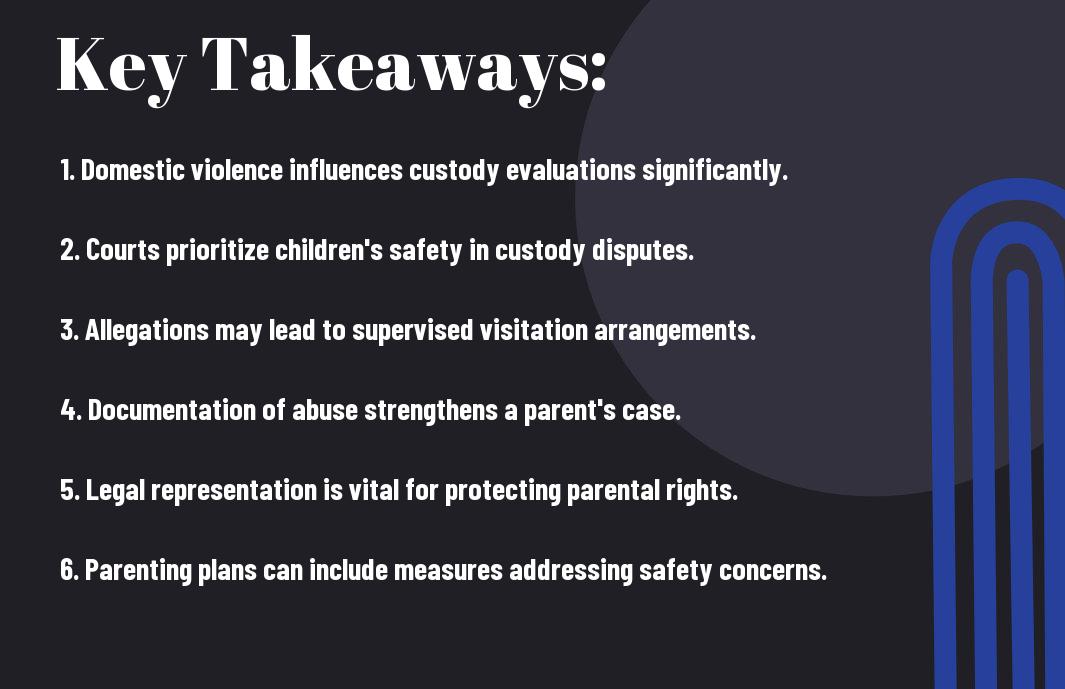
Among the factors considered in custody decisions, domestic violence plays a significant role. Courts assess any history of abuse to determine the safety and well-being of the child and the non-abusive parent. Evidence of domestic violence can substantially impact the allocation of custody rights and parenting time.
Legal standards typically require that judges carefully review instances of domestic violence when making custody decisions. The presence of abuse may lead a judge to restrict a parent’s custodial rights or even grant sole custody to the non-abusive parent. Moreover, courts may enforce conditions such as supervised visitation to ensure the child’s safety in the presence of the abusive parent. In these cases, presenting compelling evidence of domestic violence can significantly influence the court’s ultimate decision regarding custody and visitation rights.
Assessing the Impact on Children
Once again, you must consider how domestic violence can profoundly affect children involved in custody situations. These experiences can shape their emotional well-being, leading to long-term developmental challenges. The court often evaluates these factors when determining the best living arrangements for children, as their safety and stability should be prioritized above all.
Psychological Effects
Between feelings of fear and uncertainty, children exposed to domestic violence may experience a range of psychological issues, including anxiety, depression, and low self-esteem. These emotional scars can follow them into adulthood, impacting their relationships and overall mental health.
Behavioral Outcomes
By witnessing or experiencing domestic violence, children may exhibit various behavioral problems, such as aggression, withdrawal, or difficulties in school settings. These manifestations can cause concerns not only for their well-being but also for how they may impact future parenting decisions.
Considering the behavioral outcomes, children who grow up in homes with domestic violence may struggle to form healthy relationships or manage their emotions effectively. They may replicate learned behaviors, leading to a cycle of violence that can persist into their own parenting. It’s necessary for you to recognize these potential outcomes when navigating custody decisions, as they can significantly influence what is deemed in the best interest of the child.

Evidence in Custody Cases
To successfully navigate a custody dispute, you must understand how evidence plays a significant role in the decision-making process. Courts often weigh the credibility of the evidence presented, including witness testimonies, police reports, and medical records, to assess the impact of domestic violence on your child’s welfare. Your ability to compile relevant evidence may influence the court’s perception of your situation and ultimately the custody arrangement.
Gathering Information
Behind any strong custody case lies detailed information about incidents of domestic violence. As you gather evidence, focus on collecting documentation, such as police records, medical reports, or any other relevant information that accurately represents your experiences. Speak with witnesses who can corroborate your claims and provide a clear context of your situation. This comprehensive approach will strengthen your position during custody hearings.
Importance of Documentation
About building a solid case, documentation is vital in establishing the history and impact of domestic violence on your family. Evidence can highlight patterns of behavior that may pose a risk to your child’s safety and well-being, making it vital for your arguments in court. Effective documentation involves accurate records of incidents, including dates, times, and details that can demonstrate any concerning behavior or events.
Custody decisions are often guided by clear and compelling documentation that illustrates the dynamics of your relationship with the other parent. By maintaining a well-organized collection of records—such as communication logs, incident reports, and any photographs related to incidents—you can create a narrative that underscores your commitment to your child’s safety. Courts rely heavily on the documentation you present, so taking the time to gather and organize this evidence can make a significant difference in the outcome of your custody case.

Custody Arrangements and Domestic Violence
Not all custody arrangements are created equal, especially when domestic violence is involved. Courts take allegations of abuse seriously and aim to protect children from witnessing or experiencing trauma. Depending on the circumstances, custody can range from sole custody to shared arrangements, influenced heavily by the history of violence.
Types of Custody Decisions
- Sole legal custody
- Sole physical custody
- Joint legal custody
- Joint physical custody
- Supervised visitation
Any decision prioritizes the child’s safety and well-being.
| Type of Custody | Description |
| Sole legal custody | One parent makes major decisions alone. |
| Sole physical custody | One parent has physical custody of the child. |
| Joint legal custody | Both parents share decision-making responsibilities. |
| Joint physical custody | Child lives with both parents for equal time. |
Supervised Visitation
An effective measure to ensure safety for your children during visitations is supervised visitation. This arrangement allows your child to interact with the parent with a history of violence, but in a controlled environment, typically monitored by a professional or a neutral third party.
Another important aspect of supervised visitation is that it can help facilitate a healthy relationship while alleviating concerns regarding safety. Such arrangements can vary from one-on-one visitation with the supervisor present to monitored exchanges at designated locations. By ensuring that the visits are overseen, you contribute to your child’s security and emotional well-being while fostering continued contact with both parents, under protective measures.
Resources for Affected Families
Many families affected by domestic violence face challenging decisions regarding child custody. It is vital for you to access a range of resources designed to help navigate these difficulties and establish a safe environment for your children.
Legal Assistance
By seeking legal assistance, you can better understand your rights and options in custody cases involving domestic violence. Local legal aid organizations and domestic violence attorneys can provide guidance tailored to your situation, helping you navigate the judicial system effectively.
Support Services
Any family impacted by domestic violence may benefit from support services that offer counseling, advocacy, and shelter. Organizations dedicated to assisting survivors often provide important resources, including therapy for you and your children, ensuring a safe space to heal and recover from trauma.
Another valuable resource within support services is the availability of group therapy and family counseling. These programs can help you and your children process experiences associated with domestic violence, foster emotional resilience, and develop healthier coping mechanisms. Additionally, advocates can assist you in connecting with community resources that provide critical support in your journey towards rebuilding your family life.
Conclusion
Drawing together the implications of domestic violence on child custody decisions, it’s crucial for you to recognize that your history and experiences can significantly influence legal outcomes. Courts prioritize the safety and well-being of children, which may result in limited custody or visitation rights for the violent parent. Understanding these dynamics can help you navigate your custody case more effectively, aiding in decisions that truly support a healthy environment for your child. Always seek expert legal guidance to advocate your position and ensure the best interests of your child are upheld.