

Just when you find yourself navigating the complexities of custody arrangements, it’s vital to understand the differences between joint custody and sole custody. Each option comes with its own set of advantages and disadvantages, affecting not only your parenting responsibilities but also your child’s emotional well-being. This blog post will research into the pros, cons, and legal factors associated with both custody types, empowering you to make informed decisions that best suit your family’s needs.
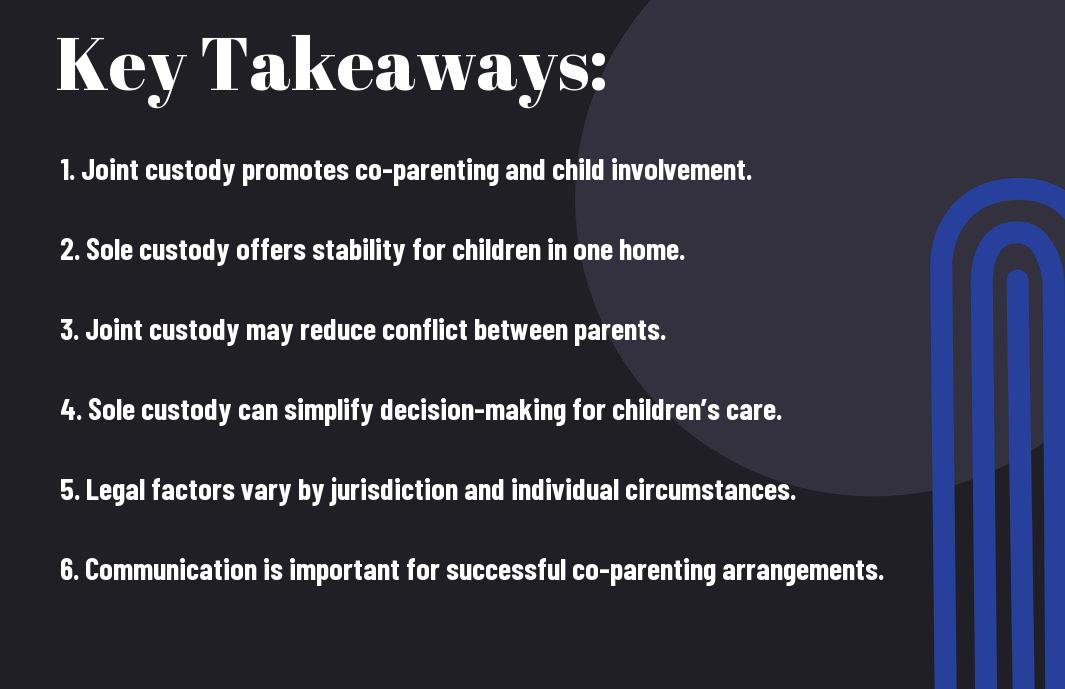

Understanding Custody Types
The custody arrangement you choose can significantly impact your child’s upbringing. It is crucial to grasp the different types of custody to make an informed decision. Here’s a breakdown:
| Joint Custody | Both parents share decision-making and physical custody of the child. |
| Sole Custody | One parent has full legal and physical custody of the child. |
| Legal Custody | The right to make significant decisions regarding the child’s welfare. |
| Physical Custody | Where the child primarily resides and the day-to-day care involved. |
| Visitation Rights | When a non-custodial parent can spend time with their child. |
Any custody arrangement should prioritize the best interests of your child and consider the dynamics of your relationship with the other parent.
Definition of Joint Custody
Before you decide on custody, you should understand that joint custody allows both parents to share parenting responsibilities and make decisions about your child’s welfare. This can foster a beneficial co-parenting relationship.
Definition of Sole Custody
Before you choose sole custody, it’s important to know that this arrangement grants one parent legal and physical custody, meaning all significant decisions are made solely by you, while the other parent may have limited involvement.
And, sole custody can simplify decision-making, reducing potential conflicts with the other parent. However, this may also lead to feelings of isolation for the non-custodial parent, and it’s vital for you to consider how that may affect your child’s relationship with both parents.

Pros of Joint Custody
Now, choosing joint custody can offer numerous advantages to both children and parents. When both parents actively participate in their child’s life, it fosters a sense of security and stability. Joint custody arrangements often encourage better communication and cooperation between parents, which can create a harmonious environment for children to thrive. This parenting approach allows for shared responsibilities, better resource management, and a more balanced lifestyle for everyone involved.
Benefits for Children
Against the backdrop of family separation, children often thrive in a joint custody setup. It allows them to maintain strong relationships with both parents, reducing feelings of abandonment or divided loyalty. Frequent interaction with both parents helps children develop emotional resilience and offers them a broader support system, contributing positively to their development.
Benefits for Parents
Pros of joint custody include the opportunity for you to share parenting responsibilities and leverage each other’s strengths, which can ease the burden of caregiving. It promotes a collaborative approach to decision-making and allows both parents to remain actively involved in their child’s life, benefiting not only the child but also enhancing your own relationship with your co-parent.
In addition, joint custody can provide you with valuable emotional support through shared parenting experiences. The cooperative nature of this arrangement encourages you to work together, enhancing amicability and reducing conflict. Additionally, sharing responsibilities can assist in reducing stress as both parents contribute to the child-rearing process, enabling you to maintain a more balanced lifestyle while enriching your child’s experiences.
Cons of Joint Custody
To navigate the complexities of joint custody, you may face various drawbacks that can impact both you and your children. These negatives range from potential conflicts between co-parents to logistical challenges that require constant communication and planning. Understanding these cons is crucial for making an informed decision about the custody arrangement that best suits your family’s needs.
Potential for Conflict
To effectively co-parent in a joint custody arrangement, it’s vital to maintain a cooperative relationship with your ex-partner. However, disagreements over schedules, parenting styles, and decision-making can create lasting tension and friction, impacting your relationship and emotional well-being.
Logistics and Communication Challenges
Along with potential conflicts, joint custody can present logistical hurdles that complicate parenting. You may find yourself juggling multiple schedules, school commitments, and extracurricular activities, all of which require clear coordination and collaboration with your co-parent.
At times, communication can become strained as you and your co-parent navigate these practical challenges. Keeping track of children’s activities, school events, and pick-up and drop-off times necessitates frequent dialogue. Misunderstandings can arise, leading to frustration and potential conflict. Therefore, establishing a reliable communication system and maintaining flexibility are vital to successfully managing the logistics of joint custody.
Pros of Sole Custody
Once again, choosing sole custody can provide significant advantages, particularly for the primary caregiver. This arrangement allows you to have full control over your child’s upbringing and daily life, fostering a consistent environment that can be beneficial for children. Additionally, sole custody can reduce parental conflict by eliminating the need for negotiation and compromise with the other parent, allowing you to make decisions that reflect your values and priorities.
Stability for Children
With sole custody, your child may experience increased stability, as they live primarily with one parent. This consistent environment can provide a sense of security and reassurance, allowing them to thrive emotionally and socially. Children benefit from predictable routines and clear expectations, which are more easily implemented in a sole custody arrangement.
Simplified Decision-Making
With sole custody, you streamline the decision-making process concerning your child’s welfare and upbringing.
Hence, removing the need to consult or negotiate with the other parent on every decision can significantly reduce stress and confusion. You will have the autonomy to make important choices regarding education, healthcare, and daily routines without delays or disagreements, creating a more efficient way to manage your child’s needs. This clarity allows you to focus on providing the best possible environment for your child, ultimately leading to a more harmonious family dynamic.

Cons of Sole Custody
Many parents may not realize that opting for sole custody can have significant downsides. While sole custody allows one parent to have complete decision-making authority, it can often lead to feelings of isolation and resentment in the other parent. This arrangement may also create tension between parents, potentially affecting the child’s emotional well-being and overall family dynamics.
Emotional Impact on Children
Custody arrangements that favor one parent can lead to emotional challenges for children. They may feel torn between their parents, leading to anxiety, guilt, or sadness. Children often struggle to understand why they cannot spend equal time with both parents, which may hinder their emotional development and cause long-term psychological effects.
Responsibility Burden on One Parent
Along with emotional stress on children, sole custody places a significant responsibility burden on one parent. This parent must manage all aspects of the child’s life, including finances, education, and healthcare, often leading to added stress and feelings of overwhelm.
To navigate this increased burden effectively, you need strong organizational skills and support systems in place. You might find it beneficial to establish a routine that allows for flexibility while ensuring that all necessary needs are met. Engaging with community resources or seeking help from friends and family can make a significant difference, as they can provide assistance when challenges arise. Balancing this responsibility is necessary not just for your well-being but for the emotional stability of your child as well.
Legal Factors in Custody Decisions
Unlike many assumptions about custody, legal factors play a significant role in determining the arrangement that best serves the child’s interests. Courts take into account various elements, including:
- The child’s age and needs
- Parental capability and history
- The child’s relationship with each parent
- Any history of abuse or neglect
- The preferences of the child, depending on age
Assume that you are facing this decision; understanding these factors can empower you to advocate effectively for your child’s best interests.
Court Considerations
Between parents, courts evaluate a wide range of considerations to reach a decision that prioritizes the child’s welfare. Factors like stability, emotional connections, and health are meticulously reviewed to determine what arrangement best supports the child’s overall development.
State Laws and Variations
By understanding that state laws significantly influence custody arrangements, you can navigate your specific circumstances with clarity. Different states have distinct guidelines concerning joint and sole custody, leading to variations in how laws are applied.
Laws surrounding custody are not uniform across the United States. Each state has its unique statutes and precedents, which can complicate custody proceedings. For instance, some states may emphasize joint custody beneficially, while others might lean towards awarding sole custody in specific situations. Familiarizing yourself with your state’s specifics allows you to anticipate how your case might be viewed in court and prepares you for what to expect in the legal process.
To wrap up
Taking this into account, understanding the pros and cons of joint custody versus sole custody is vital for your decision-making process. Joint custody can foster a meaningful relationship between your child and both parents, while sole custody may provide stability in certain situations. Legal factors, including your child’s best interests and your individual circumstances, also play a significant role. Ultimately, the choice you make should align with what you believe will serve your child’s needs best, backed by informed legal guidance.